Luxury interior decor is not simply about buying expensive furniture, filling rooms with designer objects or following the latest Instagram trend. The most successful interiors feel considered, comfortable and personal. Every material, light source, furniture piece and decorative object has a reason to be there. For Australian homes, that approach should also respond to climate, natural light, indoor comfort and the way people actually use their spaces.
A beautifully designed home often feels effortless. However, that simplicity usually comes from careful decisions about proportion, colour, texture, circulation and lighting.
In practice, one of the clearest differences between an ordinary decorated room and a sophisticated one is restraint. Rather than trying to make every object impressive, a refined interior establishes a hierarchy. One or two features lead the room, while everything else supports them.
That principle works whether you are decorating a contemporary Melbourne townhouse, refreshing a coastal home, furnishing an apartment or planning a complete residential interior.
What Is Luxury Interior Decor?
Luxury interior decor is the considered use of high-quality materials, balanced proportions, layered lighting, custom or well-crafted furniture, art and restrained accessories to create a refined, comfortable home. In Australia, good luxury decor also responds to climate, natural light, durability and how people actually live in the space.
Table of Contents
- What Luxury Interior Decor Really Means
- The Core Principles of a Luxury Interior
- Designing Luxury Interiors for Australian Conditions
- Luxury Interior Decor vs Expensive-Looking Decor
- Choosing Materials That Create Lasting Luxury
- Colour, Texture and Visual Balance
- Lighting for Luxury Interior Decor
- Room-by-Room Luxury Interior Ideas
- Furniture, Art and Decorative Objects
- Sustainable Luxury in Australian Interiors
- Where to Spend and Where to Save
- Luxury Interior Decor Planning Checklist
- Common Luxury Decorating Mistakes
- People Also Ask
- Expert Q&A
- Conclusion
What Does Luxury Interior Decor Really Mean?
The word “luxury” is often associated with marble, chandeliers, expensive furniture and large homes. Yet those things alone do not create a luxurious interior.
True luxury is more closely connected with quality, comfort, craftsmanship and thoughtful design.
A room can contain expensive products and still feel disconnected. Conversely, a relatively simple room can feel sophisticated when its materials, colours, lighting and proportions work together.
Luxury is about coherence
The strongest luxury interior decor usually follows one clear visual language.
For example, a room might combine:
- warm oak or walnut
- natural limestone
- brushed brass
- linen upholstery
- textured wool
- sculptural lighting
- carefully selected artwork.
None of these items needs to dominate the room.
Instead, their colours and textures connect.
This creates visual continuity.
Luxury is also functional
A beautiful lounge that nobody enjoys sitting on is not successful design.
Likewise, an elegant dining space with poor lighting or inadequate circulation quickly becomes frustrating.
Therefore, functionality should be resolved before decorative layering begins.
Ask practical questions first:
- How many people regularly use the room?
- Where does natural light enter?
- Where are the main walking paths?
- What activities happen here?
- What storage is required?
- Which objects need to remain accessible?
- Where do people naturally sit or gather?
Once those questions are answered, the decorative decisions become easier.
Core Principles of Luxury Interior Decor
There is no single formula for luxury interior design. However, several principles appear consistently in refined residential spaces.
1. Start With Scale and Proportion
Scale describes how large an object feels relative to the room.
Proportion describes how objects relate to one another.
These concepts sound technical, but they are easy to recognise visually.
For example, placing a small two-seat sofa against a very long wall can make both the sofa and room feel awkward. Meanwhile, an oversized modular sofa in a compact apartment may restrict movement.
Therefore, furniture should relate to the architecture.
In larger rooms, consider:
- generous rugs
- substantial sofas
- larger artwork
- wider sideboards
- statement pendants
- grouped seating areas.
In smaller rooms, luxury often comes from precision rather than size.
A carefully proportioned armchair, beautifully finished joinery and one strong piece of artwork can create more impact than several competing decorative pieces.
2. Build Around Quality Materials
Materials create much of the emotional character of an interior.
Natural materials are particularly effective because they usually contain subtle variation.
Consider:
- natural stone
- solid or engineered timber
- wool
- linen
- leather
- ceramic
- glass
- metal.
However, expensive material is not automatically better.
Installation quality, durability and context matter just as much.
For instance, a beautiful stone surface may look disappointing if joins are poorly positioned. Likewise, premium timber can lose its impact if the tone clashes with surrounding cabinetry.
Therefore, view materials together before finalising selections.
3. Layer Rather Than Decorate All at Once
A common mistake is treating decoration as a final shopping exercise.
Luxury interior decor works better when layers are considered throughout the project.
A room can be imagined in stages:
Architecture → fixed finishes → large furniture → lighting → textiles → artwork → objects.
Each layer should improve the previous one.
This also makes editing easier.
If a room already feels complete after artwork is installed, you may need very few decorative objects.
4. Use Restraint
More decoration does not necessarily create more luxury.
In fact, too many attention-grabbing objects can make expensive interiors feel visually noisy.
Instead, establish focal points.
For example, a living room might feature:
- one large artwork
- a sculptural coffee table
- a distinctive armchair.
The remaining pieces can be quieter.
As a result, your eye knows where to look.
5. Prioritise Comfort
Texture has an important role here.
Soft rugs, tactile upholstery, supportive seating, curtains and layered cushions can prevent spaces dominated by stone, glass or metal from feeling cold.
Luxury should therefore be experienced physically as well as visually.
Luxury Interior Decor for Australian Homes
Australia’s climate varies dramatically.
The Australian Government’s YourHome guidance identifies eight main Australian climate zones, ranging from tropical conditions to alpine areas. Consequently, a design approach that works beautifully in Brisbane may not provide the same comfort in Melbourne, Hobart or Perth. Australian Government guidance on designing for climate
This matters because interior design cannot be separated completely from the building itself.
Think Beyond Aesthetics
For example, dramatic floor-to-ceiling curtains might be selected for visual softness.
However, well-considered window treatments may also help control:
- glare
- privacy
- heat gain
- cold surfaces
- visual comfort.
Similarly, furniture positioning should consider natural ventilation, daylight and heating or cooling systems.
A beautiful armchair positioned directly in an uncomfortable draught is unlikely to become anyone’s favourite chair.
Melbourne and temperate interiors
In temperate areas, interiors often benefit from adaptable layers.
Consider combining:
- curtains with sheers
- tactile rugs
- warm timber
- upholstered seating
- adjustable lighting
- flexible shading.
This allows a room to feel comfortable across changing seasons.
Warmer Australian regions
In warmer climates, the visual language may change.
Lighter materials, breathable fabrics and fewer heavy layers can create a more relaxed interior.
However, this does not mean luxury must disappear.
Instead, sophisticated choices might include:
- high-quality linen
- pale stone
- textured plaster
- timber
- woven materials
- large-scale artwork
- carefully controlled lighting.
The result can still feel luxurious without appearing heavy.
Luxury Interior Decor vs Expensive-Looking Decor
A useful way to understand luxury is to compare timeless design principles with decoration intended mainly to look expensive.
| Design element | Considered luxury interior decor | Expensive-looking but less considered decor |
| Furniture | Selected for comfort, scale and longevity | Selected mainly for visual impact or branding |
| Materials | Authentic, tactile and appropriate to use | High-gloss or decorative finishes used excessively |
| Colour | Cohesive palette with controlled contrast | Multiple fashionable colours competing for attention |
| Lighting | Layered around activities and atmosphere | One dramatic fitting expected to do everything |
| Accessories | Limited and meaningful | Many decorative objects filling empty surfaces |
| Art | Properly scaled and intentionally positioned | Small pieces added simply to fill walls |
| Trends | Used selectively | Applied throughout the entire room |
| Sustainability | Durability, reuse and material impact considered | Short-term replacement driven by changing trends |
| Comfort | Central to the design | Sometimes sacrificed for appearance |
| Overall effect | Calm, personal and enduring | Visually impressive initially but may date quickly |
The goal is not to avoid glamour.
Rather, glamour works best when it is controlled.
A polished brass detail can feel sophisticated. An entire room filled with reflective metallic finishes may quickly become overwhelming.
Choosing Materials for Luxury Interior Decor
Materials are among the biggest contributors to perceived quality.
However, they should be chosen according to both appearance and performance.
Natural Stone
Marble, limestone, travertine and other natural stones can introduce depth because every slab contains variation.
They may work well for:
- benchtops
- fireplace surrounds
- bathrooms
- tables
- consoles
- feature walls.
However, different stones have different maintenance needs.
Some surfaces can stain, scratch or etch more easily than others. Therefore, homeowners should understand the characteristics of a particular material before selecting it for a heavily used area.
Timber
Timber adds warmth to interiors dominated by hard surfaces.
Depending on the design direction, it can feel:
- contemporary
- traditional
- European
- coastal
- minimalist
- highly architectural.
Consistency matters.
Rather than introducing several unrelated timber colours, establish a primary timber family and repeat it subtly throughout the home.
Textiles
Fabric is one of the easiest ways to make a room feel more inviting.
Common options include:
- linen
- wool
- velvet
- boucle
- leather
- cotton blends.
However, suitability matters more than prestige.
For example, a delicate pale fabric may be difficult to maintain in a family living room with children or pets.
Consequently, performance fabrics can sometimes be the more luxurious choice because they allow people to use the room comfortably rather than constantly protecting it.
Metals
Brass, bronze, nickel, blackened steel and other metal finishes can provide contrast.
Again, consistency is important.
You do not necessarily need one identical metal throughout your entire home. Nevertheless, mixing too many unrelated finishes can weaken the visual language.
A better approach is to establish one dominant finish and, if required, introduce a second complementary finish.
Colour and Texture in Luxury Interior Decor
Many luxury interiors use restrained palettes, but restrained does not necessarily mean beige.
Deep green, burgundy, charcoal, navy, ochre and other strong colours can feel sophisticated when used carefully.
The key is balance.
Start With a Base Palette
Choose two or three foundation colours.
For example:
- warm white
- soft taupe
- walnut.
Then add controlled accents through artwork, cushions, rugs or smaller furniture.
Alternatively:
- cream
- limestone
- dark bronze.
Or:
- soft grey
- oak
- muted green.
The exact colours matter less than their relationship.
Use Texture to Add Depth
A monochromatic space becomes more interesting when surfaces respond differently to light.
For example, one neutral living room could contain:
- matte plaster walls
- wool carpet
- linen curtains
- polished stone
- timber furniture
- brushed metal
- soft upholstery.
Although the colours remain quiet, the changing textures provide richness.
That is often more effective than introducing many different colours.
Lighting: One of the Most Important Luxury Interior Decor Decisions
Lighting can dramatically change how interior materials and colours are perceived.
Poor lighting can flatten an otherwise beautiful interior. Conversely, thoughtful lighting can reveal texture, shape and architectural detail.
The Australian Government’s YourHome guidance recommends combining daylight with appropriately designed electric lighting. It also distinguishes between general, background and task lighting and notes that directed lighting can efficiently illuminate particular tasks or features. Australian Government YourHome lighting guidance
Think in Layers
A good lighting plan normally contains several levels.
Ambient lighting
This provides general illumination.
Examples include:
- ceiling fixtures
- indirect lighting
- some downlights
- concealed lighting.
Task lighting
Task lighting supports specific activities.
Examples include:
- bedside lamps
- reading lights
- kitchen preparation lighting
- desk lamps
- vanity lighting.
Accent lighting
Accent lighting adds visual drama.
It may highlight:
- artwork
- textured walls
- joinery
- sculpture
- architectural details.
Decorative lighting
Finally, decorative fittings become part of the visual composition.
A sculptural pendant or distinctive floor lamp can work almost like an artwork.
However, it should complement the lighting system rather than replace it.
Consider daylight too
Natural light changes throughout the day.
Therefore, observe a room during morning, afternoon and evening before making major decisions.
A colour that looks soft and warm in indirect morning light could appear considerably stronger under direct afternoon sunlight.
Similarly, polished surfaces may create uncomfortable glare if placed in intense direct light.
For electrical installation or substantial renovation work, use appropriately qualified professionals and check relevant local requirements. This is a practical project-management consideration rather than legal advice.
Room-by-Room Luxury Interior Decor Ideas
Living Room
The living room often establishes the home’s visual identity.
Begin with the largest pieces:
- sofa
- rug
- coffee table
- major artwork.
Then build around them.
Choose the rug early
A rug defines the seating area.
One frequent mistake is choosing a rug that is too small.
Where practical, the rug should visually connect the main seating pieces rather than appearing like a small island beneath the coffee table.
Create conversation
Furniture does not always need to face a television.
Consider how people interact.
In a larger living room, two armchairs opposite a sofa can create a more conversational layout.
Allow breathing room
Not every corner requires furniture.
Negative space is part of good composition.
An empty section of wall can make nearby artwork feel more important.
Luxury Interior Decor for Kitchens and Dining Areas
Kitchens have to work harder than almost any other room.
Consequently, practicality must lead.
Luxury can emerge through:
- beautifully detailed joinery
- durable benchtops
- carefully chosen handles
- integrated appliances
- considered lighting
- comfortable circulation
- consistent material transitions.
A kitchen should not need constant styling to appear impressive.
Its architecture and materials should provide the foundation.
Dining rooms
The dining table should suit both the dimensions of the room and usual household needs.
Then consider lighting.
A pendant above the table can establish a visual centre. However, its height and scale should relate to the table beneath it.
Large artwork or a restrained console can complete the space without creating clutter.
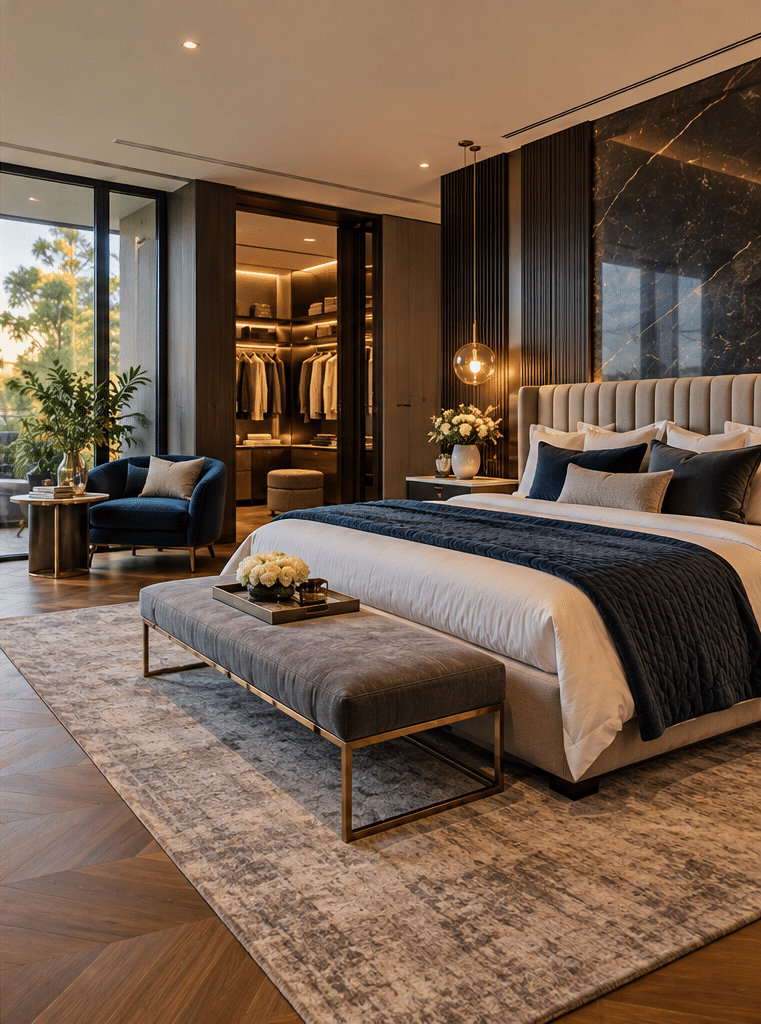
Luxury Bedroom Interior Decor
Bedrooms benefit from a quieter approach.
Comfort should dominate.
Start with the bed, then build symmetry or intentional asymmetry around it.
Useful layers include:
- upholstered bedhead
- high-quality bedding
- bedside lighting
- curtains
- rug
- artwork
- occasional chair where space allows.
Instead of filling the room with objects, focus on tactile quality.
Soft materials can provide the sense of luxury that highly decorative accessories often fail to achieve.
Window treatments matter
Curtains extending from close to the ceiling towards the floor can emphasise height and create softness.
Meanwhile, sheers can diffuse light and improve privacy during the day.
However, window treatments should always suit the room’s actual light, privacy and thermal requirements.
Luxury Bathrooms
Bathrooms offer another opportunity to use materials strongly.
However, excessive variety can make relatively small rooms feel busy.
One or two hero materials are often enough.
For example:
- stone-look floor and wall tile
- timber vanity
- brushed metal tapware.
Or:
- pale stone
- simple cabinetry
- sculptural basin.
Storage deserves special attention.
Removing everyday toiletries from visible surfaces can make a larger visual difference than adding more decoration.
Entries and Hallways
Entries create the transition between outside and inside.
Even small entries can communicate the style of the home.
Consider:
- one substantial artwork
- a console
- wall lighting
- a mirror
- an occasional chair
- a sculptural object.
Again, avoid overcrowding.
The entry should introduce the interior, not reveal every design idea at once.
Furniture, Art and Objects in Luxury Interior Decor
Furniture is usually most effective when collected around a clear design concept rather than purchased as a complete matching set.
A sofa, armchair and side table do not need to come from the same collection.
In fact, variation often creates a more layered result.
Mix Shapes
If most furniture is rectangular, introduce curves through:
- rounded occasional chairs
- oval tables
- circular mirrors
- sculptural lamps.
Similarly, a room filled with soft curves may benefit from a more architectural table or cabinet.
Contrast creates rhythm.
Select Art for the Space
Artwork should be selected because it adds something meaningful to the room.
Large walls often benefit from larger work.
Alternatively, several smaller pieces can form a carefully arranged group.
Avoid selecting art purely because its colours match the sofa.
Good art can introduce tension, personality and contrast.
Decorative Objects Need Space
Luxury interior decor rarely requires every shelf to be full.
Instead, group objects thoughtfully.
Try combining:
- one tall object
- one lower sculptural piece
- a small group of books.
Then leave some empty space around them.
The empty area allows the objects to register visually.
Sustainable Luxury Interior Decor
Increasingly, quality interior design involves considering what happens to materials beyond the day they are installed.
Longevity itself can be a form of sustainability.
A durable table kept for decades may be preferable to repeatedly replacing cheaper furniture as trends change.
Circularity is also becoming more prominent in Australian fitout thinking. In March 2026, the Green Building Council of Australia highlighted reuse, reconfiguration, material impacts and waste reduction when introducing its Green Star Fitouts framework. Although the framework is aimed at building fitouts rather than prescribing residential decorating choices, the broader principle is useful: interiors should be considered beyond their first installation. Green Building Council of Australia on circular fitouts
For homeowners, practical steps may include:
- restoring quality furniture
- reupholstering well-made seating
- choosing durable materials
- buying fewer but better pieces
- sourcing vintage furniture
- avoiding unnecessary renovation
- considering repairability
- selecting timeless fixed finishes
- checking material provenance where relevant.
This approach can also make interiors more personal.
A vintage console beside contemporary furniture often creates more character than a room purchased entirely from one collection.
Where to Spend and Where to Save
A luxury interior does not require the highest-priced version of every product.
Instead, prioritise areas that strongly affect comfort, durability or visual impact.
Areas often worth prioritising
Sofa and everyday seating
These items receive heavy use.
Comfort and construction quality matter.
Flooring
Flooring occupies a large visual area and may be expensive to replace.
Therefore, durability deserves careful consideration.
Lighting
Good lighting affects almost every other design decision.
Window treatments
Curtains and blinds influence privacy, light, temperature and overall softness.
Joinery
Well-designed cabinetry can improve both function and visual order.
Major artwork
One strong piece may provide greater impact than many small decorative purchases.
Areas where smart savings are possible
Decorative styling can often combine investment pieces with affordable items.
For example:
- cushions
- books
- decorative trays
- ceramics
- smaller occasional tables
- baskets
- simple planters.
The important factor is composition rather than price.
Luxury Interior Decor Planning Checklist
Before buying furniture or commissioning custom pieces, work through this process.
- Define how each room will be used.
Identify everyday activities, household size, storage needs and circulation before considering decorative items. - Study the architecture.
Note ceiling heights, windows, doors, existing materials, views and strong architectural features. - Observe natural light.
Look at the room during different parts of the day rather than relying on a single inspection. - Create a restrained material palette.
Select your primary timber, stone, metal and textile direction before shopping widely. - Measure everything.
Record room dimensions, wall lengths, access points and important furniture clearances. - Plan large furniture first.
Position sofas, dining tables, beds and major storage before purchasing accessories. - Develop a layered lighting plan.
Consider ambient, task, accent and decorative lighting rather than relying on one source. - Introduce textiles and artwork.
Use curtains, rugs, cushions and art to bring softness, depth and personality. - Add decorative objects last.
Accessories should complete the room rather than compensate for unresolved design problems. - Edit the final composition.
Remove anything that makes the room feel crowded, repetitive or visually confusing.
This final editing stage is particularly important.
Often, removing two accessories improves the room more than adding another expensive object.
Common Luxury Interior Decor Mistakes
Buying Everything From One Range
Matching furniture can initially feel safe.
However, it may make the home resemble a showroom.
Instead, combine compatible pieces with different shapes, periods or textures.
Following Too Many Trends
Trends can provide inspiration.
Nevertheless, applying every current trend to fixed finishes can cause a home to date quickly.
Use trend-driven colours and shapes more carefully in items that can be changed easily.
Ignoring Scale
This is one of the most noticeable problems in interiors.
Tiny artwork on a huge wall, an undersized rug or an oversized sofa can disturb the entire composition.
Measure before buying.
Making Every Item a Statement
A statement sofa, statement rug, dramatic pendant, highly patterned curtains and oversized artwork may all be attractive individually.
Together, however, they may compete.
Choose a hierarchy.
Decorating Before Solving Storage
Visual calm is difficult to create when everyday belongings have nowhere to go.
Therefore, address functional storage early.
Forgetting the Evening Experience
A room that looks beautiful during daylight may feel flat after sunset.
Evaluate both natural and artificial light.
Copying Inspiration Images Exactly
Use inspiration photographs to identify principles rather than creating replicas.
Ask what you actually like about an image.
Is it:
- the proportions?
- warm lighting?
- colour palette?
- furniture arrangement?
- natural materials?
- amount of empty space?
Once you understand the principle, you can adapt it to your own home.
People Also Ask About Luxury Interior Decor
What makes interior decor look luxurious?
Luxury usually comes from good proportions, quality materials, restrained colour, layered lighting and carefully selected furniture rather than simply adding expensive accessories. A room also needs visual breathing space so individual materials and objects can be appreciated.
How can I make my Australian home look luxurious?
Start by reducing visual clutter, improving lighting and establishing a consistent material palette. Then focus investment on high-impact elements such as flooring, window treatments, large furniture, artwork and professionally detailed joinery.
Does luxury interior decor have to be expensive?
No. Price and good design are not the same thing. Mixing a few high-quality investment pieces with vintage, restored or reasonably priced decorative items can create a sophisticated result when scale, colour and texture are carefully controlled.
What colours work best for luxury interiors?
There is no required luxury colour palette. Warm neutrals are popular because they provide a calm foundation, but deep green, navy, burgundy, charcoal and other rich colours can also work beautifully when balanced with quieter materials and sufficient light.
Is modern luxury interior decor minimalist?
Not necessarily. Modern luxury often uses restraint, but it can still include layered textiles, artwork, decorative furniture and strong architectural details. The key is intentional composition rather than simply reducing the number of objects.
Expert Q&A: Luxury Interior Decor
1. Should all rooms in a luxury home use the same colour palette?
They do not need to be identical.
However, there should usually be some visual connection between adjoining spaces.
For example, the same timber tone may appear in several rooms while wall colours and textiles change. Alternatively, a repeated metal finish or similar warm undertone can provide continuity.
This creates cohesion without making every room look the same.
2. How many materials should be used in one room?
There is no strict number.
However, several major finishes are normally enough.
For example, a living room might contain timber, stone, wool, linen and metal. Additional textures can appear in smaller details.
The important point is avoiding too many competing finishes with no visual relationship.
3. How do you create luxury interior decor in a small apartment?
Prioritise proportion and multifunctional pieces.
Choose furniture that suits the available floor area, use appropriately scaled artwork and improve lighting rather than filling the space with small accessories.
Custom storage can also be valuable because reducing visible clutter immediately makes smaller interiors feel calmer.
Furthermore, one beautiful material used consistently can feel more luxurious than many competing finishes.
4. Is custom furniture necessary for a luxury interior?
No.
Custom furniture becomes valuable when unusual room dimensions, specific storage needs or a distinctive design concept make standard products unsuitable.
However, well-designed ready-made furniture can work extremely well.
A balanced interior might combine custom joinery with readily available sofas, vintage pieces and original artwork.
Therefore, customisation should solve a design problem rather than exist merely as a symbol of luxury.
5. How long should a luxury interior design remain relevant?
There is no reliable expiry date for good interior design.
However, fixed elements such as flooring, cabinetry and stone are usually better approached with longevity in mind because changing them can be disruptive and expensive.
Meanwhile, cushions, smaller furniture, paint and decorative objects can evolve more easily.
This creates a flexible foundation that can adapt as personal tastes change.
Creating a Home That Feels Luxurious Rather Than Simply Looking Expensive
The most successful luxury interior decor is rarely about displaying wealth.
Instead, it reflects consideration.
The sofa fits the room properly.
The lighting works for daily life.
The stone suits its purpose.
Curtains respond to the windows.
Artwork has enough space around it.
Storage removes unnecessary visual noise.
Most importantly, the interior reflects the people living there.
For Australian homeowners, climate and daylight should also form part of the design conversation. A home in Melbourne does not experience the same conditions as one in Brisbane, Perth or Hobart. Therefore, the strongest interiors respond to their location instead of applying the same visual formula everywhere.
Start with function.
Then establish scale.
Select a limited material palette.
Layer lighting carefully.
Choose furniture gradually.
Finally, edit.
That final step is often what separates a merely decorated room from a refined one.
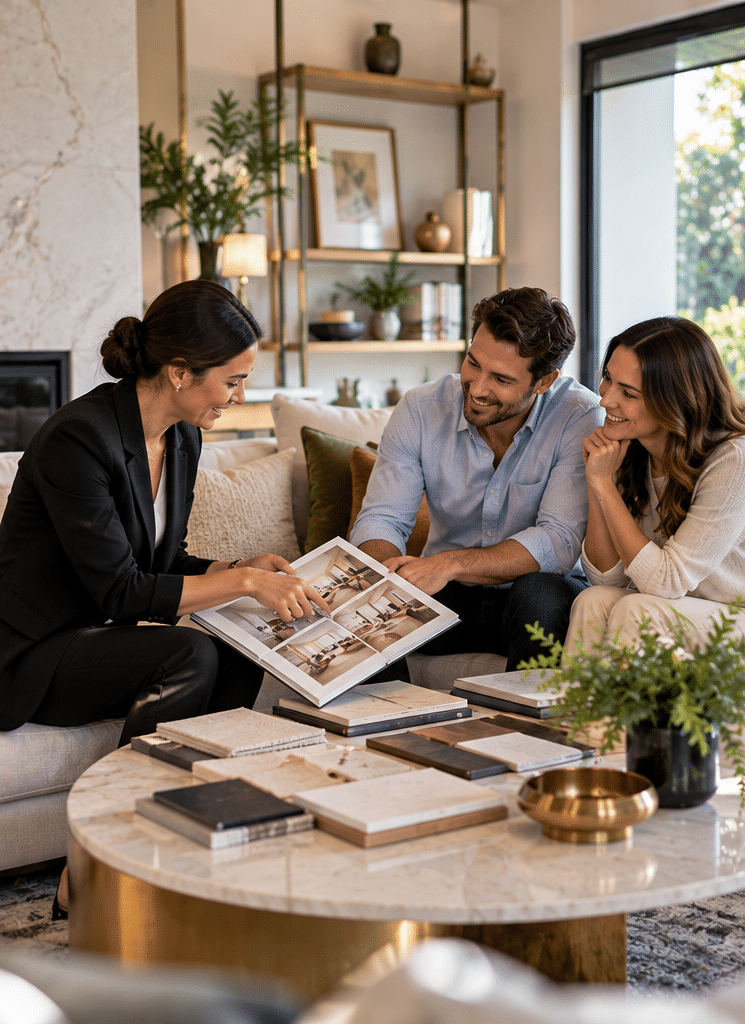
If you are planning a complete interior, refreshing an existing property or looking for professional guidance on creating a more considered residential space, explore VM Lux Avenue’s luxury interior design and décor approach and begin with a clear vision for how you want your home to look, feel and function.