Introduction
A luxury room is more than an attractive space filled with expensive furniture. It is an environment where comfort, thoughtful design, quality materials and personal style come together. Whether you are decorating a Melbourne apartment, upgrading a Sydney family home or refreshing a coastal property in Queensland, a well-designed room can make everyday living more enjoyable.
Luxury interior design has also evolved. While traditional interiors often featured elaborate detailing, ornate furniture and rich finishes, contemporary spaces tend to favour clean lines, natural textures, warm lighting and carefully chosen statement pieces. However, neither approach is automatically better. The right design depends on your lifestyle, architecture, climate and preferences.
Creating a refined interior requires more than selecting beautiful products. You need to consider how the room functions, how sunlight enters, where furniture belongs and which materials will remain attractive over time.
This guide explores practical ways to design luxurious rooms for Australian homes. It covers furniture planning, colour palettes, lighting, sustainable choices, budgets and professional styling considerations.
What is a luxury room?
A luxury room is an interior designed to feel calm, comfortable and considered through its layout, lighting, materials and finishing details. It need not be large or expensive. Instead, quality comes from how well the space suits daily life, controls light and sound, and brings furniture, colour and texture together.

Table of Contents
- What Makes a Luxury Room Feel Luxurious?
- How to Plan a Luxury Room Layout
- Luxury Room Design for the Australian Climate
- Choosing the Right Lighting
- Luxury Room Colours, Materials and Textures
- Selecting Furniture That Balances Style and Comfort
- Luxury Room Ideas for Different Spaces
- Comparing Popular Interior Design Styles
- Sustainable Luxury Room Design
- How Much Does a Luxury Room Cost?
- Step-by-Step Luxury Room Design Checklist
- Common Luxury Interior Design Mistakes
- Working With an Interior Designer
- Maintaining Your Luxury Interior
- People Also Ask
- Expert Questions and Answers
- Conclusion
1. What Makes a Luxury Room Feel Luxurious?
The difference between an ordinary room and a luxurious interior is not always the price of its furnishings. Often, it comes down to proportion, comfort, materials and attention to detail.
A room might contain an expensive marble table and designer sofa but still feel uncomfortable if the layout restricts movement or the lighting creates glare.
Conversely, a modest room can feel sophisticated when its elements complement one another.
Thoughtful space planning
Space planning means arranging furniture and functional areas to support how people use a room.
For example, a living room should provide comfortable seating, clear walking paths and convenient access to lighting and storage.
A well-planned layout also gives each object enough visual space. Rather than filling every corner, it allows important furniture and decorative pieces to stand out.
High-quality materials
Materials influence appearance, comfort and durability.
Timber, natural stone, wool, linen, leather and carefully selected metals can introduce depth and character. However, each material has different maintenance needs.
For instance, marble may create an elegant surface, but some varieties can stain or etch when exposed to acidic substances. Engineered alternatives may be more practical in busy households.
Therefore, material quality should be assessed alongside suitability.
Consistent design language
A cohesive room usually follows a clear design direction.
That does not mean every item must match. Instead, colours, proportions, finishes and furniture shapes should have a visual relationship.
For example, a contemporary living room might combine an understated sofa, textured rug, timber side tables and warm metallic accents.
Although these products differ, their tones and proportions can make them feel connected.
Personal comfort
True luxury also reflects individual needs.
Some homeowners prefer a quiet reading corner, while others value an entertainment area or a spacious dining setting.
Consequently, the best luxury room design is not necessarily the most fashionable. It is the one that works for the people living there.
2. How to Plan a Luxury Room Layout
Before choosing furniture, study the room itself.
Start with its dimensions, architectural features and daily functions. A clear plan helps prevent expensive purchasing mistakes and makes it easier to create a balanced interior.
Measure the available space
Record the room’s length, width and ceiling height.
Next, locate:
- Doors and their opening directions
- Windows and natural light sources
- Power outlets and switches
- Heating and cooling equipment
- Built-in wardrobes and cabinets
- Existing architectural features
Then prepare a basic floor plan.
You can sketch the room on paper or use interior planning software. The aim is to understand the available space before committing to furniture.
Identify the main purpose
Consider how the space will be used.
A family living room may need durable upholstery, generous seating and hidden storage. Meanwhile, a formal lounge might prioritise conversation, artwork and statement furniture.
A luxury bedroom should generally support restful sleep and convenient daily routines.
Once the main purpose is clear, furniture selection becomes more straightforward.
Establish a focal point
A focal point gives the eye somewhere to settle.
It might be a fireplace, large window, artwork, sculptural pendant or distinctive headboard.
However, too many competing focal points can make a room feel unsettled.
Choose one main feature and allow supporting elements to complement it.
Maintain comfortable circulation
Circulation refers to the space people need to move through a room.
As an initial design exercise, you might allow approximately 900 mm for a frequently used walking route, adjusting this for the occupants and layout. This is a planning example, not a universal accessibility or building compliance requirement.
Likewise, test whether chairs can be pulled out, doors can open fully and storage remains accessible.
In a smaller luxury room, good circulation may matter more than adding another decorative item.
3. Luxury Room Design for the Australian Climate
Australia has diverse climate conditions, from warm and humid northern regions to cooler southern areas.
Therefore, interior design should respond to the home’s location rather than rely entirely on international trends.
According to the Australian Government’s YourHome guidance on shading, effective shading can improve comfort and reduce unwanted summer heat gain. The appropriate solution depends on climate, window orientation and seasonal conditions.
Melbourne and southern Australia
Melbourne homes often need to accommodate both cooler winters and warm summer periods.
For a room with north-facing windows, carefully designed shading can help manage direct sunlight across seasons.
Soft curtains, layered window coverings and comfortable upholstery can also contribute to a welcoming interior.
However, decorative curtains alone cannot correct significant insulation or glazing problems.
For substantial thermal improvements, seek qualified building advice.
Sydney and coastal NSW
In Sydney, glare, afternoon sun and summer warmth may influence the choice of furnishings and window treatments.
A bright room can benefit from breathable-looking textiles, soft neutral colours and surfaces that do not create excessive reflections.
For example, a combination of linen-look upholstery, timber furniture and adjustable blinds may produce a relaxed but refined appearance.
Nevertheless, fabric selection should also account for cleaning needs and sun exposure.
Brisbane and Queensland
Warm, humid conditions often make ventilation and moisture management important.
Avoid assuming that heavy materials automatically communicate luxury.
Instead, consider light visual layers, suitable blinds, furniture arrangements that do not obstruct airflow and materials appropriate for the local conditions.
Importantly, decoration cannot resolve persistent dampness or mould. These problems need their underlying causes investigated.
Perth and Western Australia
Western Australian homes may experience strong afternoon sun, particularly where windows face west.
As a result, glare control and appropriate shading deserve early attention.
Consider how direct sunlight affects television screens, artwork, furniture and the temperature of the space.
Rather than using window coverings only as decoration, select them as part of the room’s comfort strategy.
Regional and rural Australian homes
In regional properties, local architecture can provide valuable design direction.
For instance, timber detailing, natural stone, earthy colours and landscape-inspired artwork can connect an interior with its surroundings.
However, a regional property in inland NSW may have different thermal needs from a coastal Queensland home.
The broader principle is simple: a luxury room should look appealing while responding sensibly to its environment.
4. Choosing the Right Lighting for a Luxury Room
Lighting can change the atmosphere of a room more dramatically than many decorative accessories.
A beautifully furnished interior may appear harsh under poorly positioned lights. Conversely, careful lighting can reveal textures, create visual depth and make a space feel welcoming.
The Australian Government’s YourHome lighting guidance recommends combining daylight with appropriate electric lighting. It also highlights the need to consider glare, energy efficiency, room orientation and different lighting functions.
Ambient lighting
Ambient lighting provides general illumination.
Ceiling lights, pendants, wall lights and indirect lighting can contribute to this layer.
For a sophisticated interior, avoid relying exclusively on a single harsh ceiling fixture.
Instead, consider how light reaches different parts of the room.
Task lighting
Task lighting supports specific activities.
Examples include bedside reading lamps, desk lights and illumination near a kitchen preparation surface.
The aim is to provide enough light for the task without creating unnecessary glare.
For example, an attractive bedside pendant may look elegant but still require careful positioning to make reading comfortable.
Accent lighting
Accent lighting draws attention to selected features.
It may highlight artwork, architectural details, shelving or textured walls.
However, excessive accent lighting can make a home feel like a showroom.
Use it selectively to support the room’s focal points.
Colour temperature and controls
Colour temperature describes whether white light appears warmer or cooler. It is measured in kelvins (K).
For many residential settings, warm-white lighting around 2700–3000 K can create a relaxed atmosphere. However, the best choice depends on the activity, room finishes and personal preference.
Dimmers may also help one room support different uses.
For example, a living space can be brighter during cleaning and softer during an evening conversation.
Always check that lights, drivers and dimmers are compatible.
Any new electrical installation or modification should be assessed and carried out by appropriately licensed professionals under the relevant state or territory requirements.
5. Luxury Room Colours, Materials and Textures
Colour establishes mood, while material and texture give a room physical depth.
The goal is not to use the most expensive finishes available. Instead, combine finishes in a way that feels balanced and appropriate.
Neutral foundations
Warm whites, creams, stone shades, taupe and soft greys remain useful because they can support many different design styles.
However, neutral does not need to mean plain.
For example, a room with cream walls can still feel rich when it includes textured upholstery, natural timber, layered window coverings and carefully selected artwork.
Consider the undertones of each colour.
A warm beige floor may appear inconsistent beside a strongly blue-grey wall. Therefore, compare samples together under the actual lighting conditions.
Rich accent colours
Deeper colours can introduce sophistication.
Popular options for refined interiors include forest green, navy, chocolate brown, burgundy and charcoal.
A dark upholstered chair or painted feature wall can add contrast without overwhelming the space.
Nevertheless, assess how the colour behaves throughout the day.
Dark colours can be effective in small rooms, but they require thoughtful lighting and suitable surrounding finishes.
Natural timber
Timber adds warmth and visual variation.
Oak, walnut and other timber finishes can suit both contemporary and traditional interiors.
However, natural timber species differ in hardness, colour, movement and maintenance needs.
Engineered timber products also vary considerably. Ask suppliers about construction, coatings and intended use before choosing.
Stone surfaces
Natural stone can introduce distinctive patterns and tactile appeal.
Marble, limestone, travertine and granite each have different characteristics.
Some stones are more porous than others, while certain finishes require specialist cleaning.
Therefore, ask for product-specific care guidance rather than treating all stone surfaces alike.
Fabric and texture
Luxury room styling benefits from combining different textures.
For example, a smooth leather chair may sit beside a woven wool rug and linen-look curtains.
This contrast can make an understated colour palette feel more interesting.
However, households with children or pets may prefer durable performance fabrics and removable cushion covers.
Comfort, cleaning and expected wear should influence fabric selection alongside appearance.
6. Selecting Furniture That Balances Style and Comfort
Furniture should suit the scale of the room and the needs of its occupants.
An oversized sofa can dominate a small apartment, while undersized pieces may feel disconnected in a spacious living area.
Start with anchor furniture
Anchor furniture refers to the main pieces that define the layout.
Examples include:
- A sofa in a living room
- A bed in a bedroom
- A dining table in a dining room
- A desk in a home office
Choose these pieces before purchasing smaller accessories.
For example, selecting the sofa first helps determine the suitable rug size, coffee table proportions and placement of side tables.
Consider proportions
Furniture should relate to the room’s dimensions and architectural scale.
A low-profile sofa may work well in a contemporary apartment. Meanwhile, a large room with high ceilings might accommodate taller furniture and substantial decorative lighting.
However, proportion is not just about size.
The visual weight of a piece also matters. Dark, bulky furniture may appear heavier than an open-frame design of similar dimensions.
Test comfort before committing
Appearance alone cannot determine whether a chair or sofa is suitable.
Consider seat depth, back support, cushion firmness and the height of the seating surface.
Likewise, check whether dining chairs remain comfortable during longer meals.
Where possible, test furniture in person or review return conditions carefully.
A luxury room should remain enjoyable after the initial excitement of its new appearance has faded.
7. Luxury Room Ideas for Different Spaces
Different rooms require different design priorities.
The following examples show how refined interiors can be tailored to everyday Australian living.
Luxury living room ideas
A living room often serves several functions, including conversation, relaxation and entertainment.
Begin with a comfortable seating arrangement.
Next, introduce a rug that visually connects the primary furniture. A rug that is too small may make the layout appear fragmented, although the ideal size depends on the room.
Consider a combination of:
- A well-proportioned sofa
- One or two occasional chairs
- A practical coffee table
- Layered lighting
- A textured rug
- Selected artwork
- Concealed or attractive storage
For example, a Melbourne townhouse might feature a warm grey sofa, walnut coffee table, cream rug and sculptural floor lamp.
However, there is no need to copy a display-home arrangement exactly.
If the family enjoys movie nights, seating comfort and screen placement should take priority.
Luxury bedroom ideas
A luxury bedroom should encourage relaxation while providing practical storage and convenient lighting.
Start with the bed and mattress.
A decorative bedhead can create a focal point, but the mattress, bedding and room temperature are likely to matter more to daily comfort.
Next, consider bedside tables and lighting.
Soft layers of bedding, carefully selected curtains and a calm colour palette can help create a restful atmosphere.
For a sophisticated finish, use different textures rather than many competing patterns.
For example, a neutral upholstered bedhead can be paired with cotton bedding, a textured throw and understated bedside lamps.
If morning sunlight disturbs sleep, suitable blockout window coverings may be worth prioritising.
Luxury dining room ideas
A dining room should support conversation, comfort and convenient movement.
Choose a table according to the room’s dimensions and the number of regular users.
Then confirm there is enough space to move chairs without obstructing important walkways.
A pendant light can create a strong focal point above the table.
However, its placement should avoid glare and allow clear sightlines between people.
For smaller Australian homes, an extendable dining table may offer greater flexibility than a large fixed table.
In addition, a sideboard can provide useful storage for tableware and serving accessories.
Luxury home office ideas
A home office can feel refined without sacrificing productivity.
Begin with an ergonomic desk and chair suited to the person using them.
Then position the workstation to reduce screen glare.
Good task lighting, accessible storage and comfortable room temperatures are more valuable than decorative features that interfere with work.
To create a sophisticated appearance, consider timber finishes, restrained artwork and concealed cable management.
Acoustic comfort also deserves attention.
Soft furnishings may help reduce some reflected sound, although serious sound transmission problems require more specialised solutions.
Luxury guest room ideas
A guest room should feel welcoming and easy to use.
Provide comfortable bedding, suitable lighting and a clear place for visitors to store their belongings.
Where space permits, include a bedside surface, accessible power outlet and mirror.
A neutral palette with a few distinctive accessories can work well because it accommodates different tastes.
However, avoid filling every surface with decorative objects.
Guests usually appreciate practical space for personal items.
The most successful guest bedroom creates a sense of hospitality without making the space difficult to maintain.
8. Comparing Popular Luxury Room Interior Styles
There is no single style that defines luxury.
Some homeowners prefer elaborate traditional interiors, while others feel more comfortable with restrained contemporary design.
The comparison below can help identify the direction that suits your home.
| Design style | Main features | Suitable spaces | Considerations |
| Modern luxury | Clean lines, refined surfaces, controlled colour palettes | Contemporary apartments and new homes | Can feel cold without texture |
| Classic luxury | Decorative mouldings, detailed furniture, rich textiles | Heritage-inspired and traditional homes | Requires careful control of visual detail |
| Minimalist luxury | Simple forms, uncluttered layouts, limited decoration | Compact apartments and calm living spaces | Storage and material quality become important |
| Coastal luxury | Light colours, natural textures, relaxed furnishings | Coastal homes and bright family interiors | Avoid relying on decorative coastal clichés |
| Contemporary European | Elegant proportions, sculptural furniture, mixed traditional and modern elements | Townhouses, period homes and refined apartments | Needs a consistent relationship between old and new |
| Transitional luxury | A blend of traditional and modern furniture | Renovated homes with existing character | Inconsistent finishes can make the design feel disconnected |
How to choose the right style
Begin with the property’s architecture.
A Victorian terrace in Melbourne may suit a blend of heritage details and contemporary furniture.
Meanwhile, a newly built apartment might benefit from simpler forms and a restrained material palette.
Next, consider the household’s daily habits.
A highly decorative room may require more regular cleaning. Similarly, delicate finishes may be less suitable for homes with active children or pets.
Ultimately, the strongest style is one that feels appropriate to both the building and its occupants.
9. Sustainable Luxury Room Design in Australia
Sustainability and sophisticated design can work together.
However, sustainable interiors require more than purchasing products labelled as environmentally friendly.
Consider product lifespan, material sourcing, repairability, energy use and indoor air quality.
Invest in durable furniture
A well-made piece that remains useful for many years may be a better choice than repeatedly replacing lower-quality items.
Look for sturdy construction, repairable components and upholstery that suits the expected level of use.
Nevertheless, high price does not automatically mean high durability.
Ask suppliers about product construction, maintenance and warranty conditions.
Reuse existing pieces
Not every redesign requires a completely new furniture collection.
An existing timber table might work beautifully with updated chairs.
Similarly, quality furniture may be suitable for reupholstering or professional restoration.
Reusing suitable products can also preserve character in older homes.
However, assess whether refurbishment is technically practical and cost-effective before proceeding.
Consider indoor air quality
Paints, coatings, adhesives and some new furnishings may release volatile organic compounds, commonly called VOCs.
The Australian Government’s YourHome indoor air quality guidance recommends considering lower-emission products and maintaining suitable ventilation when introducing new finishes and furnishings.
For this reason, ask manufacturers for relevant product information.
Also, ventilate newly decorated rooms as appropriate to the products used and the outdoor conditions.
A beautiful interior should not ignore the comfort and wellbeing of its occupants.
Reduce unnecessary energy use
Lighting controls, efficient light sources and practical window treatments can contribute to a more considered interior.
However, the effectiveness of a solution depends on the building and how it is used.
For example, curtains may help manage light and privacy, but they are not a substitute for correcting poorly performing glazing where a significant building issue exists.
10. How Much Does a Luxury Room Cost in Australia?
The cost of creating a luxury room varies considerably.
A decorative refresh of an existing bedroom will usually involve different work from a complete renovation with new joinery, lighting circuits and flooring.
Instead of relying on a universal price, build a budget around the actual scope.
Main cost categories
Furniture: Sofas, beds, dining tables, chairs and storage can account for a substantial share of spending.
Materials: Flooring, wall finishes, upholstery and window coverings influence both appearance and cost.
Lighting: Decorative fittings, lamps and any electrical installation should be considered separately.
Custom joinery: Built-in cabinets and bespoke furniture can improve space efficiency but require detailed measurement and fabrication.
Professional services: Depending on the project, costs may include interior design, styling, delivery, installation and trade services.
Contingency: A separate allowance can help manage unforeseen expenses. Its appropriate size depends on the project’s complexity and risk.
Compare different investment approaches
| Project approach | Typical scope | Main advantage | Main limitation |
| Styling refresh | Accessories, soft furnishings, art and layout changes | Makes use of existing furniture | Cannot correct significant layout or building issues |
| Furniture upgrade | Replacement of selected major pieces | Can improve comfort and appearance | Existing finishes may limit the result |
| Full interior redesign | Coordinated furniture, finishes and styling | Creates a consistent design direction | Requires more planning and investment |
| Renovation with design | Building changes, finishes, joinery and furnishings | Can address functional problems | Greater cost, complexity and administrative requirements |
These categories are illustrative rather than fixed pricing packages.
Where should you spend more?
Prioritise the elements used most frequently.
In a bedroom, that might mean a suitable mattress and practical window coverings.
In a living room, the sofa and everyday lighting may deserve a greater share of the budget.
For a dining room, durable table surfaces and comfortable chairs are often more useful than numerous decorative accessories.
Meanwhile, inexpensive improvements such as reducing clutter and rearranging furniture can sometimes produce meaningful visual results.
How to request an accurate quote
Provide the designer or supplier with room measurements, photographs, preferred materials and an explanation of your goals.
Also, identify which existing items should remain.
Ask for a written breakdown that distinguishes product purchases, labour, delivery, installation and professional fees.
Because custom furniture and renovation work can involve longer lead times, confirm the proposed schedule before committing.
Most importantly, compare quotes based on the same scope rather than the final price alone.
11. Step-by-Step Luxury Room Design Checklist
A structured process can make interior design easier to manage.
Use this checklist before purchasing major furniture or beginning renovation work.
1. Define your design objective
Decide what needs to improve.
For example, you may want better storage, improved comfort or a more sophisticated appearance.
Write down the three most important outcomes.
2. Assess the existing room
Measure the space and photograph it from several angles.
Identify natural light sources, awkward corners, existing finishes and furniture worth retaining.
Also, observe how the room feels at different times of day.
3. Establish your budget
Decide how much you can reasonably spend.
Separate essential improvements from optional decorative purchases.
If building work is involved, seek professional guidance on an appropriate contingency.
4. Choose a design direction
Select a style that complements the home’s architecture.
Create a small collection of reference images showing suitable colours, materials and furniture shapes.
Avoid combining too many unrelated concepts.
5. Prepare a furniture layout
Position anchor furniture first.
Then test walking routes, access to storage and door clearances.
If possible, mark furniture dimensions on the floor before purchasing.
6. Select the colour palette
Choose a primary colour, supporting neutrals and a small number of accents.
View physical samples in the room during daylight and under artificial lighting.
Colours may appear different from online product photographs.
7. Plan the lighting
Identify ambient, task and accent lighting needs.
Consider natural light, glare and the controls required for daily activities.
Consult licensed tradespeople where installation work is needed.
8. Finalise materials and furniture
Compare durability, comfort, maintenance and delivery conditions.
Request samples for important finishes.
For custom pieces, confirm drawings and measurements before approving fabrication.
9. Install and style in stages
Complete necessary building or finishing work before bringing in delicate furnishings.
Then position furniture, rugs and larger decorative elements.
Finally, add smaller accessories and artwork.
10. Review the finished space
Use the room normally for a period and note any problems.
Check whether lighting is comfortable, storage is practical and circulation remains clear.
Make small adjustments before purchasing further accessories.
A luxury room should be judged by how well it functions, not simply how it looks in photographs.
12. Common Luxury Interior Design Mistakes
Even an expensive interior can fall short when basic planning is overlooked.
Buying furniture before measuring
A large sofa might look ideal in a showroom but overwhelm a compact apartment.
Likewise, a dining table may fit physically yet leave too little room for chairs.
Always confirm dimensions before ordering.
Following trends too closely
Trends can introduce fresh ideas, but they may not suit every home.
For example, a highly stylised interior might look impressive online while proving difficult to maintain.
Instead, use trends selectively and build the main design around enduring preferences.
Ignoring natural light
A dark colour palette may be attractive in one setting but unsuitable in another without additional lighting.
Similarly, reflective finishes can create glare near large windows.
Assess the room’s actual conditions rather than copying a reference photograph.
Using too many statement pieces
A sculptural sofa, bold rug, ornate mirror and dramatic chandelier may compete for attention.
Instead, establish one clear focal point.
Then use simpler supporting elements to create balance.
Sacrificing function
Furniture that is uncomfortable or difficult to clean can become frustrating.
The same applies to rooms without adequate storage.
Luxury should enhance daily life, not make ordinary activities more difficult.
Overlooking maintenance
Certain stones, metals and delicate textiles require specialist care.
Before purchasing, check cleaning instructions, likely wear and the availability of replacement components.
A beautiful material is not necessarily the best material for every household.
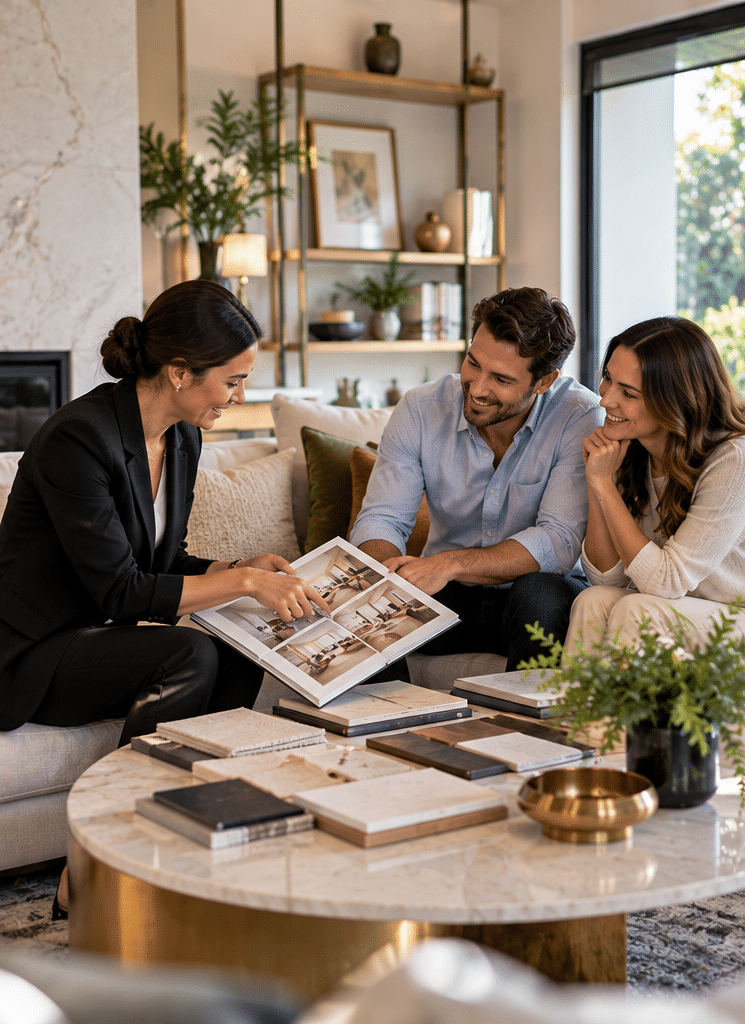
13. Working With an Interior Designer for a Luxury Room
Professional guidance can be valuable when a project involves several rooms, complicated layouts or coordinated furniture and finishes.
However, the level of service required depends on the scope.
Interior design versus interior styling
Interior design generally involves planning the space, selecting finishes, developing layouts and coordinating relevant design decisions.
Interior styling focuses more closely on furniture arrangement, decorative layers, colour coordination and presentation.
The boundary between services can vary by business.
Therefore, confirm exactly what a professional includes in their proposal.
Property staging versus designing to live
Property staging prepares a home for presentation to potential buyers.
The design may highlight room size, function, natural light and general appeal.
By contrast, designing a home for ongoing occupation places greater emphasis on the current household’s preferences, practical needs and long-term comfort.
For example, a staged room might use furniture to demonstrate its possible function, while a homeowner may need additional storage or a different seating arrangement.
Neither approach is inherently superior. They serve different purposes.
When professional advice may help
Consider professional design support when:
- You are renovating several connected rooms.
- You need custom furniture or built-in storage.
- You are unsure how to coordinate finishes.
- You want to preserve existing architectural character.
- You need help managing product selection and installation.
- You are preparing a property for sale and require styling advice.
Understanding the design process
A typical process begins with a consultation and project brief.
Next, the designer may develop a concept, furniture plan, materials selection and proposed budget.
Once approved, the project can move towards sourcing, installation and finishing.
However, the sequence varies according to the service and complexity.
Before proceeding, clarify deliverables, revision allowances, product ownership, payment stages and responsibilities for trade coordination.
If construction, structural changes or regulated electrical and plumbing work is proposed, establish which qualified professionals will assess and carry out that work.
Any relevant permits, approvals and compliance checks are project administration matters that should be reviewed with appropriately licensed practitioners and the responsible local authority. This article is not legal or building compliance advice.
14. Maintaining Your Luxury Room Over Time
A refined interior should continue to feel comfortable and attractive after installation.
Fortunately, thoughtful maintenance can reduce unnecessary wear.
Follow material-specific care instructions
Timber, stone, leather and upholstery require different cleaning methods.
Avoid assuming that one general-purpose cleaner is suitable for every surface.
For example, some stone finishes can be damaged by inappropriate acidic cleaners.
Always check supplier recommendations.
Protect furniture from unnecessary exposure
Direct sunlight can affect the appearance of certain fabrics and finishes over time.
Where appropriate, use suitable window coverings and reconsider furniture placement.
Likewise, manage spills promptly according to the material’s care instructions.
Refresh decorative elements gradually
A complete redesign is not necessary whenever tastes change.
Updating cushions, artwork or selected accessories can give the room a different character.
However, maintain a consistent relationship between new items and the existing palette.
Review comfort as needs change
Household needs are not fixed.
A room that once served mainly as a formal lounge may later become a family entertainment area.
Therefore, review furniture arrangements and storage periodically.
An adaptable luxury room can remain useful as daily routines evolve.
15. People Also Ask: Luxury Room Design in Australia
1. What makes a room look luxurious?
A room often looks luxurious when furniture is well proportioned, materials are thoughtfully combined and lighting highlights the design without creating glare. Consistent colours, quality finishes and reduced visual clutter can create a refined appearance without requiring every item to be expensive.
2. How can I make a small room look luxurious?
Start with appropriately sized furniture, effective storage and a cohesive colour palette. Then use layered lighting, carefully placed mirrors and selected decorative accents to create visual depth without overcrowding the space.
3. What colours are best for a luxury room?
Warm whites, taupe, stone, charcoal and muted earthy colours are versatile choices for Australian interiors. However, deeper tones such as navy, forest green and burgundy can also create sophisticated spaces when supported by suitable lighting and complementary materials.
4. Can you create a luxury room on a budget?
Yes, a luxurious appearance can be achieved through careful planning, furniture arrangement and selective upgrades. Prioritise comfort, lighting and a few quality pieces before purchasing expensive decorative accessories.
5. Is modern or classic luxury better for Australian homes?
Neither style is universally better because the choice depends on the home’s architecture and the owner’s preferences. Modern luxury often suits contemporary spaces, while classic or transitional design may complement traditional homes and interiors with heritage features.
16. Expert Questions and Answers About Luxury Room Design
Q1. How do I combine modern furniture with traditional architectural features?
Begin by identifying which existing architectural details should remain prominent.
For example, decorative ceiling cornices, timber floors or an original fireplace may already establish the room’s character.
Next, choose contemporary furniture with proportions and finishes that complement those features.
A simple sofa can work beautifully beside detailed architectural mouldings when the colour palette is consistent.
However, avoid introducing too many contrasting materials or unrelated furniture styles.
The aim is to create a deliberate relationship between old and new rather than making every element identical.
Q2. Which materials are most suitable for a luxurious family living room?
The most suitable materials depend on the room’s daily use, cleaning requirements and desired appearance.
For a busy family space, consider durable upholstery, washable or maintainable rugs and furniture surfaces that can tolerate regular use.
Natural timber can introduce warmth, while carefully chosen performance fabrics may simplify cleaning.
However, no material is completely resistant to wear or damage.
Request samples, examine care instructions and confirm warranty conditions before purchasing.
This approach helps balance an elegant appearance with realistic maintenance expectations.
Q3. How can I make a luxury room feel warm without making it visually cluttered?
Start with a simple arrangement of essential furniture.
Then introduce warmth through texture, soft lighting and a controlled selection of decorative pieces.
For example, a neutral living room might combine timber furniture, a woven rug, upholstered seating and warm-white lamps.
These elements provide visual richness without requiring a large number of accessories.
Additionally, leave some surfaces clear and give important objects enough space.
The result can feel inviting while maintaining the calm atmosphere associated with understated luxury.
Q4. Should I invest in custom furniture or ready-made furniture?
Both options can work well, depending on the project.
Custom furniture may be useful for unusual room dimensions, specific storage requirements or a particular design concept.
However, bespoke pieces can involve higher costs, longer production periods and more detailed approval processes.
Ready-made furniture may offer easier product comparison, shorter lead times and clearer opportunities to test comfort.
Before deciding, compare dimensions, construction quality, delivery conditions and overall cost.
For many homes, a combination of custom joinery and carefully selected ready-made furniture provides a practical solution.
Q5. How can I design a luxury room that will still look appealing in ten years?
Focus on durable materials, comfortable furniture and a design that suits the architecture of the home.
Choose major pieces based on quality and function rather than short-lived trends.
For example, a well-proportioned sofa and suitable timber furniture may remain useful through several decorative updates.
Then express changing preferences through smaller items such as cushions, artwork and accessories.
Nevertheless, no design can be guaranteed to remain fashionable for a particular period.
A more realistic goal is to create a room that ages comfortably, can be maintained and remains adaptable to your needs.
17. Conclusion: Creating a Luxury Room That Reflects Your Lifestyle
A beautiful luxury room should offer more than visual appeal. It should support comfort, function and the everyday routines of the people who use it.
From choosing suitable furniture to understanding natural light, every decision contributes to the finished result.
For Australian homes, climate, architecture and material performance are particularly important. A room that responds to its surroundings is often more enjoyable than one designed solely around an international trend.
Start by identifying what matters most to you. Then build a clear design plan, select materials carefully and invest in features that improve your daily experience.
Remember that sophisticated interiors do not always require extravagant spending. Thoughtful proportions, good lighting, quality finishes and personal details can make a meaningful difference.
Ready to transform your space?
Whether you are refreshing a living room, developing a complete residential interior or preparing a Melbourne property for presentation, professional planning can help bring your ideas together.
Discover how thoughtful interiors can combine European-inspired elegance with contemporary Australian living. Explore VM Lux Avenue’s interior design and property styling services and enquire about a design consultation tailored to your property, preferences and project goals.