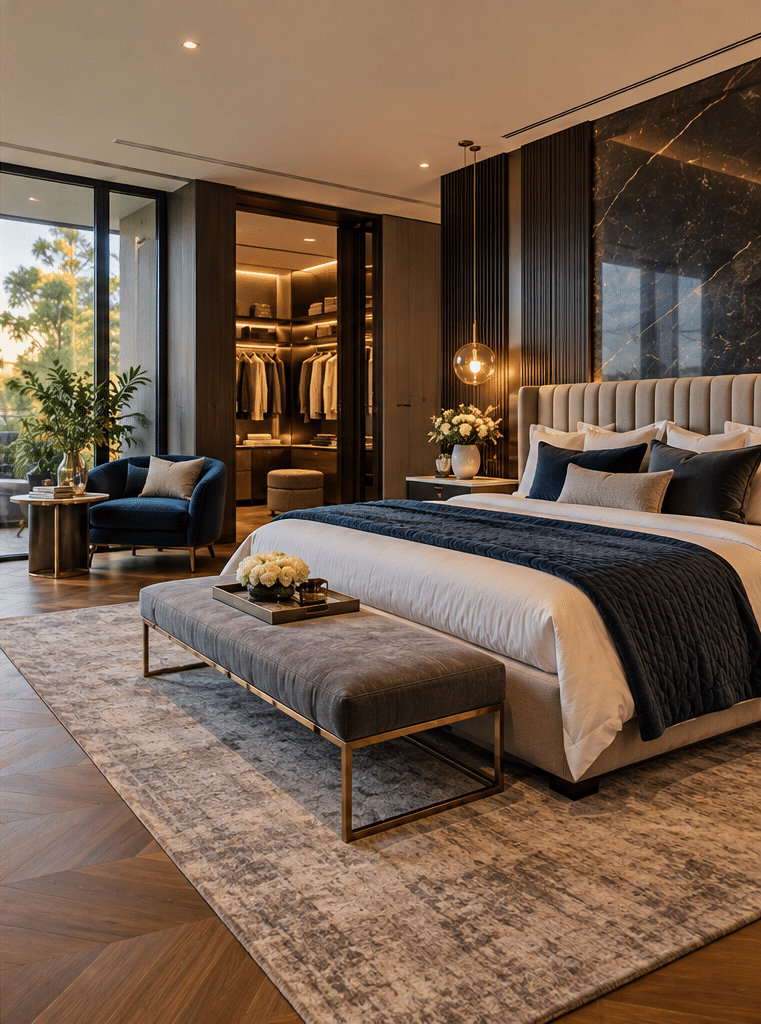
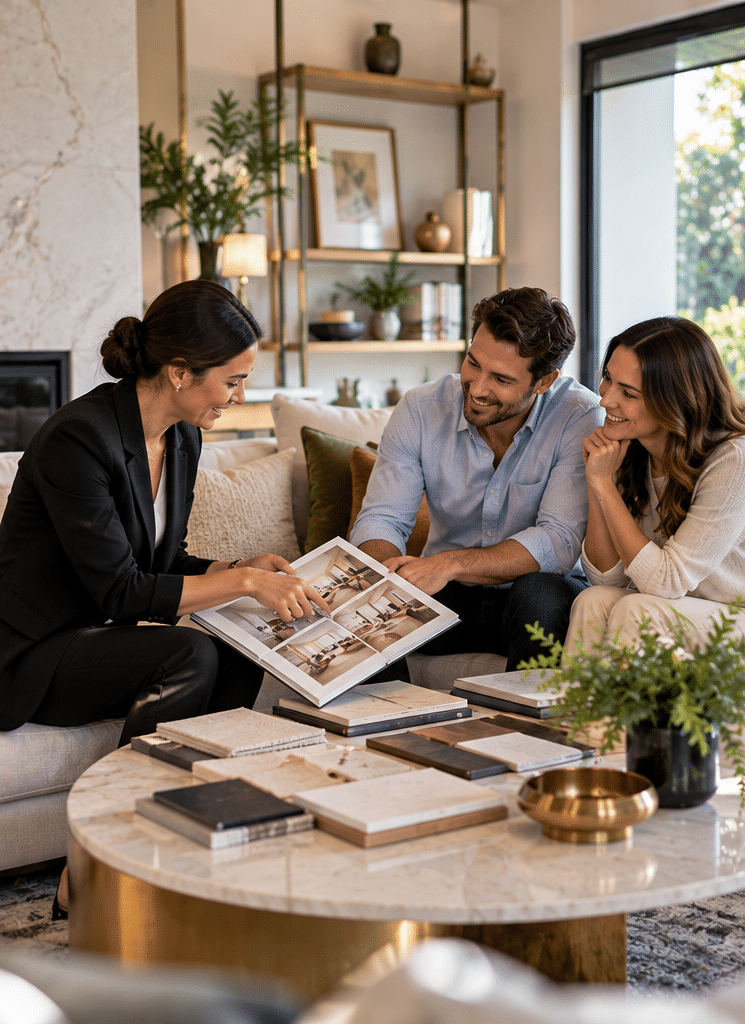
Choosing a luxury home interior designer & decorator is about far more than selecting beautiful furniture, premium stone or an elegant colour palette. For Australian homeowners, the right professional can help turn lifestyle needs, architectural character and personal taste into a home that works as well as it looks. The process may involve space planning, lighting, custom joinery, furniture, materials, art, styling and coordination with specialist trades.
Luxury interiors also require restraint. Expensive finishes alone do not create a refined home. Instead, successful interiors usually rely on proportion, circulation, natural light, material quality, craftsmanship and a consistent visual language.
For homeowners in Melbourne and across Australia, understanding how interior designers and decorators work can also prevent costly changes later. Decisions about cabinetry, electrical points, flooring, lighting and furniture dimensions often affect one another. Therefore, early planning can be just as important as the final styling.
What Is a Luxury Home Interior Designer & Decorator?
A luxury home interior designer & decorator plans both the functional and visual character of a high-end residence. The role can include space planning, materials, custom joinery, lighting, furniture, art and styling, while coordinating specialist consultants and trades so the finished home feels coherent, comfortable and suited to its owners.

Table of Contents
- What does a luxury home interior designer & decorator do?
- Interior designer vs decorator vs other professionals
- What luxury interior design means in Australia
- How a luxury residential interior project is planned
- Space planning and architectural flow
- Materials, finishes and craftsmanship
- Lighting design for luxury Australian homes
- Furniture, art and styling
- Sustainable luxury and healthier interiors
- Budgeting for luxury interior design
- How to choose the right designer
- Common mistakes to avoid
- People Also Ask
- Expert Q&A
- Conclusion
What Does a Luxury Home Interior Designer & Decorator Do?
A luxury home interior designer & decorator connects practical planning with visual refinement.
The Design Institute of Australia explains that interior designers consider space allocation, traffic flow, building services, furniture, fixtures, finishes and the overall function, comfort and appearance of interior spaces. Interior decorators, meanwhile, tend to focus more strongly on finishes, furniture, colour, textiles and styling.
You can review the distinction in the Design Institute of Australia guidance on interior design and decoration.
On a sophisticated residential project, those areas often overlap. However, the boundaries still matter.
For example, a decorator may transform a completed living room through furniture, rugs, art, window treatments and accessories. By contrast, an interior designer may become involved earlier, when decisions are still being made about circulation, cabinetry, lighting positions, materials or the relationship between rooms.
A luxury project can therefore include:
- Initial client and lifestyle consultation
- Existing-home assessment
- Concept and mood development
- Space planning
- Furniture layouts
- Colour direction
- Floor and wall finishes
- Custom joinery concepts
- Kitchen and bathroom interior selections
- Decorative and architectural lighting
- Furniture sourcing
- Window treatments
- Rugs and textiles
- Art placement
- Accessories and final styling
- Supplier coordination
- Trade coordination within the agreed professional scope
- Installation and final presentation
However, an interior designer does not automatically replace an architect, structural engineer, building surveyor, electrician, plumber or other licensed professional.
Where structural, technical or regulated work is involved, the appropriate qualified professional should be engaged.
Luxury Home Interior Designer & Decorator vs Other Design Roles
Understanding each role makes it easier to appoint the right team.
| Professional | Typical Focus | Common Residential Tasks | Best Suited To |
| Luxury home interior designer & decorator | Function and aesthetics | Layouts, finishes, joinery concepts, lighting, furniture, art and styling | Whole-home interiors and high-detail renovations |
| Interior designer | Interior planning and functionality | Space planning, materials, cabinetry, fixtures and interior documentation | Renovations, new homes and significant interior changes |
| Interior decorator | Appearance and atmosphere | Furniture, fabrics, colour, art, rugs and decorative pieces | Furnished homes and cosmetic transformations |
| Architect/building designer | Building form and architectural planning | Building layout, additions, façades and architectural documentation | New builds and significant structural changes |
| Stylist | Presentation | Furniture arrangement, accessories and visual finishing | Photography, events, property presentation and final styling |
| Specialist consultant | Technical expertise | Engineering, lighting, acoustics, building services or other specialist work | Projects requiring technical input |
The professional team should always reflect the project’s actual complexity.
For instance, changing a sofa and window treatment is very different from removing walls or relocating services.
Therefore, discuss responsibilities early rather than assuming one consultant will manage every aspect of the project.
What Does Luxury Interior Design Mean in an Australian Home?
Luxury is frequently confused with expense.
However, high-end residential design is usually more convincing when luxury is expressed through quality rather than quantity.
A carefully designed Melbourne residence, for example, might use a restrained collection of natural stone, timber, textured plaster, custom cabinetry and well-selected furniture rather than filling every surface with decorative pieces.
Luxury begins with proportion
Furniture must relate correctly to the size of the room.
A sofa that is too small can make a large living space feel unresolved. Conversely, oversized pieces can interrupt circulation and make an otherwise impressive interior uncomfortable.
Therefore, designers commonly begin with measurements and floor plans before choosing furniture.
Luxury also depends on continuity
A home should not feel like a sequence of unrelated Pinterest boards.
Instead, colours, materials, architectural details and furniture forms should connect from one area to another.
That does not mean every room must look identical. Rather, there should be a recognisable visual language throughout the house.
Australian climate matters
Australian homes operate across very different climate conditions.
Melbourne may require different thermal and lighting decisions from Brisbane, Darwin or Perth. Likewise, a coastal residence may need material selections that respond differently from an inner-city apartment.
The Australian Government’s YourHome guidance notes that renovations can be an opportunity to improve insulation, daylight, shading, layout and overall comfort.
This matters because luxury should not only be visible. It should also be felt through comfortable temperatures, useful natural light and spaces that work throughout the year.
How a Luxury Home Interior Designer & Decorator Plans a Project
A well-run luxury residential project normally moves from broad decisions to detailed ones.
Changing that order creates problems.
For example, buying a statement dining table before confirming the room’s circulation can result in an expensive piece that simply does not fit comfortably.
A disciplined process is more reliable.
1. Define how you actually live
Before discussing finishes, identify how the home must function.
Ask questions such as:
- How many people live in the home?
- Do you entertain frequently?
- Do you work from home?
- Are children or pets part of the household?
- How much storage is needed?
- Which rooms are used every day?
- Do you prefer formal or casual living?
- Are there existing pieces that must remain?
- Will your needs change over the next five or ten years?
These questions may feel less glamorous than selecting marble. However, they often determine whether the finished home remains enjoyable after the initial excitement disappears.
2. Study the existing architecture
Good interior design responds to the building.
A Victorian residence in Melbourne, for example, may benefit from a different approach from a contemporary apartment or newly constructed coastal home.
Original details do not always need to be copied. Instead, they can be interpreted.
A traditional cornice might sit beside contemporary lighting. Likewise, European-inspired furniture may be balanced by clean contemporary joinery.
The objective is coherence rather than imitation.
3. Create the design direction
Next, the designer can establish the project’s visual language.
This may include:
- Reference imagery
- Material samples
- Colour palettes
- Furniture direction
- Lighting references
- Joinery ideas
- Metal finishes
- Textile samples
- Art direction
At this stage, avoid judging individual pieces in isolation.
A dark timber cabinet, for example, may look heavy on its own but elegant when balanced with pale stone, soft walls and carefully controlled lighting.
4. Resolve layouts
Layouts should come before detailed purchasing.
The designer can test furniture sizes, circulation and focal points.
This helps answer practical questions.
Can someone walk comfortably behind the dining chairs?
Does the sofa align with the architecture?
Can doors open without hitting furniture?
Is the television dominating a room that is supposed to focus on conversation or views?
These small questions have a large effect on everyday comfort.
5. Finalise specifications
Once the design is resolved, key products and finishes can be documented.
Clear specification is important because vague selections create uncertainty during purchasing and construction.
The Australian Government’s YourHome guidance also recommends clearly specifying desired products and sustainability requirements rather than assuming they will be understood automatically.
A 10-Step Checklist for Starting With a Luxury Home Interior Designer & Decorator
Before your first major design meeting, prepare the following:
- Create a realistic project brief. List the rooms involved and what you want to improve.
- Set an overall investment range. Include design, construction, furniture, lighting and installation where relevant.
- Identify your non-negotiables. These might include an existing artwork, dining table or architectural feature.
- Collect references selectively. Ten useful images are often more valuable than hundreds of unrelated screenshots.
- Explain your lifestyle. Mention children, pets, entertaining, working from home and storage requirements.
- Confirm the professional scope. Understand whether you need design, decoration, procurement, styling or broader project coordination.
- Discuss timing early. Custom furniture, stone, cabinetry and imported products may involve longer lead times.
- Ask who approves each decision. This becomes especially important when several family members or project consultants are involved.
- Clarify documentation. Establish which drawings, schedules, specifications and approvals are included.
- Confirm how changes are handled. Changes after orders or construction begins can affect cost and timing.
This onboarding stage may appear administrative. However, it often protects the creative process later.
Space Planning: The Hidden Foundation of Luxury
Beautiful finishes cannot fix poor circulation.
For that reason, space planning is one of the most valuable contributions a luxury home interior designer & decorator can make.
Consider a large open-plan living room.
It may look generous on a floor plan. Yet without zones, it can feel empty and difficult to furnish.
A designer might create:
- A primary conversation area
- A secondary reading chair
- A clearly defined dining zone
- A lighting hierarchy
- A strong connection to outdoor space
- Visual separation without physical walls
Conversely, a compact home may require furniture that performs several functions.
Custom joinery might combine television storage, bookshelves and concealed cabinets. A banquette can provide dining seating while using less floor space than freestanding chairs.
The lesson is simple: luxury is partly about removing friction.
Doors should open easily. Storage should be where it is needed. Furniture should support movement. Frequently used objects should have logical homes.
When those details disappear into the background, the space feels effortless.
Materials and Finishes in Luxury Australian Interiors
Material selection has a major influence on how a home ages.
Natural stone, timber, metal, glass, plaster, textiles and high-quality engineered products can all work in premium interiors. However, the best option depends on location, maintenance expectations and usage.
The Australian Government’s YourHome resource notes that material choices influence durability, energy use, comfort and environmental impact. It also recommends considering durable products and materials with appropriate environmental credentials.
You can explore the broader principles through Australian Government YourHome renovation guidance.
Natural stone
Marble, limestone, travertine and other natural stones can create depth because every slab varies.
However, natural stone is not maintenance-free.
Some stones can stain, etch or require sealing. Therefore, the stone should be chosen according to how the surface will actually be used.
A dramatic marble may be perfect for a feature vanity. Yet a busy family kitchen may require a different balance between appearance and maintenance.
Timber
Timber introduces warmth and visual softness.
It can be used for:
- Flooring
- Joinery
- Wall panelling
- Furniture
- Doors
- Ceiling details
However, species, finish, moisture conditions and exposure should all be considered.
Textiles
Fabric is one of the fastest ways to make a room feel richer.
Curtains, rugs, upholstered furniture and cushions also improve acoustic softness.
For a refined result, consider texture as carefully as colour.
Wool, linen, velvet and textured blends can create depth even within a restrained neutral palette.
Metals
Bronze, brass, stainless steel, blackened metal and other metallic finishes work best when treated as part of a whole-home material palette.
Too many unrelated finishes can create visual noise.
Therefore, a designer may establish a dominant metal family and introduce contrasting finishes only when there is a clear purpose.
Lighting Design for a Luxury Home Interior
Lighting should be considered early.
Unfortunately, it is often treated as a final decoration.
A successful lighting plan normally combines several layers.
Ambient lighting
This provides general illumination.
However, filling a ceiling with a uniform grid of downlights rarely creates an intimate luxury atmosphere by itself.
Task lighting
Task lighting supports specific activities.
Examples include:
- Kitchen preparation lighting
- Reading lamps
- Bathroom mirror lighting
- Desk lighting
- Wardrobe lighting
Accent lighting
Accent lighting creates emphasis.
It may highlight:
- Artwork
- Textured walls
- Joinery
- Sculptures
- Architectural details
Decorative lighting
Pendant lights, chandeliers and sculptural lamps can also act as design objects.
However, decorative fixtures should still relate to scale and sightlines.
YourHome advises combining daylight with well-designed electric lighting. It also notes that natural light needs to be balanced with thermal performance so unwanted solar gain does not increase cooling demand.
Therefore, a luxury home interior designer & decorator should think about lighting as both visual composition and practical infrastructure.
A project insight worth remembering is that great materials can appear surprisingly ordinary under poor lighting. In contrast, thoughtful lighting can reveal texture, depth and craftsmanship without making a room feel excessively bright.
Furniture, Art and Styling: Where the Interior Gains Personality
Once the architecture and major finishes are resolved, furniture introduces human scale.
The objective is not simply to fill available space.
Instead, each piece should contribute something.
That contribution might be:
- Comfort
- Sculptural form
- Colour
- Texture
- Storage
- Historical character
- Personal meaning
Avoid matching everything
Luxury interiors rarely need every item to belong to the same furniture range.
A more layered approach may combine contemporary seating, vintage pieces, custom furniture and personal objects.
However, contrast still needs structure.
A room with too many statement pieces can become exhausting.
Therefore, designers often create a hierarchy.
One piece leads. Others support.
Art should not be an afterthought
Art can influence scale, colour and even furniture placement.
For that reason, existing collections should be discussed early.
A large artwork may determine the position of a console or lighting element. Likewise, a sculpture may need sufficient negative space around it to work properly.
Styling should finish the story
Accessories matter, but restraint matters more.
Books, ceramics, trays, flowers and objects should create life without making the room feel staged for a showroom.
A useful rule is to leave some surfaces partially empty.
Negative space allows important pieces to be seen.
Sustainable Luxury Is Becoming More Relevant
Luxury and sustainability are not opposites.
In fact, durable products, adaptable layouts and timeless materials can support both objectives.
The Australian Government’s YourHome guidance encourages renovators to retain usable parts of existing buildings where practical, consider recycled or certified materials and choose durable, low-maintenance products. It also notes that some paints, joinery products, flooring, sealants and adhesives can release volatile organic compounds, or VOCs, which can affect indoor air quality.
Therefore, questions worth asking include:
- Can existing timber floors be restored instead of replaced?
- Can quality furniture be reupholstered?
- Is a material suitable for long-term use?
- Can cabinetry be designed for future changes?
- Does the finish require frequent replacement?
- Are low-emission products available?
- Is timber sourced responsibly?
- Can natural light reduce unnecessary daytime lighting?
YourHome also reports that construction-related waste represents a substantial share of Australia’s waste stream, which reinforces the value of reducing, reusing and recycling materials where practical.
Luxury can therefore mean buying fewer things, but choosing them more carefully.
Budgeting for a Luxury Home Interior Designer & Decorator
There is no useful universal price for a luxury interior project.
A furnishing-only project may have a very different cost structure from a whole-home renovation involving bespoke cabinetry, stone, specialist lighting and construction work.
Therefore, homeowners should focus first on scope.
Separate the budget into categories
Consider allocating funds across:
| Budget Area | Typical Inclusions |
| Professional design | Consultation, concepts, layouts, documentation and specifications |
| Building or renovation work | Trades, installation and construction |
| Joinery | Kitchens, wardrobes, entertainment units and custom cabinetry |
| Hard finishes | Flooring, stone, tiles, paint and wall treatments |
| Lighting | Decorative fixtures and architectural lighting |
| Furniture | Seating, tables, beds and storage pieces |
| Textiles | Rugs, curtains, cushions and upholstery |
| Art and objects | Artwork, sculpture and decorative pieces |
| Delivery and installation | Freight, handling and installation |
| Contingency | Unplanned changes or site conditions |
The exact proportions will vary.
However, this structure helps prevent a common problem: spending too heavily on visible furniture before essential construction and installation costs are understood.
Ask how professional fees work
Interior design businesses may use different commercial structures.
Depending on the studio and project, these can include:
- Fixed design fees
- Hourly consultation
- Stage-based fees
- Procurement fees or margins
- Project-management fees
- Hybrid arrangements
None is automatically better.
The important issue is transparency.
Ask what is included, what is excluded and how additional work is approved.
Australian Building and Approval Considerations
A luxury home interior designer & decorator can help coordinate many project decisions, but regulated work may require other professionals.
For example, structural modifications may require engineering input. Electrical work should be handled by appropriately licensed practitioners. Likewise, building approval processes depend on the type and location of the project.
Australia’s National Construction Code provides the national technical framework for building work. However, the relevant edition, variations and administrative processes can depend on the state or territory and the specific project. The Australian Building Codes Board recommends checking the requirements that apply in the relevant jurisdiction.
For current national information, refer to the Australian Building Codes Board NCC guidance.
For homeowners, this means approvals should be treated as an early administrative project task rather than something to investigate after construction starts.
Any discussion here is general project information, not legal advice. Where regulated work is proposed, confirm requirements with the relevant council, building surveyor or certifier and appropriately licensed professionals.
How to Choose a Luxury Home Interior Designer & Decorator
A strong portfolio is important, but it should not be the only deciding factor.
Review completed work carefully
Do not look only at individual photographs.
Instead, ask whether entire projects feel coherent.
Look for:
- Consistent attention to detail
- Good furniture scale
- Thoughtful lighting
- Material transitions
- Practical layouts
- Restraint
- Variety between projects
If every project looks identical, determine whether that aesthetic genuinely suits you.
Discuss how the designer works
Ask about:
- Design stages
- Communication
- Revision limits
- Product sourcing
- Lead times
- Documentation
- Procurement
- Installation
- Trade coordination
- Budget reporting
The objective is to understand the process before the project becomes complex.
Look for listening skills
A luxury home should reflect its owners.
Therefore, the designer should not simply impose a personal signature.
The best outcome is usually a balance between professional direction and genuine understanding of how the household lives.
Check communication compatibility
High-end projects involve many decisions.
Consequently, communication style matters.
Some clients want detailed involvement. Others prefer a more delegated process.
Clarify expectations at the beginning.
Common Luxury Interior Design Mistakes
1. Starting with products instead of planning
A beautiful sofa cannot solve an unsuitable layout.
Resolve space first.
2. Following too many trends
Trends can provide inspiration. However, a whole home based on short-lived visual trends can date quickly.
Use fashionable elements selectively.
3. Ignoring lighting until construction is nearly finished
Lighting positions affect ceilings, walls, cabinetry and electrical planning.
Therefore, they should be considered early.
4. Using too many premium materials
Luxury does not require marble, brass, timber veneer and decorative plaster on every surface.
Choose a few important materials and allow them room to stand out.
5. Forgetting maintenance
Ask how every material ages.
A finish that looks impressive in a showroom may be unsuitable for a busy household.
6. Designing every room independently
A home should have continuity.
Develop a whole-home material and colour strategy before making isolated room decisions.
7. Choosing furniture without checking dimensions
Always verify:
- Width
- Depth
- Height
- Doorways
- Lift access
- Stair access
- Circulation space
This is particularly important for oversized sofas, stone tables and custom pieces.
8. Trying to make every item a feature
If everything demands attention, nothing feels special.
Luxury needs visual hierarchy.
People Also Ask About Luxury Home Interior Designer & Decorator Services
What does a luxury home interior designer & decorator actually do?
A luxury home interior designer & decorator can help plan layouts, finishes, lighting, cabinetry concepts, furniture and styling. Depending on the agreed scope, they may also coordinate suppliers and work alongside architects, consultants and trades.
Is an interior designer the same as an interior decorator in Australia?
Not exactly. Interior design generally reaches further into space planning and building-related interior decisions, while interior decoration focuses more on furnishings, finishes, colour and styling.
When should I hire an interior designer for a new home?
Ideally, involve the designer before major interior decisions are locked in. Early collaboration allows cabinetry, lighting, electrical locations, furniture layouts and material selections to be considered together rather than corrected later.
How long does luxury interior design take?
There is no standard timeframe because project scale, custom manufacturing, approvals, construction and product lead times vary. A decorating project may move much faster than a whole-home renovation involving bespoke joinery and building work.
Is hiring a luxury interior designer worth it?
It can be valuable when the project involves many interconnected decisions, substantial spending or a high level of customisation. However, value depends on the designer’s skill, the clarity of their scope and how well their approach matches your objectives.
Expert Q&A: Luxury Residential Interior Design in Australia
1. Should I buy furniture before meeting my designer?
Usually, it is better to wait if the room is undergoing a significant redesign.
Furniture dimensions affect circulation, rug sizes, lighting placement and surrounding pieces. Therefore, purchasing too early can restrict better layout options.
If you already own furniture you love, provide dimensions and photographs during the first consultation so it can be considered from the beginning.
2. How do I create a luxurious interior without making it look excessive?
Focus on proportion, craftsmanship, texture and material consistency.
For example, one beautifully detailed stone surface often has more impact than several competing feature materials. Likewise, well-made curtains, thoughtful lighting and appropriately scaled furniture can create sophistication without excessive decoration.
Restraint is one of the most useful luxury design tools.
3. Should every room in a luxury house use the same colour palette?
No.
However, rooms should usually have enough connection to feel like parts of the same home.
That connection may come from repeated timber tones, metal finishes, stone, architectural details or related colours rather than identical wall paint.
This allows personality while protecting overall coherence.
4. How should I prepare for my first luxury interior design consultation?
Bring your floor plans if available, photographs of the property, examples of interiors you like, a list of existing items you want to keep and an outline of your priorities.
Also discuss your approximate budget and timing.
Most importantly, explain how you live rather than describing only the style you want. Daily routines often reveal design requirements that inspiration photographs cannot.
5. How can I tell whether a designer’s luxury style will suit my home?
Look beyond decorative similarities.
Study how the designer handles proportions, lighting, materials, circulation and architectural context.
Then ask how they would respond to your specific property rather than recreating a previous project.
A strong luxury home interior designer & decorator should be able to maintain quality and design discipline while adapting the result to the client and building.
Conclusion: Creating a Luxury Home That Feels Personal
The right luxury home interior designer & decorator does more than make a property visually impressive.
They help connect architecture, furniture, lighting, materials, colour and everyday routines into one considered environment.
For Australian homeowners, that approach is particularly valuable because climate, natural light, existing architecture, construction requirements and lifestyle can vary significantly from one property to another.
Therefore, begin with function.
Understand how you want to live. Resolve layouts before purchasing furniture. Choose materials for longevity as well as beauty. Plan lighting early. Clarify professional responsibilities. Finally, allow enough restraint for the most important elements to stand out.
When those decisions work together, luxury becomes less about displaying expensive objects and more about creating a home that feels calm, personal and carefully resolved.
For homeowners looking for a Melbourne-based approach to refined residential interiors, explore VM Lux Avenue’s luxury interior design approach and start by defining the spaces, priorities and atmosphere you want your home to achieve.