Introduction
Searching for apartment interior modern ideas often starts with an inspiring image: a bright living room, elegant furniture, clean lines and a beautifully organised space. However, creating that look in an Australian apartment requires more than choosing attractive furnishings. Limited floor space, natural lighting, storage needs, temperature changes and building restrictions can all influence the final result.
Modern apartment interior design is about finding the right balance between style, comfort and everyday practicality. Whether you live in a compact Melbourne apartment, a contemporary Sydney residence or a coastal apartment in Queensland, thoughtful design can make your home more functional and visually appealing.
A successful design starts with understanding how people use each room. Furniture placement, lighting, materials and storage should work together rather than compete for attention.
This guide explores practical design principles, room-by-room ideas, Australian climate considerations, renovation requirements and budget planning. It also explains how to make informed decisions that suit your apartment, lifestyle and long-term needs.
What Does Apartment Interior Modern Mean?
Apartment interior modern design is a practical approach to making an apartment feel calm, functional and current. It uses simple room layouts, purposeful storage, balanced lighting, durable finishes and a restrained palette. In Australia, the best results also respond to sun, ventilation, noise and any strata or rental restrictions.
Table of Contents
- Understanding Modern Apartment Interior Design
- Planning an Apartment Interior Modern Layout
- Modern Apartment Colour Palettes and Materials
- Lighting Ideas for Contemporary Apartments
- Apartment Interior Modern Ideas for Every Room
- Designing for Australia’s Different Climates
- Modern Apartment Design for Owners and Renters
- Australian Strata Rules and Renovation Considerations
- Budget Planning for Modern Apartment Interiors
- Step-by-Step Apartment Design Checklist
- Common Apartment Interior Design Mistakes
- People Also Ask
- Expert Questions and Answers
- Conclusion
1. Understanding Modern Apartment Interior Design
Modern apartment design focuses on simplicity, purposeful details and efficient use of available space.
However, simplicity does not mean that a home must feel empty or impersonal. A well-designed modern apartment can include colour, texture, artwork and meaningful decorative pieces.
The goal is to create a consistent visual style while supporting the activities that happen inside the home.
Key characteristics of modern apartment interiors
Clean architectural lines
Modern interiors often use simple furniture shapes, uncluttered surfaces and balanced proportions.
For example, a sofa with a straightforward profile can work better in a compact living area than a heavily decorated, oversized alternative.
Functional furniture
Every major item should have a clear purpose.
A dining table may also serve as a workspace. Similarly, a storage ottoman can provide seating while keeping blankets and other items organised.
Thoughtful material selection
Timber, glass, metal, ceramics, natural stone and high-quality laminates can all complement modern interiors.
However, durability and maintenance requirements matter as much as appearance.
Balanced natural and artificial lighting
Good lighting supports comfort, visibility and visual appeal.
Therefore, modern apartment design uses daylight where possible and adds suitable lighting for reading, cooking, working and relaxing.
Purposeful decoration
Rather than filling every surface, choose a smaller collection of decorative items that add character.
For instance, one meaningful artwork may create a stronger impression than several unrelated wall decorations.
Modern versus contemporary apartment design
Although these terms are often used interchangeably, they have different meanings.
Modern design usually refers to principles associated with twentieth-century modernism, including simple forms, functional layouts and limited ornamentation.
Contemporary design describes styles that are popular or developing now. Consequently, it may combine modern elements with curved furniture, layered textures, natural materials and other current influences.
Australian homeowners can use both approaches without strictly following either style.
The important consideration is whether the interior feels consistent and supports daily life.
2. Planning an Apartment Interior Modern Layout
An effective layout is the foundation of a comfortable apartment.
Before purchasing furniture or selecting colours, assess the existing floor plan.
This step helps prevent costly mistakes and ensures that the available space is used efficiently.
Measure the apartment carefully
Start by recording the dimensions of each room.
Measure:
- Wall lengths and ceiling heights.
- Door and window positions.
- Existing cupboards and storage.
- Kitchen and bathroom fixtures.
- Electrical outlets and lighting points.
- Heating, cooling and ventilation equipment.
- Walkways between frequently used areas.
Also note how far doors and drawers extend when opened.
These details can affect furniture placement.
For example, a dining table might technically fit beside a kitchen island. However, it may become inconvenient if chairs block cupboard doors when someone is seated.
Identify activity zones
A modern apartment often needs to support several daily activities within a limited area.
These may include relaxing, dining, working, entertaining and storing household items.
Instead of dividing the apartment with permanent walls, use furniture placement and visual cues to define separate zones.
Consider an open-plan living and dining area.
A sofa can establish the living zone, while a pendant light or rug can visually define the dining area.
This approach preserves openness while making each space easier to understand.
Apartment interior modern solutions for small spaces
Small apartments benefit from furniture that offers flexibility.
Useful options include extendable dining tables, nesting side tables, compact modular sofas and beds with integrated storage.
However, multifunctional furniture should still be comfortable and easy to operate.
A folding desk provides little benefit if it blocks a cupboard or becomes difficult to use.
A practical apartment layout example
Consider a hypothetical 58-square-metre one-bedroom apartment in Melbourne.
The living room must accommodate a sofa, television, dining space and occasional home office use.
Instead of selecting separate large furniture pieces, a possible arrangement could include:
- A compact sofa positioned away from the main walkway.
- A round dining table that can also function as a workspace.
- Wall-mounted shelves for books and decorative items.
- One storage cabinet that serves several purposes.
- A floor lamp beside the sofa for evening reading.
This is an illustrative design scenario, not a completed client project.
The key lesson is to choose furniture according to actual room dimensions and daily activities.
3. Apartment Interior Modern Colour Palettes and Materials
Colour and material choices strongly influence how an apartment feels.
A coordinated palette can create visual consistency between connected rooms. However, it should also respond to available daylight, existing flooring and personal preferences.
Choose a balanced colour palette
Many modern Australian apartments use neutral colours as a foundation.
Popular choices include warm white, soft grey, beige, taupe and muted earthy tones.
These colours work well with timber furniture, upholstered seating and natural textures.
However, neutral interiors do not need to be entirely monochromatic.
Muted olive green, terracotta, dusty blue or charcoal can introduce contrast without overwhelming the space.
A practical approach is to choose:
- One main background colour.
- One secondary colour for furniture or larger features.
- One or two accent colours for smaller decorative elements.
This is a design framework rather than a fixed rule.
Consider natural light before selecting paint
The same paint colour can appear different under various lighting conditions.
For example, a warm white may appear inviting in a south-facing room with soft daylight but noticeably brighter in a north-facing living area.
Therefore, test paint samples on more than one wall.
Observe them during the morning, afternoon and evening before making a final decision.
Selecting materials for modern apartment interiors
Material selection should account for durability, cleaning, cost and visual appearance.
Timber and timber-look finishes
Timber introduces warmth and can complement modern furniture.
Engineered timber, laminate and other timber-look products may provide different options for budget and maintenance needs.
However, flooring changes in apartment buildings can involve acoustic requirements and approval processes.
Stone and stone-look surfaces
Natural stone can provide distinctive patterns and textures.
Meanwhile, porcelain and suitable laminate finishes can offer alternative appearances and maintenance characteristics.
Material suitability should be assessed for the intended use, especially in kitchens and wet areas.
Glass and reflective finishes
Glass furniture and mirrors can help distribute light and reduce visual heaviness.
However, excessive reflective surfaces may create glare or require frequent cleaning.
Soft furnishings
Rugs, curtains and upholstered furniture add texture and can soften the sound of everyday activity.
In apartments with hard floors, these materials also help create a more comfortable atmosphere.
Why material consistency matters
Using too many unrelated finishes can make a small apartment feel visually fragmented.
Instead, select a limited number of finishes that can appear throughout connected spaces.
For example, repeating similar timber tones in dining furniture, shelving and bedroom furniture can create a more unified design.
Still, avoid making every surface identical. Contrast helps prevent an interior from feeling flat.
4. Modern Apartment Lighting, Daylight and Privacy
Lighting is one of the most useful tools in modern apartment design.
It affects how residents use rooms, perceive colours and move safely through the home.
A carefully planned lighting scheme can also improve the visual atmosphere without requiring major structural changes.
Use three layers of lighting
An effective modern lighting scheme generally combines three types of lighting.
Ambient lighting
Ambient lighting provides general illumination.
Examples include ceiling lights, suitable pendants and floor lamps that distribute light throughout a room.
Task lighting
Task lighting supports specific activities.
Under-cabinet kitchen lights, bedside lamps and desk lights are common examples.
Accent lighting
Accent lighting highlights selected features such as artwork, shelving or architectural details.
However, these lights should support the overall scheme rather than create unnecessary brightness.
Choose suitable LED lighting
According to the Australian Government’s YourHome lighting guidance, effective residential lighting combines natural daylight with appropriately designed electric lighting.
The guidance also explains that LEDs are generally much more energy-efficient than older halogen technologies.
For many living rooms and bedrooms, warm-white lighting around 2700–3000 Kelvin can create a comfortable atmosphere.
Kelvin describes the colour appearance of white light.
Lower values appear warmer, while higher values generally appear cooler.
However, different tasks may require different lighting conditions.
For example, kitchen preparation areas need adequate visibility, while bedroom lighting may benefit from softer illumination.
Also check brightness in lumens, colour rendering and dimmer compatibility when selecting products.
Managing daylight and glare
Large windows are attractive features of many Australian apartments.
However, direct sunlight can also create glare and unwanted heat.
Window coverings should balance daylight, thermal comfort and privacy.
Sheer curtains can provide some daytime privacy while allowing filtered light.
Meanwhile, lined curtains or suitable blinds may help reduce glare and provide additional insulation.
The best choice depends on the direction of the windows and the building’s conditions.
Apartment interior modern lighting for small rooms
Compact apartments benefit from lighting that does not occupy valuable floor space.
Wall lights, discreet table lamps and suitable ceiling fittings can provide useful illumination.
However, installing new hardwired fittings may require approval and licensed electrical work.
Therefore, renters and owners should consider portable lighting first when extensive electrical changes are not practical.
5. Apartment Interior Modern Ideas for Every Room
Every apartment room serves a different purpose.
Consequently, a successful design should address the specific needs of each area while maintaining visual consistency.
Modern apartment living room design
The living room is often the centre of daily activity.
It may support relaxing, entertaining, watching television and occasional work.
Start with the largest furniture item, usually the sofa.
Select a size that suits the available space rather than automatically choosing the largest option.
Next, position smaller furnishings according to movement and comfort.
For instance, a coffee table should be easy to reach without obstructing the route to the balcony or kitchen.
Rugs can help define the seating area. However, the rug should be large enough to visually connect the major furniture pieces where practical.
A coordinated arrangement may include a comfortable sofa, one accent chair, a low-profile television unit and a simple coffee table.
Finally, introduce personality through artwork, cushions or a distinctive floor lamp.
Modern apartment kitchen interiors
A modern apartment kitchen should prioritise easy movement, practical storage and safe food preparation.
Many apartments contain galley kitchens or kitchens integrated into an open-plan living area.
Therefore, the design should support the existing layout rather than fight against it.
Useful improvements include drawer organisers, vertical storage, accessible pantry shelving and suitable lighting over preparation surfaces.
If the kitchen already functions well, replacing selected handles or refreshing cupboard fronts may be more practical than removing the entire fit-out.
However, changes involving electrical installations, plumbing, cabinetry or waterproofing may require professional assessment and approval.
Modern apartment dining spaces
Dining spaces should be designed according to actual household needs.
A large dining table may look impressive but become inconvenient if it restricts movement.
For smaller households, an appropriately sized round table can provide a comfortable dining area.
Alternatively, an extendable table can offer flexibility when guests visit.
A dining pendant may help define the space, provided the installation is suitable and approved where required.
The overall goal is to create an inviting area without interrupting daily circulation.
Modern bedroom interior design
Bedrooms benefit from a quieter, more restrained design approach.
Start with bed placement.
Consider access to wardrobes, natural light and the position of windows.
Then choose bedside furniture that suits the available space.
In smaller rooms, wall-mounted bedside shelves may provide an alternative to bulky side tables.
Soft textures can make a modern bedroom feel comfortable.
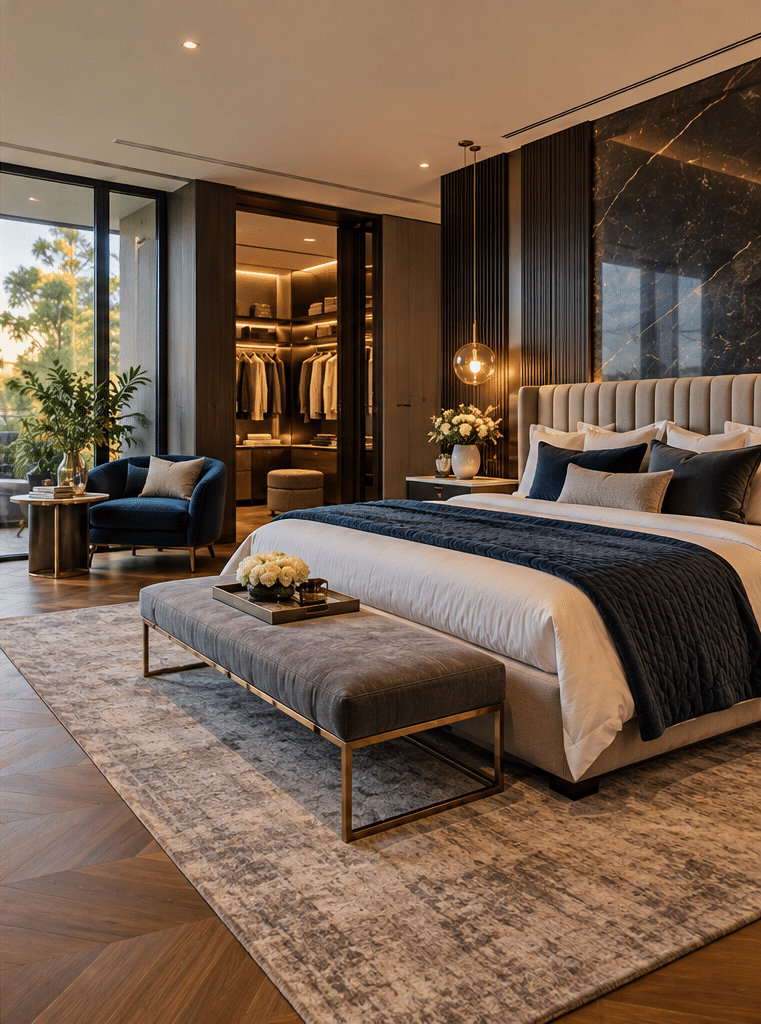
For example, layered bedding, curtains and an upholstered headboard can add warmth without introducing excessive decoration.
Also consider blackout window coverings where suitable, particularly when outdoor lighting affects sleep.
Modern apartment bathroom design
Bathrooms require careful material selection because of regular moisture exposure.
Suitable storage can reduce countertop clutter and improve daily organisation.
Wall-mounted cabinets, well-designed drawers and recessed storage can be useful where the existing construction allows them.
However, bathroom renovation is not simply a decorative project.
Waterproofing, plumbing, electrical work and ventilation can involve technical requirements.
Therefore, major modifications should be assessed and completed by appropriately qualified professionals.
For a simpler refresh, consider replacing approved accessories, improving organisation and selecting coordinated towels and decorative elements.
Modern apartment balcony design
Balconies can extend the usable living experience of an apartment.
However, furniture selection should account for weather exposure and available space.
Compact outdoor seating, suitable planters and weather-resistant materials can create an inviting area.
In addition, consider wind exposure, drainage, weight limits and building rules.
Avoid blocking drainage points or attaching structures to balcony elements without appropriate approval.
A carefully arranged balcony can feel like a natural extension of the apartment without requiring extensive work.
6. Apartment Interior Modern Design for Australia’s Climate
Australia contains several climate zones, so one apartment design approach will not suit every location.
A bright Melbourne apartment may require different thermal comfort measures from a high-rise apartment in Darwin.
According to the Australian Government’s YourHome guide to choosing and upgrading an apartment, orientation, shading, glazing and natural ventilation are important considerations for apartment comfort.
The guide also highlights that some improvements can be difficult to complete later because external windows and other building elements may form part of common property.
Melbourne and other cooler southern locations
Melbourne, Canberra and Hobart experience cooler periods that make winter comfort important.
Where suitable, north-facing windows can provide useful winter sunlight.
However, summer shading still matters because strong sunlight may increase indoor temperatures.
Curtains with insulating properties and appropriately selected rugs can improve comfort.
Also consider furniture placement so that heaters, vents and natural light are not obstructed.
Sydney and coastal New South Wales
Sydney apartments can experience warm summers, periods of humidity and cooler winter conditions.
Therefore, adaptable shading and ventilation are valuable.
Light-filtering window coverings can help manage daylight.
Meanwhile, durable, easy-to-clean surfaces may suit homes near the coast, where salt air and moisture can affect some finishes.
Brisbane and tropical Queensland
In Brisbane and other warm or humid regions, cooling and moisture management are important.
Where building design and outdoor conditions permit, natural ventilation can improve comfort.
However, ventilation should be balanced with humidity, air quality and safety requirements.
Materials should also suit the local environment.
For example, moisture-resistant finishes may be preferable in areas exposed to regular humidity.
Perth and Western Australia
Perth experiences hot summers, making direct solar exposure an important design consideration.
West-facing glazing can produce uncomfortable afternoon heat.
Therefore, suitable shading and window coverings deserve attention before decorative furniture choices.
In apartments with limited external shading options, residents may need to focus on approved internal solutions.
The role of sustainable design
A modern interior should consider running costs and resource use alongside appearance.
Practical improvements may include efficient lighting, appropriate window coverings, durable furniture and energy-efficient appliances.
However, the environmental benefit of replacing an item depends on its condition, material, manufacture and expected lifespan.
Keeping a functional item and improving its appearance can sometimes be more sensible than buying a replacement.
Consequently, sustainable design is not simply about purchasing products labelled as environmentally friendly.
It also involves reducing unnecessary replacement and selecting products that remain useful over time.
7. Apartment Interior Modern Design for Owners, Renters and Property Styling
The right design strategy depends partly on whether someone owns, rents or is preparing an apartment for sale.
These situations involve different budgets, permissions and long-term priorities.
Comparison: Modern apartment design approaches
| Design consideration | Apartment owner | Apartment renter | Property styling for sale |
| Main objective | Long-term comfort and function | Personalise without major alterations | Present the property clearly to buyers |
| Furniture | Permanent or flexible investment pieces | Portable, adaptable pieces | Furniture selected for presentation |
| Storage | Approved built-in or freestanding options | Mainly removable storage | Reduce clutter and show usable space |
| Lighting | Portable or approved permanent upgrades | Portable lamps and permitted changes | Balanced light for inspections and photographs |
| Wall finishes | Painting or larger approved changes | Subject to lease and landlord permission | Neutral, consistent presentation |
| Renovation scope | Subject to strata, building and other approvals | Usually limited by permissions | Often focused on cosmetic improvements |
| Long-term value | Everyday usability and durability | Flexibility and reusability | Visual appeal and buyer understanding |
These approaches are not mutually exclusive.
For example, an owner may use property styling principles when planning a permanent renovation.
Similarly, renters can create a refined modern interior through careful furniture selection and coordinated decoration.
Designing modern apartments for renters
Renters should prioritise changes that are portable and easily reversible.
For example, a coordinated rug, freestanding shelving, lamps and removable decorative accessories can transform a room.
However, even apparently simple changes may require permission under the rental agreement.
Therefore, confirm restrictions before drilling, painting, replacing fixtures or installing wall-mounted furniture.
Apartment styling before selling
Property styling has a different purpose from permanent interior design.
The aim is to help potential buyers understand the apartment’s layout, proportions and possible uses.
A well-planned styling arrangement might highlight a comfortable living area and a practical dining space.
However, styling cannot correct structural defects or guarantee a particular sale price.
Accurate property presentation remains essential.
8. Australian Strata Rules and Renovation Considerations
Apartment renovations can involve more administrative steps than renovations to detached houses.
This is because many apartment buildings operate under strata or related ownership arrangements.
In a strata scheme, individual owners generally own their lots while sharing responsibility for certain building elements and common property.
Rules and terminology differ between Australian states and territories.
Understand your building’s approval process
For a practical example, the NSW Government’s strata renovation guidance distinguishes between cosmetic work, minor renovations and major renovations.
The guidance explains that cosmetic work, such as certain internal painting and decorating activities, generally does not require owners corporation approval in NSW.
However, other changes can require formal permission.
For example, alterations to hard flooring, electrical systems, kitchens or bathrooms may fall into categories that need approval.
The exact classification depends on the work and applicable rules.
These NSW requirements should not be assumed to apply unchanged in Victoria, Queensland or other jurisdictions.
Check before changing flooring
Replacing carpet with hard flooring can affect sound transmission between apartments.
Therefore, some buildings require acoustic documentation or specific underlay systems.
Acoustic performance describes how well a floor assembly limits the transmission of sound.
Before ordering flooring, ask the strata manager about applicable requirements.
This can prevent unexpected delays or the need to replace unsuitable materials.
Windows, balconies and external appearance
External windows, balcony structures and building façades may form part of common property.
Therefore, changing their appearance or installing attachments can require permission.
For example, replacing windows or adding external shading may involve a more complex approval process than installing ordinary internal curtains.
Electrical, plumbing and structural work
Permanent electrical alterations, plumbing changes and structural modifications should be assessed by appropriately qualified professionals.
Some work also requires licensed tradespeople, building approvals or technical documentation.
The National Construction Code establishes technical building requirements, but its application depends on the building and proposed work.
Importantly, this article provides design and administrative guidance, not legal, engineering or building-certification advice.
Before starting renovation work, confirm the relevant requirements with the strata manager, local authority and suitably licensed professionals.
9. Apartment Interior Modern Budget Planning
A modern apartment does not necessarily require a complete renovation.
Often, thoughtful changes to furniture, lighting and storage can make a meaningful difference.
However, effective budgeting requires clear priorities.
Start with essential improvements
Identify the issues that affect everyday comfort.
For example:
- Is the living room difficult to move through?
- Does the bedroom lack storage?
- Is the dining furniture too large?
- Are existing lights unsuitable for everyday tasks?
- Do window coverings provide adequate privacy?
- Are furniture finishes difficult to maintain?
Addressing these problems may provide greater practical value than purchasing decorative items first.
Separate styling from renovation costs
Styling costs might include furniture, curtains, rugs, lamps and accessories.
Renovation costs may include demolition, cabinetry, flooring, plumbing, electrical work and professional fees.
These categories can differ substantially in cost and complexity.
Therefore, obtain itemised quotations for major work rather than relying on general online estimates.
Illustrative apartment styling budget
Consider a hypothetical A$8,000 living and dining room refresh.
One possible allocation is:
| Category | Illustrative allocation |
| Sofa and dining furniture | A$3,200 |
| Storage furniture | A$1,600 |
| Window furnishings | A$1,200 |
| Portable lighting | A$800 |
| Soft furnishings and accessories | A$400 |
| Contingency | A$800 |
| Total | A$8,000 |
This is an example of budget allocation, not a market price guide or supplier quotation.
Actual prices will depend on furniture quality, room dimensions, delivery charges, installation requirements and the products selected.
The example also excludes structural renovation, plumbing and electrical installation.
Where should you spend more?
Prioritise items used frequently.
A supportive sofa, suitable mattress or well-designed storage system may deliver more daily value than an expensive decorative feature.
Meanwhile, smaller accents can often be updated without significant expense.
Therefore, invest in function and durability before short-lived trends.
Plan for unexpected expenses
Even modest apartment projects can involve additional costs.
Delivery restrictions, lift bookings, removal of old furniture and minor repairs may affect the final budget.
Consequently, include a contingency allowance.
Also confirm building access arrangements before scheduling deliveries or tradespeople.
10. Apartment Interior Modern Project Checklist
A structured plan makes apartment design easier to manage.
Use the following checklist before committing to purchases or renovation work.
Step-by-step modern apartment design checklist
- Define your goals. Decide whether the main objective is improved comfort, better storage, a visual refresh or preparation for sale.
- Measure every room. Record wall dimensions, doors, windows and existing fixtures. Check delivery access and lift dimensions where relevant.
- Identify daily activities. Consider how the household uses the apartment during weekdays, evenings and weekends.
- Assess natural light. Observe sunlight, glare and privacy at different times of the day.
- Select a design direction. Create a consistent colour and material palette that suits the existing apartment.
- Prepare a furniture layout. Test the proposed position of major pieces before ordering anything.
- Plan practical storage. Include space for household supplies, clothing, technology and items used less frequently.
- Review lighting needs. Identify where ambient, task and accent lighting will improve everyday use.
- Check building permissions. Confirm rental, strata and other approval requirements before planning permanent alterations.
- Prepare an itemised budget. Separate furniture and decoration from building work, installation and professional services.
- Compare materials and products. Consider durability, dimensions, cleaning, warranties and expected use.
- Confirm delivery and installation logistics. Check building access, noise restrictions, lift availability and permitted work hours.
- Complete major work before styling. Finalise approved repairs and installations before arranging the finished furniture layout.
- Review the result in everyday use. Test storage, lighting and movement. Adjust smaller items before adding more decoration.
This process helps reduce unnecessary purchases and makes project decisions easier to explain to suppliers and professionals.
11. Common Modern Apartment Interior Design Mistakes
Even attractive apartments can become inconvenient when design decisions overlook everyday use.
The following mistakes are worth avoiding.
Buying oversized furniture
Large furniture can make circulation difficult and reduce usable space.
Therefore, measure the actual room and check all product dimensions before purchasing.
Following trends without considering function
A fashionable chair or decorative table may not suit the apartment’s layout.
Instead, choose items that balance appearance, comfort and practical use.
Ignoring storage
An uncluttered appearance is difficult to maintain without enough storage.
Therefore, consider everyday belongings when planning cabinets, shelves and furniture.
Using only one light source
A single ceiling light may create uneven illumination.
Adding suitable task and ambient lighting can improve comfort.
Choosing materials only by appearance
A material may look attractive but require frequent cleaning or unsuitable maintenance.
Consequently, check product specifications and suitability for the intended location.
Ignoring privacy and acoustic comfort
Apartments can experience noise from neighbouring properties, corridors and streets.
Rugs, curtains and upholstered furniture may help improve room comfort, although they cannot solve every building acoustic problem.
Similarly, window coverings should provide appropriate privacy without unnecessarily eliminating natural light.
Renovating without approval checks
An appealing design idea may involve work that affects common property or regulated building systems.
Therefore, confirm permissions before ordering materials or engaging tradespeople.
Overdecorating small spaces
Too many small objects can make a compact room feel busy.
Instead, allow space between decorative elements and select items with a clear purpose.
An apartment interior modern in appearance should still feel comfortable and easy to live in.
12. People Also Ask About Modern Apartment Interiors
1. How can I make a small apartment look modern?
Start with furniture that fits the room, a consistent colour palette and practical storage. Then improve lighting and remove items that obstruct movement. A modern appearance comes from good proportions and thoughtful organisation, not simply using fewer decorations.
2. What colours are best for modern apartments in Australia?
Warm whites, beige, soft grey and muted natural tones can provide a flexible foundation. However, the best colours depend on daylight, flooring and personal taste. Test samples in the apartment before deciding.
3. Is modern apartment design expensive?
Not necessarily. A considered furniture layout, improved lighting and coordinated accessories may refresh an apartment without major renovation. Costs increase when the project involves custom cabinetry, extensive construction or specialist installations.
4. Can I modernise an apartment without changing the floor plan?
Yes. Many apartments benefit from better furniture placement, updated window coverings, improved storage and suitable lighting. These changes can enhance appearance and daily function while preserving the existing walls and room arrangement.
5. Do I need an interior designer for a modern apartment?
A designer is not essential for every project. However, professional guidance may be useful when planning custom storage, coordinating several trades or making costly design decisions. The appropriate level of support depends on the project’s scope and complexity.
13. Expert Q&A on Apartment Interior Modern Design
1. How should I design an apartment with windows on only one side?
Begin by keeping the main daylight path as open as possible.
Position tall storage units away from windows where practical, and avoid blocking available light with oversized furniture.
Use suitable artificial lighting in deeper parts of the apartment.
Additionally, select a coordinated palette that limits strong visual breaks between the brighter and darker areas.
However, furniture changes cannot create true cross-ventilation when the building lacks openings on different sides.
Therefore, ventilation and indoor comfort should be assessed separately from visual design.
2. Is custom-built furniture better than freestanding furniture?
Neither option is universally better.
Custom furniture can use awkward spaces efficiently, especially around alcoves and unusual wall dimensions.
However, it can be expensive and difficult to move when household needs change.
Freestanding furniture provides more flexibility and may be preferable for renters or people planning to relocate.
Before selecting custom joinery, consider long-term use, accessibility for maintenance and any installation approvals.
A combination of built-in and freestanding furniture can offer a practical balance.
3. How do I choose suitable flooring for an Australian apartment?
Start with the building’s acoustic requirements and the room’s intended use.
Hard flooring may offer a modern appearance and straightforward cleaning, but it can transmit impact noise between apartments.
Carpet may provide a softer walking surface and can help reduce some noise.
Meanwhile, different timber, laminate, vinyl and hybrid flooring products have varying maintenance and installation characteristics.
Ask suppliers for technical specifications, and confirm acoustic and strata requirements before ordering.
The final decision should account for durability, comfort, maintenance and approvals rather than appearance alone.
4. What should I ask an interior designer before starting a project?
Ask about the designer’s relevant experience, scope of services and proposed process.
Clarify whether the work includes layout planning, material selection, furniture sourcing, project coordination or installation supervision.
Also request information about fees, deliverables, revision limits and expected responsibilities.
For apartment renovations, confirm how strata approvals and licensed trade requirements will be handled.
Finally, ask how the design will address storage, lighting, maintenance and the household’s daily routines.
A clearly defined scope helps both parties understand the intended outcome.
5. How can I create a luxury apartment interior without sacrificing practicality?
Focus on quality, proportion and carefully selected details rather than purchasing the most expensive products.
For example, a well-proportioned sofa, attractive window coverings, coordinated finishes and thoughtful lighting can create a refined interior.
However, luxury should also include comfort, durability and usability.
Choose materials that suit everyday cleaning and furniture that supports the household’s needs.
Investing in a few meaningful elements can create a more lasting impression than filling the apartment with expensive decorative objects.
The strongest result is an interior that looks considered and remains easy to maintain.
14. Conclusion: Creating a Modern Australian Apartment That Works
Creating a successful apartment interior modern design begins with understanding the space and the people who use it.
A modern appearance is only one part of good interior design. Practical layouts, comfortable furniture, effective lighting, thoughtful storage and suitable materials are equally important.
For Australian apartments, local climate conditions and building restrictions also deserve attention.
Melbourne residents may prioritise winter comfort, while apartments in warmer regions may require careful shading and ventilation. Likewise, owners and renters must consider different permissions and long-term needs.
Before investing in significant changes, assess the existing layout, establish clear priorities and confirm any approval requirements.
Most importantly, choose solutions that remain practical beyond the latest design trends.
Transform your apartment with thoughtful interior design.
Whether you want to refresh a compact living space, create a refined contemporary home or prepare an apartment for presentation, professional guidance can help bring your ideas together.
Explore VM Lux Avenue’s interior design and property styling services to discover design options for your Australian apartment and discuss a solution suited to your space, preferences and project goals.