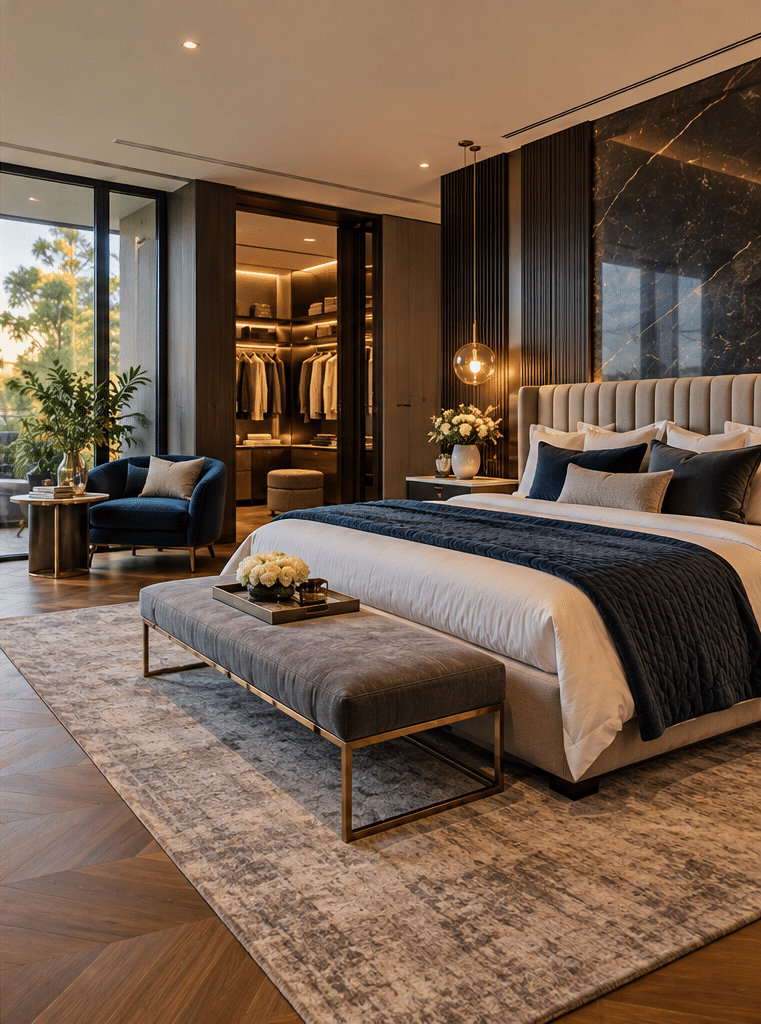
A well-designed bedroom lux interior is about much more than an expensive bed, designer furniture or decorative finishes. For Australian homes, genuine luxury comes from combining comfort, proportion, texture, practical storage, natural light and carefully planned lighting in a way that makes the bedroom feel calm rather than crowded.
That distinction matters because a bedroom has a different purpose from a living room or entertaining area. While a living room can afford to be visually expressive, the bedroom needs to help the mind slow down. Therefore, successful luxury bedroom design usually feels controlled, balanced and intentional.
Australian conditions add another layer to the design process. A bedroom in Melbourne may need to respond to cool winters and strong changes between seasons, while a bedroom in Brisbane or another warmer region may place greater emphasis on shading, airflow and cooling. Australia has eight main climate zones, and Australian Government YourHome guidance recommends designing homes in response to local climate rather than applying the same solution everywhere.
Consequently, this guide treats bedroom luxury as a complete design system. It covers layouts, colour palettes, furniture, bedding, lighting, materials, window treatments, ventilation, storage and styling so that the finished room is beautiful but also comfortable to live in.
What Is Bedroom Lux?
Bedroom lux is a practical approach to luxury bedroom design that combines restful comfort, refined materials, layered lighting, balanced proportions and intentional styling. In an Australian home, it should also respond to climate, daylight, ventilation and privacy, so the room feels sophisticated without becoming visually heavy or uncomfortable.

Table of Contents
- What bedroom lux really means
- Why Australian bedroom design needs a local approach
- Planning a bedroom lux layout
- Choosing a luxury colour palette
- Selecting the bed and major furniture
- Luxury materials and textures
- Bedroom lux lighting design
- Window treatments, daylight and privacy
- Creating a better sleep environment
- Storage and visual simplicity
- Small-bedroom luxury strategies
- Bedroom lux comparison table
- A practical bedroom design checklist
- Common luxury bedroom mistakes
- People Also Ask
- Expert Q&A
- Conclusion
What Does Bedroom Lux Really Mean?
The word “luxury” can easily become associated with marble, gold details, oversized chandeliers or costly furniture. However, those features do not automatically produce a luxurious room.
In good interior design, luxury is often created through restraint.
The bed aligns correctly with the architecture. Lighting has more than one purpose. Curtains fall properly. Furniture is proportionate to the room. Storage reduces unnecessary visual noise. Materials feel pleasant to touch. Colours repeat subtly throughout the space.
As a result, nothing appears accidental.
A practical bedroom lux approach normally works through several layers:
- room proportions and circulation
- the bed and other anchor furniture
- wall and flooring finishes
- window furnishings
- bedding and soft textiles
- general, task and accent lighting
- artwork and decorative objects
- storage
- temperature, ventilation and acoustic comfort
The important point is that these layers need to work together.
For example, an expensive upholstered bed may look impressive on its own. Yet if it is squeezed between two oversized bedside tables, blocks access to a wardrobe and sits under harsh ceiling lighting, the bedroom is unlikely to feel luxurious.
Conversely, a relatively simple room can feel premium when every element is properly scaled and coordinated.
Why Bedroom Lux Design Should Respond to Australia
Australian housing exists across very different climate conditions. Therefore, bedroom design should not be copied directly from photographs of homes in London, Dubai, New York or Paris without considering how the room will actually perform locally.
Australian Government YourHome guidance explains that passive design works with climate to improve indoor comfort. Orientation, insulation, glazing, shading and ventilation all influence how warm or cool a home feels.
Explore Australian Government YourHome passive design guidance
This has practical implications for bedroom lux design.
For example, a large wall of unshaded glass may look spectacular in a photograph. However, it can also contribute to unwanted heat gain or heat loss depending on orientation, glazing and climate.
Similarly, heavy curtains can contribute to a sophisticated appearance while also supporting privacy and helping manage light. In some climates, suitable window treatments may also assist thermal comfort.
YourHome specifically advises careful treatment of east- and west-facing glazing because unwanted solar heat can make interiors uncomfortable. Its orientation guidance also notes that west-facing bedrooms can become particularly hot.
Therefore, Australian bedroom luxury should be both visual and environmental.
Planning a Bedroom Lux Layout
Before selecting cushions, lamps or artwork, start with the floor plan.
This is one of the most important stages because an attractive bedroom can still feel awkward when circulation has not been considered.
Begin With the Bed
The bed is usually the visual anchor.
Whenever practical, position it where the headboard creates a strong focal point as someone enters the room. A solid wall generally gives the bed greater visual stability than placing it randomly between architectural features.
However, the ideal position depends on:
- doors
- wardrobes
- windows
- ensuite access
- room shape
- views
- circulation paths
- natural light
- air-conditioning or heating outlets
The bed should not make normal movement through the room inconvenient.
Think in Proportions, Not Just Dimensions
Large furniture is not automatically more luxurious.
For instance, placing a king-size bed in a room that cannot comfortably support it can create a cramped effect. In contrast, a slightly smaller bed with generous circulation, correctly scaled bedside tables and well-positioned lighting may feel far more premium.
Likewise, bedside tables should relate visually to the width and height of the bed.
A very low table beside a deep mattress can feel disconnected. Meanwhile, an excessively wide table can overwhelm the sleeping zone.
Maintain Visual Balance
Symmetry works particularly well in bedroom lux interiors because bedrooms benefit from a sense of calm.
Typical examples include:
- matching bedside tables
- paired lamps
- symmetrical wall lights
- balanced artwork
- cushions arranged evenly across the bed
However, perfect symmetry is not compulsory.
An asymmetrical design can still feel refined when visual weight is balanced. For example, one side of the room might contain a tall floor lamp while the other uses artwork and a lower side table.
Choosing a Bedroom Lux Colour Palette
Colour is one of the fastest ways to change the emotional tone of a bedroom.
However, luxurious interiors rarely depend on a large number of unrelated colours.
Instead, start with a restrained base.
Popular foundations include:
- warm white
- ivory
- stone
- mushroom
- taupe
- soft beige
- muted grey
- charcoal
- deep brown
- dusty green
- muted blue
Then introduce depth through variations of the same colour family.
For example, rather than decorating an entire bedroom with identical beige finishes, combine cream walls, oatmeal linen, natural timber, warm stone and darker brown accents.
The result feels layered rather than flat.
Warm Versus Cool Bedroom Lux
Warm palettes tend to create an intimate atmosphere.
They work especially well with:
- walnut or oak
- brushed brass
- linen
- wool
- travertine-inspired finishes
- warm neutral paint
Cool palettes can feel crisp and architectural.
Consider:
- soft grey
- charcoal
- blue-grey
- cooler stone finishes
- black details
- silver or chrome accents
However, avoid choosing colour solely because it is fashionable.
Natural light can dramatically change how paint appears throughout the day. Therefore, sample colours in the actual bedroom before making a final decision.
Bedroom Lux Furniture: Start With Strong Anchor Pieces
A bedroom usually does not need many furniture pieces.
Instead, invest design attention in a few important anchors.
The Bed
The bed naturally receives the most attention.
Luxury options may include:
- upholstered headboards
- timber bed frames
- integrated bedside designs
- wall-to-wall bedheads
- panelled feature walls
- custom joinery surrounding the sleeping zone
An oversized upholstered headboard can create softness and acoustic absorption while giving the room a hotel-inspired feeling.
However, scale it carefully. A large bedhead should appear integrated with the wall rather than simply oversized.
Bedside Tables
Bedside tables provide both visual structure and everyday convenience.
They should accommodate essentials such as:
- a reading light
- phone
- water
- book
- glasses
- charging access
Therefore, functionality should remain part of the design.
An Occasional Chair or Bench
If space permits, an upholstered chair or bench can increase the sense of completeness.
For instance, a bench at the foot of a bed can provide somewhere to place clothing temporarily or sit while dressing.
Nevertheless, avoid adding one when circulation is already limited.
Empty space is valuable.
In fact, generous visual breathing room often contributes more to luxury than adding another piece of furniture.
Materials That Make Bedroom Lux Feel More Refined
Texture creates depth without requiring strong patterns or bright colours.
This is especially useful in neutral luxury interiors.
Consider combining several tactile surfaces such as:
- timber
- linen
- wool
- velvet
- bouclé
- leather
- natural stone
- brushed metal
- woven rugs
- smooth painted joinery
The goal is contrast.
A soft bedhead becomes more interesting next to timber joinery. Meanwhile, crisp linen can be softened with a heavier throw.
Similarly, a smooth bedside table can be balanced by a textured rug.
Avoid Excessive Material Variety
More materials do not necessarily mean more luxury.
Instead, repeat key finishes.
If warm timber appears in the bedside tables, for example, it might reappear subtly in a dresser or decorative frame.
Likewise, the metal finish used for wall lights can be repeated in handles or small accessories.
Repetition creates cohesion.
Bedroom Lux Lighting: Design in Layers
Lighting can completely change the quality of a bedroom after sunset.
Therefore, relying on one bright ceiling fixture is usually insufficient.
A more considered bedroom lux scheme combines several lighting layers.
1. Ambient Lighting
Ambient lighting provides general illumination.
This may come from:
- ceiling lights
- recessed downlights
- a central decorative fitting
- indirect LED lighting
However, bedrooms rarely need to be uniformly bright at night.
2. Task Lighting
Task lighting supports activities such as reading.
Examples include:
- bedside lamps
- adjustable wall lights
- pendant lights
- dressing-table lighting
3. Accent Lighting
Accent lighting adds atmosphere.
It might illuminate:
- artwork
- architectural panelling
- shelving
- curtains
- the underside of joinery
- a feature wall
Australian Government YourHome guidance recommends combining natural daylight with appropriate electric lighting and considering different lighting needs for different activities. It also identifies LED technology as an energy-efficient lighting option.
Read the Australian Government guide to home lighting
Add Lighting Controls
Dimmers can be particularly useful in bedrooms because lighting needs change through the evening.
Bright light may be useful while dressing or cleaning.
Later, however, softer illumination creates a calmer atmosphere.
Therefore, flexible lighting often feels more luxurious than simply installing more lights.
Bedroom Lux Window Treatments: Beauty, Daylight and Privacy
Windows affect far more than appearance.
They influence:
- daylight
- privacy
- glare
- temperature
- views
- ventilation
Consequently, window furnishings deserve the same level of attention as furniture.
Layer Sheers and Blockout Curtains
One common bedroom lux solution combines sheer curtains with heavier blockout curtains.
During the day, sheers can soften incoming daylight while maintaining a degree of privacy.
At night, heavier curtains can increase privacy and darken the room.
Floor-to-ceiling curtains can also visually increase the perceived height of the space, particularly when installed neatly from close to ceiling level.
Consider Orientation
The correct solution depends on the window.
Australian Government guidance explains that east- and west-facing glazing can present particular shading challenges because of lower-angle sunlight. Adjustable or appropriate external shading may therefore improve comfort.
For substantial renovation work, however, window, glazing and external shading decisions should be assessed in the context of the building and local requirements.
Any planning approvals, permits or building-code checks involved are administrative or professional project matters. They should be verified with suitably qualified local professionals rather than treated as interior-design advice or legal advice.
Bedroom Lux Should Support Better Sleep
A luxury bedroom should not only photograph well.
It should also work at midnight.
Sleep Health Foundation guidance recommends making the bedroom quiet and dark, with comfortable bedding and suitable temperature control.
See Sleep Health Foundation guidance for better sleep environments
These recommendations align closely with thoughtful bedroom design.
For example:
- blockout window treatments can reduce unwanted light
- soft finishes can help create a quieter atmosphere
- appropriate ventilation supports comfort
- layered lighting allows bright lights to be reduced in the evening
- uncluttered storage can make the room visually calmer
Therefore, bedroom lux should never sacrifice sleep comfort simply for appearance.
Ventilation Also Matters
YourHome describes ventilation as the intentional introduction of outdoor air into a building to maintain indoor air quality and notes that ventilation can be natural, mechanical or a combination of both.
In practical terms, bedrooms need a strategy that suits the home.
Some Australian properties can benefit from cross-ventilation and openable windows.
Others may rely more heavily on mechanical heating, cooling or ventilation.
Furthermore, the correct approach can differ substantially between humid northern climates, temperate Melbourne conditions and colder inland locations.
Storage: The Quiet Luxury Element People Often Miss
Visible clutter can quickly reduce the sense of calm in a bedroom.
Therefore, good storage is one of the less glamorous but most valuable elements of bedroom lux design.
Consider where you will keep:
- clothing
- shoes
- jewellery
- bags
- bedding
- chargers
- books
- laundry
- personal care items
Where possible, give everyday items a defined location.
Built-in joinery can be particularly effective because it allows storage to become part of the architecture.
For example, a full-height wardrobe in a colour similar to the wall may create a quieter visual effect than several freestanding cabinets.
Likewise, handleless or discreetly handled joinery can support a minimalist look.
However, storage should remain easy to use.
Beautiful joinery that does not suit everyday habits eventually becomes frustrating.
How to Create Bedroom Lux in a Small Bedroom
A small room can still feel luxurious.
In fact, reducing unnecessary objects can make luxury easier to achieve.
Use Fewer, Better Pieces
Instead of filling every available corner, choose only the furniture that has a clear purpose.
For example, consider wall-mounted bedside tables when floor space is limited.
Wall-mounted lights can also free the bedside surface.
Use Vertical Space
Full-height curtains and tall joinery can direct the eye upwards.
As a result, the bedroom may feel more generous.
Keep the Palette Connected
Too many contrasting colours can divide a small room visually.
Therefore, consider using related tones across:
- walls
- curtains
- bedding
- joinery
You can then introduce interest through texture rather than multiple colours.
Choose the Right Rug
A tiny rug beside a large bed can make the entire sleeping zone feel disconnected.
Instead, use a rug that visually anchors the bed where the floor plan allows.
Again, correct proportion creates a stronger luxury effect than simply choosing an expensive material.
Bedroom Lux Comparison: Decorative Luxury vs Considered Luxury
| Design Element | Decorative-First Approach | Considered Bedroom Lux Approach | Why It Matters |
| Bed | Largest or most expensive option | Sized to suit room proportions | Preserves circulation and balance |
| Lighting | One bright feature fitting | Ambient, task and accent layers | Supports different activities and moods |
| Materials | Many premium finishes | Small palette of repeated finishes | Creates cohesion |
| Windows | Curtains chosen mainly for appearance | Daylight, privacy, heat and darkness considered | Improves comfort and usability |
| Furniture | Every empty area filled | Negative space deliberately retained | Makes the room calmer |
| Colour | Trend-led colours | Palette tested in actual room light | Produces more reliable results |
| Storage | Added after styling | Planned from the beginning | Reduces visible clutter |
| Bedding | Many decorative cushions | Comfortable foundation with controlled layering | Balances appearance and practicality |
| Technology | Visible screens and cables | Technology integrated discreetly | Maintains a quieter atmosphere |
| Climate | Same design copied anywhere | Design responds to Australian climate and orientation | Improves year-round comfort |
The key difference is intention.
Luxury should not be measured by the number of expensive things in the room. Instead, it should be judged by how well each choice supports the complete space.
10-Step Bedroom Lux Design Checklist
Use this numbered checklist before purchasing furniture or finishes.
- Measure the room accurately. Record walls, ceiling height, windows, doors, wardrobes and power points.
- Identify the strongest bed position. Consider architecture, circulation, windows and views.
- Assess natural light and orientation. Notice when direct sunlight enters and whether the bedroom becomes too hot or too dark.
- Choose a restrained colour palette. Start with two or three principal tones rather than many competing colours.
- Select the anchor furniture first. Choose the bed, bedside tables and major storage before accessories.
- Develop a material palette. Coordinate timber, textiles, stone-inspired surfaces, metal finishes and flooring.
- Plan lighting in layers. Include appropriate ambient, task and accent lighting rather than relying on one source.
- Resolve curtains and privacy. Consider sheers, blockout treatments, shading and the room’s orientation.
- Plan storage before styling. Give everyday objects somewhere practical to live.
- Style last. Add cushions, throws, artwork and objects only after the fundamental design works.
This sequence reduces impulse purchases and helps the room develop as one coherent scheme.
Common Bedroom Lux Mistakes
Buying Everything as a Matching Set
Perfectly matching beds, bedside tables, dressers and wardrobes can sometimes make a bedroom feel more like a showroom.
Instead, create relationships between furniture pieces without making them identical.
Installing Harsh Lighting
A luxury bedroom can lose its atmosphere instantly under overly bright, poorly positioned lighting.
Therefore, consider multiple sources and flexible controls.
Ignoring Curtains Until the End
Window treatments occupy a large visual area.
Consequently, they should be incorporated into the colour and material palette early.
Over-Styling the Bed
Layered bedding can be attractive.
However, an excessive number of cushions that must be removed every evening creates unnecessary work.
Luxury should simplify daily living rather than complicate it.
Following Trends Too Closely
Trends can provide inspiration.
Nevertheless, major items such as joinery, beds, flooring and curtains may remain for years.
Therefore, use trends mainly for elements that can be changed easily.
Confusing Luxury With Visual Noise
Gold, marble patterns, oversized lighting, mirrors, velvet, decorative mouldings and bold artwork can all work beautifully.
The problem occurs when every feature competes for attention.
Choose a hierarchy.
A room usually feels stronger when one or two elements lead and the rest support them.
People Also Ask About Bedroom Lux
How can I make my bedroom look luxurious without spending too much?
Start with proportion, decluttering, coordinated bedding, better lighting and well-fitted curtains before replacing all your furniture. These changes can create a stronger bedroom lux effect because visual consistency and comfort often matter more than expensive labels.
What colours make a bedroom feel luxurious?
Warm whites, taupes, stone tones, soft greys, muted greens, deep browns and charcoal can all work well. However, the best palette depends on natural light, flooring, furniture and the atmosphere you want to create.
How can I make a small bedroom feel more luxurious?
Reduce unnecessary furniture, use full-height curtains, keep colours connected and integrate storage wherever practical. In addition, correctly scaled furniture will usually make a small room feel more refined than oversized statement pieces.
What lighting works best for a luxury bedroom?
Use several lighting layers rather than relying on a single ceiling fixture. Ambient lighting provides general illumination, task lights support reading and dressing, while accent lighting adds depth and atmosphere.
Does bedroom lux need expensive furniture?
No. Furniture should feel appropriate to the scale, palette and function of the room. A moderately priced piece that fits perfectly into a well-designed scheme may appear more sophisticated than an expensive piece that disrupts the layout.
Expert Q&A: Bedroom Lux Design
1. Is carpet or timber flooring better for a luxury bedroom?
Both can work.
Carpet provides softness underfoot and can contribute to a cosy atmosphere. Timber, meanwhile, offers visual warmth and can create continuity with other areas of the home.
If using timber, a generously sized rug can soften the sleeping zone. Therefore, consider acoustics, climate, maintenance and the wider interior style rather than deciding on appearance alone.
2. What should I do with a west-facing bedroom in Australia?
First, assess how much afternoon heat and sunlight enters the room.
YourHome guidance specifically warns that west-facing bedrooms can become hot and identifies shading as an important strategy. Depending on the property, suitable glazing, external shading, curtains, insulation, ventilation or cooling may help.
For renovation work that changes windows or the building exterior, consult appropriate building professionals and check local administrative requirements.
3. How many different textures should a luxury bedroom contain?
There is no fixed number.
However, three to six clearly related textures can often provide sufficient depth without making the room visually confusing.
For example, a scheme might combine linen, wool, timber, smooth painted joinery and one metal finish. Instead of continually adding new materials, repeat existing ones to build cohesion.
4. Can dark colours work in Australian bedrooms?
Yes.
Charcoal, deep brown, navy, forest green and other darker tones can create a sophisticated bedroom.
However, evaluate natural light, room size and climate first. Dark finishes can create intimacy, while lighter colours may feel visually brighter.
The most effective solution often uses contrast—for example, dark joinery with lighter bedding or a deep feature wall balanced by softer surrounding surfaces.
5. When is it worth hiring an interior designer for a bedroom?
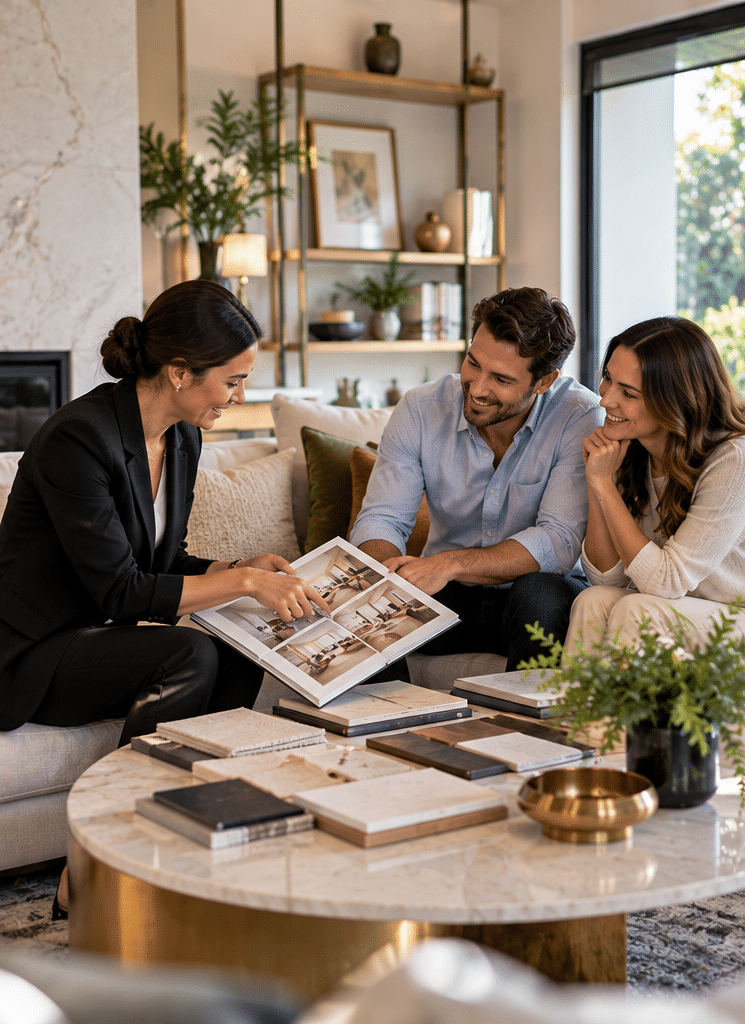
Professional design support can be particularly valuable when the bedroom forms part of a larger renovation, involves custom joinery, needs integrated lighting, has an awkward floor plan or must coordinate with the rest of the home.
It can also help when you want a highly resolved result but do not want to make numerous independent decisions about finishes, furniture, proportion, sourcing and installation.
Creating a Bedroom That Feels Luxurious Every Day
The strongest bedroom lux interiors are rarely the rooms containing the greatest number of decorative features.
Instead, they are the rooms where everything appears to belong.
The bed is positioned deliberately.
Furniture fits the available space.
The colour palette feels connected.
Textiles add softness.
Lighting changes according to the time of day.
Storage controls clutter.
Curtains manage daylight and privacy.
Meanwhile, ventilation, shading and temperature are considered alongside aesthetics.
This combination is particularly important in Australia because climate conditions vary considerably between regions. Therefore, luxury should never be separated from environmental comfort.
A successful bedroom should work on an ordinary Tuesday night just as well as it does in a photograph.
That means the bedside lamp is easy to reach. The curtains actually darken the room. The wardrobe has enough space. Circulation remains comfortable. The bedding feels inviting. The lighting can be softened before sleep.
Once these fundamentals are resolved, decorative details become much more effective.
Ultimately, bedroom lux is less about displaying wealth and more about creating a considered personal retreat. When proportion, colour, light, texture, climate and functionality work together, even restrained interiors can feel highly sophisticated.
If you are planning a more personalised luxury bedroom, whole-home interior or refined property transformation, explore VM Lux Avenue’s interior design and styling approach to begin developing a space around your home, lifestyle and design preferences.