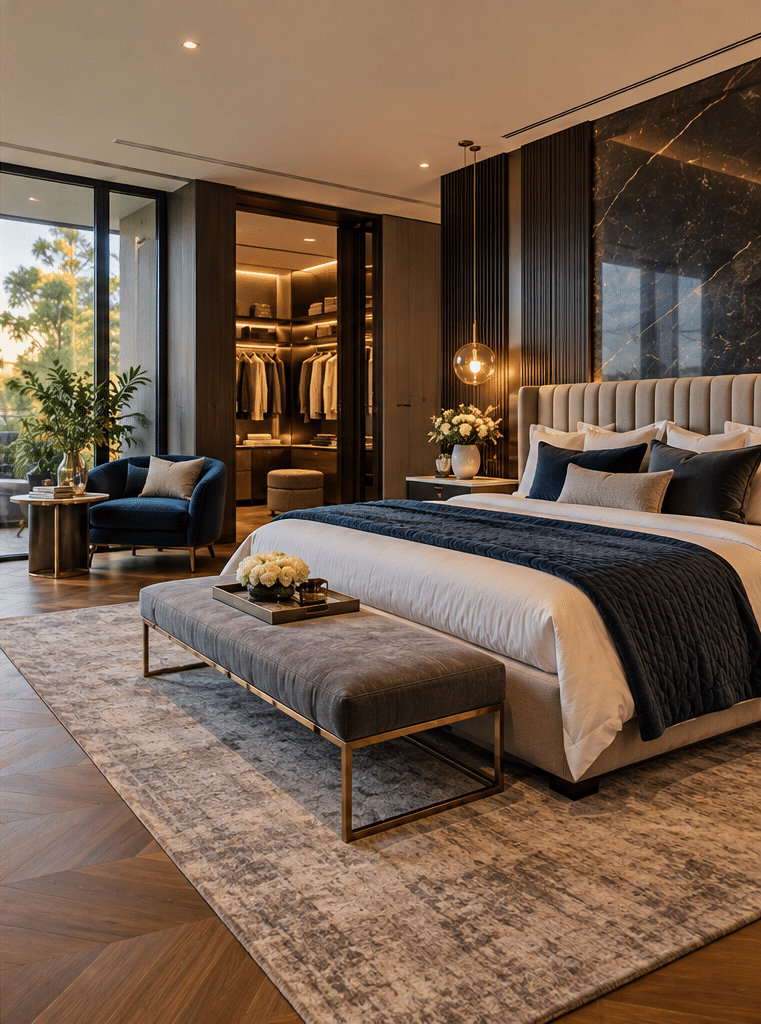
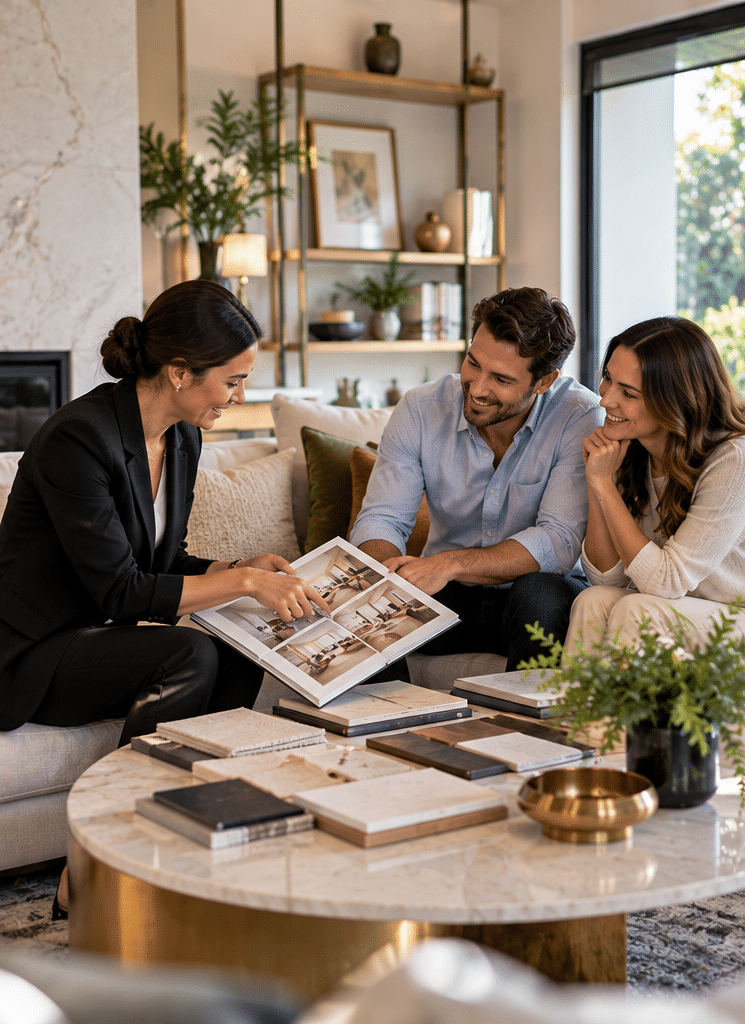
Searching for famous interior designers can be surprisingly useful when you are planning your own home. Their projects reveal much more than attractive furniture. They show how colour, materials, lighting, architecture, artwork and everyday function can work together. In Australia, influential designers also respond to local light, climate, heritage, landscape and relaxed ways of living.
However, “famous” is not an official professional category. Recognition may come through major projects, design awards, publications, industry leadership or decades of influence. Therefore, this guide does not rank designers from best to worst. Instead, it looks at several Australian designers and studios with documented industry recognition and explains what homeowners can learn from their work.
The aim is practical. Rather than copying a completed room, you can study the thinking behind successful interiors and use those principles when developing your own brief.
What Are Famous Interior Designers?
Famous interior designers are practitioners whose work is widely recognised through influential projects, awards, publications, or long-term impact on design culture. In Australia, the term can include historic figures such as Marion Hall Best and contemporary studios known for distinctive residential, hospitality, retail, and commercial interiors.
Table of Contents
- Why famous interior designers matter in Australia
- What makes an interior designer well known?
- Famous interior designers in Australia to know
- Comparison of Australian interior design approaches
- Lessons homeowners can learn from leading designers
- Interior designer vs decorator vs architect
- How to choose an interior designer in Australia
- How the interior design process usually works
- Australian climate, lifestyle and interior design
- Trends versus timeless design
- People Also Ask
- Expert Q&A
- Conclusion
Why Famous Interior Designers Matter in Australia
Looking at the work of famous interior designers is useful because good interiors solve several problems at once.
A room needs to look appealing. However, it also needs to support movement, storage, comfort, lighting, maintenance and the people who use it.
That distinction matters.
A beautiful chair might work perfectly in an editorial photograph but poorly in a home with young children. Likewise, a dramatic stone finish may look luxurious but be unsuitable for a heavily used surface unless its maintenance requirements are understood.
Well-resolved interiors usually begin with questions such as:
- Who uses this space?
- How does natural light change during the day?
- Which materials suit the level of use?
- What should be concealed and what should be displayed?
- How should people move through the room?
- Which architectural details are worth preserving?
- Where should visual emphasis occur?
- How will the interior feel five or ten years from now?
Therefore, looking at recognised Australian projects can teach homeowners to think beyond individual products.
Australia also has a mature professional design sector. The Design Institute of Australia, the national professional membership organisation for designers, operates an accreditation framework that considers qualifications, experience, professional development and professional standards. Design Institute of Australia
For readers researching professional credentials, the Design Institute of Australia professional accreditation guidance provides useful background.
What Makes Famous Interior Designers Famous?
There is no official list of famous interior designers in Australia.
Moreover, popularity and professional recognition are not exactly the same thing.
A designer might become widely known because of television, social media or celebrity projects. Another may have less public recognition but decades of respected professional work.
A more useful way to evaluate designers is to look for evidence.
1. A Distinct Design Language
Recognisable designers usually develop a point of view.
For example, one practice may use intense colour and pattern. Another may favour quiet spaces built around natural materials. A third may focus heavily on furniture, objects and artwork.
However, a strong designer does not simply repeat the same room for every client. Instead, the underlying principles remain recognisable while the result responds to the client and site.
2. Consistent Project Quality
One impressive room is different from a substantial body of work.
Therefore, when researching famous interior designers, explore projects completed over several years.
Look at houses, apartments, renovations, hospitality spaces and commercial projects where relevant.
3. Industry Recognition
Awards do not automatically make one designer better than another. Nevertheless, independently judged awards provide useful evidence that projects have been assessed by experienced industry professionals.
The Australian Interior Design Awards archive, for example, documents residential, hospitality, workplace, retail, installation and other interior projects across Australia. australianinteriordesignawards.com
You can explore the Australian Interior Design Awards project gallery to see documented projects across different years and categories.
4. Influence Over Time
Long-term influence matters too.
Historical designers may no longer have active studios, yet their work can change how later generations use colour, furniture or space.
Marion Hall Best is one important Australian example.
Famous Interior Designers in Australia to Know
The following selection is not a ranking. Instead, these designers and studios illustrate different directions within Australian interior design.
1. Marion Hall Best: A Pioneer of Australian Interior Design
Any discussion about Australian famous interior designers should recognise the historical contribution of Marion Hall Best.
Best worked during a period when interior design was developing into a more independent professional discipline in Australia. The Design Institute of Australia describes her as one of Australia’s important and influential twentieth-century interior designers and notes her role in moving beyond the department-store model of interior decoration. Design Institute of Australia
Colour became central to her work.
Rather than treating colour as a small decorative accent, Best considered it an architectural and emotional tool. Museums of History NSW notes that bold colour was a signature throughout much of her career, together with modernist furniture sourced locally and internationally. Mental Health NSW
This remains relevant today.
Many homeowners begin by choosing a neutral wall colour because it feels safe. Best’s work suggests a different question: what should colour actually do in the room?
It might:
- define a zone;
- make artwork more prominent;
- change the apparent proportions of a room;
- create warmth;
- build visual energy; or
- connect furniture with architecture.
Therefore, colour becomes part of the design structure rather than a final accessory.
For historical research, the Museums of History NSW Marion Hall Best collection contains documents, plans, photographs, textiles and furnishings relating to her career.
2. Greg Natale: Pattern, Geometry and Layered Interiors
Greg Natale is another name frequently associated with Australian luxury residential interior design.
His projects demonstrate how multiple decorative elements can coexist without automatically creating visual disorder.
Pattern, stone, furniture, artwork, lighting and strong geometry often appear together. However, the important lesson is not simply “use more decoration”.
Instead, successful layering needs hierarchy.
Some elements lead. Others support them.
For example, a patterned floor may become the visual foundation while furniture uses a more controlled palette. Alternatively, expressive furniture might sit against quieter architectural surfaces.
Natale’s continued presence in major Australian design programmes also provides measurable evidence of an active practice. His Bellevue Hill House was shortlisted in the 2025 Australian Interior Design Awards residential design category, while Gordon House appeared on the 2026 Residential Decoration shortlist. australianinteriordesignawards.com
What homeowners can learn
Do not confuse “minimal” with “timeless”.
Likewise, do not assume pattern automatically dates a room.
The real question is whether the elements have a clear relationship through proportion, repetition, shape, tone or material.
3. David Flack and Flack Studio: Interiors With Character
David Flack is the founding principal of Flack Studio.
The Australian Interior Design Awards describes his work across residential, hospitality, commercial and retail environments and notes his focus on creating experiential spaces while respecting existing architecture. australianinteriordesignawards.com
One widely documented example is the Troye Sivan House in Melbourne.
The project won the 2022 Australian Interior Design Award for Residential Decoration. The jury highlighted its curation of furniture, art, lighting and objects, together with the way the interior respected the existing architecture. australianinteriordesignawards.com
That provides an important lesson.
Interior design is not always about removing everything and beginning again.
Sometimes the strongest result comes from identifying what already gives a building character.
Therefore, before renovating, ask:
What is worth keeping?
Original brick, timber, unusual proportions, existing joinery or architectural history can provide a richer starting point than an entirely blank interior.
Flack Studio remained visible in the 2026 awards as well, receiving Best of State Commercial Design recognition for its Scanlan Theodore Canberra project. australianinteriordesignawards.com
4. Yasmine Ghoniem and YSG Studio: Expressive Australian Interiors
Yasmine Ghoniem founded YSG Studio in 2020 after earlier professional work that included the design collective Amber Road.
YSG’s interiors frequently demonstrate strong colour, unexpected material combinations and individual furniture pieces. However, the rooms are not simply collections of dramatic objects.
Instead, atmosphere is carefully constructed.
This is an important distinction when studying famous interior designers.
An interior can be visually bold while still having a controlled underlying composition.
For example, colour may change between adjoining areas while repeated timber tones provide continuity. A dramatic tile can contrast with a restrained wall finish. Meanwhile, sculptural furniture can create focal points without filling every part of the room.
YSG Studio received the 2026 Australian Interior Design Award for Residential Decoration for The Gentleman. The same project also received a commendation in Residential Design. australianinteriordesignawards.com
That current recognition helps show how expressive interior decoration and architectural thinking can overlap.
What homeowners can learn
Personality should come before trend.
Instead of asking only, “What colours are popular this year?”, ask:
“What colours, materials, objects and memories genuinely belong in this home?”
That question usually produces a more individual result.
5. Fiona Lynch: Materiality and Refined Restraint
Fiona Lynch represents another side of contemporary Australian interiors.
Her work often demonstrates the power of material selection, proportion and carefully controlled composition.
A quieter palette does not necessarily mean a simple project.
In fact, restrained interiors can require considerable precision because small changes in stone, timber tone, texture, furniture scale or lighting become much more visible.
Fiona Lynch has a documented history within the Australian Interior Design Awards. She served as a juror in 2017, while Sorrento House received a Residential Design commendation in 2022. australianinteriordesignawards.com
Therefore, one useful lesson from this design approach is to examine materials physically whenever possible.
Stone, timber, metal, plaster and textile surfaces react differently to daylight.
A sample under showroom lighting may look completely different beside a north-facing window or under warm evening lighting.
So, instead of choosing finishes independently, view key samples together.
6. Arent&Pyke: Warmth, Art and Everyday Living
Sydney practice Arent&Pyke demonstrates another useful principle: sophisticated interiors do not need to feel formal or untouchable.
Their work often combines art, furniture, texture, colour and architectural detail while maintaining a strong sense of domestic comfort.
Their Legato House project received a 2022 Residential Decoration commendation. The Australian Interior Design Awards described influences that ranged from Scandinavian and Japanese approaches to Mediterranean references, while still producing an Australian result. australianinteriordesignawards.com
In 2026, Arent&Pyke also appeared on the Residential Decoration shortlist with projects including Chromatica, Golden Light and Hawthorn House. australianinteriordesignawards.com
The lesson is valuable for homeowners.
You do not need to select one narrow “style” and follow it rigidly.
A home can contain:
- vintage furniture;
- contemporary pieces;
- inherited objects;
- Australian art;
- Scandinavian influences;
- Mediterranean materials; and
- modern lighting.
However, there should still be connections between those elements.
Colour, proportion, texture and repetition provide that connection.
7. Miriam Fanning and Mim Design: Restraint and Context
Miriam Fanning founded Melbourne-based Mim Design in 2000.
The Design Institute of Australia describes her work as informed by simplicity, restraint, quality materials and authenticity. It also notes the studio’s broad portfolio across residential, hospitality, retail and commercial projects. Design Institute of Australia
This provides a useful counterpoint to some of the more decorative famous interior designers.
Strong interior design does not require every surface to demand attention.
Sometimes the most effective strategy is subtraction.
For example, a designer might reduce the number of materials and then focus heavily on the quality of each one. Similarly, concealed storage can reduce visual noise so that furniture and architecture have more impact.
Practical lesson
Before adding another decorative element, ask whether the room actually needs it.
Editing is part of designing.
8. Simone Haag: Furniture, Art and Interior Curation
Simone Haag’s work is particularly useful for understanding the difference between designing architecture and curating the objects that make architecture feel inhabited.
Furniture placement, artwork, vintage pieces, lighting and objects can dramatically change the character of an existing room.
For example, her Whiskey Room received a Residential Decoration commendation in the 2023 Australian Interior Design Awards. More recently, Gruyere Farm was shortlisted for Residential Decoration in 2026, while Craigweil received Best of State Residential Design recognition. australianinteriordesignawards.com
Therefore, homeowners should not underestimate furniture planning.
A large sofa positioned incorrectly can make an expensive room feel cramped. Conversely, well-scaled furniture can make modest architecture feel deliberate and comfortable.
Comparison: Famous Interior Designers and Their Approaches
The table below is not a ranking. Instead, it shows how different Australian design philosophies can lead to successful interiors.
| Designer or studio | Recognisable design lesson | Documented industry context | Useful idea for homeowners |
| Marion Hall Best | Bold colour as part of spatial design | Recognised by the DIA and preserved in the Museums of History NSW collection Design Institute of Australia | Treat colour as a design tool, not an afterthought |
| Greg Natale | Layering, pattern and geometry | Residential projects documented in the 2025 and 2026 AIDA programmes australianinteriordesignawards.com | Create hierarchy when combining patterns |
| David Flack / Flack Studio | Character, material richness and respect for existing architecture | Troye Sivan House won Residential Decoration in 2022 australianinteriordesignawards.com | Preserve valuable architectural character |
| YSG Studio | Expressive colour and individual combinations | The Gentleman won Residential Decoration in 2026 australianinteriordesignawards.com | Build interiors around personality rather than trends |
| Fiona Lynch | Material focus and controlled composition | Sorrento House received an AIDA commendation in 2022 australianinteriordesignawards.com | Test materials together in real light |
| Arent&Pyke | Comfortable layering of art, furniture and global influences | Legato House received a 2022 decoration commendation australianinteriordesignawards.com | Mix influences through consistent colour and proportion |
| Mim Design | Simplicity, restraint and quality materials | Miriam Fanning recognised as a DIA Fellow Design Institute of Australia | Remove unnecessary visual noise |
| Simone Haag | Furniture, object and art curation | Craigweil received 2026 Best of State Residential Design recognition australianinteriordesignawards.com | Plan furniture as carefully as fixed finishes |
What Famous Interior Designers Can Teach Australian Homeowners
Studying famous interior designers becomes most useful when you stop asking “How can I copy this room?” and start asking “Why does this room work?”
Several principles appear repeatedly.
1. Start With the Architecture
Furniture cannot fix every spatial problem.
Therefore, begin with circulation, window positions, ceiling height, doors, existing materials and the relationship between rooms.
In an older Melbourne terrace, for example, heritage character may be worth preserving.
Meanwhile, a contemporary coastal property may benefit from stronger visual connections to the landscape.
2. Think in Materials, Not Individual Products
A room is experienced as a whole.
Therefore, the kitchen benchtop should not be selected without considering cabinetry, flooring, wall finishes, hardware and lighting.
Create a physical material palette whenever possible.
Then view it in daylight and artificial light.
3. Create a Colour Hierarchy
You do not need equal amounts of every colour.
Instead, decide which colour is dominant, which supports it and which provides contrast.
This principle works in both bold and neutral interiors.
4. Plan Furniture Early
One common mistake is completing the architecture and only later asking where the furniture will fit.
Instead, furniture dimensions should influence circulation, power points, lighting locations and joinery planning.
For example, pendant placement over a dining table depends partly on the table’s size and final location.
5. Design for Real Behaviour
A beautiful entrance needs somewhere practical for bags, keys or shoes if the household uses them there.
Similarly, a kitchen designed for frequent entertaining may need different circulation from a kitchen used primarily by one person.
Design begins with behaviour.
Interior Designer vs Interior Decorator vs Architect
People researching famous interior designers often encounter several overlapping professional titles.
They are related, but they are not identical.
Interior Designer
Interior designers can work with spatial planning, materials, finishes, lighting concepts, joinery, furniture and other elements of interior environments.
The exact service varies by practitioner.
Therefore, always ask what is included in the proposed scope.
Interior Decorator
Interior decoration generally concentrates more heavily on the decorative layer.
That can include:
- furniture;
- rugs;
- fabrics;
- artwork;
- styling;
- colour; and
- accessories.
However, individual studios may offer broader services.
Architect
Architects work with building design and regulated architectural services.
A major renovation may involve an architect or other appropriately qualified building professional together with an interior designer.
For structural changes, permits, approvals or regulated construction, confirm the requirements that apply to your state, territory and individual project with the relevant registered or licensed professionals.
That is project administration guidance rather than legal advice.
How to Choose an Interior Designer in Australia: 8-Step Checklist
Being inspired by famous interior designers is useful. However, choosing a designer should be based on suitability rather than fame alone.
Use this checklist.
- Write down your actual project needs.
Separate essential requirements from desirable features. - Establish a realistic overall budget.
Include construction, professional fees, furniture, lighting, window treatments and contingency rather than considering each category separately. - Review complete projects.
Do not judge a designer from three social media images. Look at whole homes or complete commercial spaces where possible. - Check whether the portfolio fits your goals.
You do not need to find a project identical to your home. However, the designer’s treatment of colour, materiality and proportion should make sense to you. - Ask exactly what the service includes.
Concept design, documentation, sourcing, procurement, styling and site involvement may be separate services. - Discuss communication and approvals.
Find out who presents concepts, who handles questions and when decisions need to be approved. - Check relevant professional credentials.
Qualifications, experience, insurance and professional memberships may be important depending on the project scope. - Assess the working relationship.
Interior design can involve many decisions over several months. Therefore, clear communication is as valuable as an attractive portfolio.
How Does an Interior Design Project Usually Work?
Different studios use different systems. Nevertheless, many projects follow a broadly similar progression.
Brief
First, the designer learns how the space will be used.
This stage may cover budget, lifestyle, aesthetic preferences, storage, existing furniture, timelines and functional problems.
Concept
Next, an overall design direction is developed.
It might include colour palettes, materials, furniture direction, spatial ideas and reference imagery.
However, this stage should establish more than a “look”.
It should answer practical questions too.
Design Development
The concept then becomes more detailed.
Specific materials, joinery decisions, fixtures, furniture and lighting may be investigated.
Costs also become clearer as selections become specific.
Documentation
Depending on the scope, drawings, specifications or schedules may be prepared for trades, suppliers or other consultants.
Procurement
Items may then be ordered.
Lead times matter, especially for custom furniture and imported products.
Therefore, procurement planning can affect the overall programme.
Installation and Styling
Finally, furniture, lighting, rugs, artwork and smaller pieces bring the completed environment together.
This is often where the relationship between architecture and decoration becomes most visible.
Australian Homes Need Australian Design Thinking
Looking internationally for inspiration is valuable. However, copying a European or North American room without considering Australian conditions can create problems.
Australian interiors may need to respond to intense sunlight, warm summers, coastal exposure, indoor-outdoor living and substantial differences between climates.
A house in Brisbane faces different environmental conditions from one in Hobart.
Likewise, Perth, Sydney and Melbourne each have different climatic and architectural contexts.
Therefore, material choices should consider the actual site.
Natural Light
Australian sunlight can be strong.
As a result, materials and colours can appear considerably different throughout the day.
Test samples near the windows where they will actually be used.
Indoor-Outdoor Connections
Many Australian homes place considerable emphasis on outdoor entertaining.
Therefore, visual continuity between kitchen, dining, living and exterior areas may become important.
That does not mean every material must match.
Instead, repeat selected colours, textures or shapes.
Material Durability
Homes near the coast may expose some materials to salt air and moisture.
Meanwhile, homes with children or pets need surfaces that can tolerate frequent use.
Luxury should not mean impracticality.
Famous Interior Designers and the Question of Trends
Searches for famous interior designers often overlap with searches for the latest interior design trends.
However, trends should be handled carefully.
Curved furniture, particular stone types, specific colour palettes and decorative styles move in and out of popularity.
That does not make trends bad.
Instead, the issue is how deeply they are built into the home.
For example, experimenting with a fashionable colour through cushions or art is relatively easy to change.
Installing an expensive trend-driven finish across an entire kitchen is a much larger commitment.
Therefore, divide design choices into three categories:
Long-life elements: flooring, major joinery, architectural changes and expensive stone.
Medium-life elements: lighting, selected furniture and window treatments.
Easy-change elements: artwork, cushions, accessories and smaller objects.
This approach allows personality without forcing every component to follow the same trend cycle.
People Also Ask About Famous Interior Designers
Who is the most famous interior designer in Australia?
There is no authoritative measure that identifies one person as Australia’s single most famous interior designer. Historically, Marion Hall Best has documented significance, while contemporary designers such as Greg Natale, David Flack, Yasmine Ghoniem, Fiona Lynch and others have substantial industry recognition.
What do famous interior designers do differently?
Recognised designers often create a clear relationship between architecture, furniture, material, colour and the client’s needs. Therefore, their work tends to feel intentional rather than simply decorated.
Do I need a famous interior designer for a beautiful home?
No. Reputation is only one consideration. Portfolio relevance, communication, professional capability, budget compatibility and understanding of your needs are often more important.
How much does an interior designer cost in Australia?
There is no single national fee because scope, location, project size and service model differ considerably. Ask for a written proposal explaining fees, inclusions, exclusions, procurement arrangements and additional services before proceeding.
What should I look for in an Australian interior designer?
Look for a relevant portfolio, clear scope, suitable qualifications or professional credentials where required, transparent communication and evidence that the designer can balance aesthetics with practical needs.
Q&A: Deeper Questions About Famous Interior Designers
1. Can I combine ideas from several famous interior designers?
Yes, but copy principles rather than completed rooms.
For example, you might appreciate Marion Hall Best’s confidence with colour, Fiona Lynch’s attention to materials and Simone Haag’s furniture curation.
However, bringing those ideas together requires a consistent palette and clear hierarchy.
Otherwise, the result may feel fragmented.
2. How can I tell whether a designer’s portfolio will work for my home?
Study the problem-solving rather than the photography.
Look at different room sizes, architectural periods and project types.
Then ask whether the designer adapts to each client or produces nearly identical interiors every time.
Adaptability is particularly important if you want a personalised result.
3. What does “layering” mean in interior design?
Layering means combining different visual and tactile elements so a room gains depth.
These layers can include architecture, furniture, rugs, lighting, artwork, textiles, books and objects.
However, layering is not the same as filling every surface.
The strongest rooms usually contain areas of visual activity and quieter space.
4. When should an interior designer become involved in a renovation?
Usually, earlier involvement gives the design team more opportunity to coordinate space planning, materials, lighting, joinery and furniture.
For example, engaging a designer after electrical work is complete can limit lighting options.
Therefore, discuss professional involvement before major decisions are fixed.
5. Does good interior design increase property value?
It can improve functionality, condition, presentation and buyer appeal, but a financial increase should never be guaranteed.
Property value also depends on location, land, market conditions, building quality and buyer demand.
Therefore, design decisions should first support the people living in the home rather than rely solely on an assumed resale return.
A Practical Way to Use Famous Interior Designers as Inspiration
The most valuable lesson from famous interior designers is not a particular sofa, stone or paint colour.
It is the design process behind the final result.
Marion Hall Best demonstrates the transformative potential of colour. Greg Natale shows how pattern and geometry can create controlled richness. David Flack illustrates how architecture and decoration can reinforce one another. YSG demonstrates individuality and expressive combinations. Fiona Lynch highlights the power of material refinement. Arent&Pyke shows how varied influences can still create a coherent home. Mim Design illustrates restraint, while Simone Haag demonstrates the importance of furniture and art curation.
Based on the documented Australian projects reviewed for this article, one principle appears repeatedly: strong interiors respond to people, place and architecture together.
Therefore, do not start a renovation by asking which trend you should copy.
Start with your life.
How do you cook? Where do you entertain? What do you collect? Which objects have personal meaning? How much storage is required? Where does sunlight enter? Which existing features are worth protecting?
Once those questions are answered, aesthetics become much easier to organise.
Conclusion
Australian famous interior designers show that memorable homes rarely depend on one fashionable product. Instead, strong interiors combine planning, proportion, colour, material, lighting, furniture and personal character.
Their projects can provide inspiration, but your home should not become a replica of someone else’s portfolio.
Use recognised designers to understand principles. Study how they balance bold elements with restraint, how they work with architecture, and how furniture changes the way a room functions. Then translate those lessons into a space that reflects your own lifestyle.
If you are developing a refined, personalised interior and want to explore how these principles can be applied to your space, discover the interior design and styling approach at VM Lux Avenue.