Introduction
A beautiful home should do more than look impressive. It should make everyday life easier, support your lifestyle and provide comfort throughout the year. This is why innovative interiors are becoming an important consideration for Australian homeowners who want spaces that combine modern design, functionality and lasting appeal.
From contemporary Melbourne apartments to spacious family homes in Sydney, Brisbane and Perth, interior design needs vary greatly. However, the most successful spaces share an important quality: every design decision serves a clear purpose.
Modern interior innovation is not simply about buying expensive furniture or installing the latest technology. Instead, it involves understanding how people use their homes, selecting suitable materials, improving storage and creating flexible spaces.
For homeowners planning a renovation, innovative interiors offer opportunities to improve existing rooms without replacing everything. Meanwhile, property owners preparing to sell can use thoughtful layouts, furnishings and styling to help prospective buyers understand a home’s potential.
This guide explores practical interior design ideas, Australian climate considerations, materials, budgets and professional planning methods. It also explains how to combine luxury aesthetics with everyday comfort without following trends that may quickly lose their appeal.
What Are Innovative Interiors?
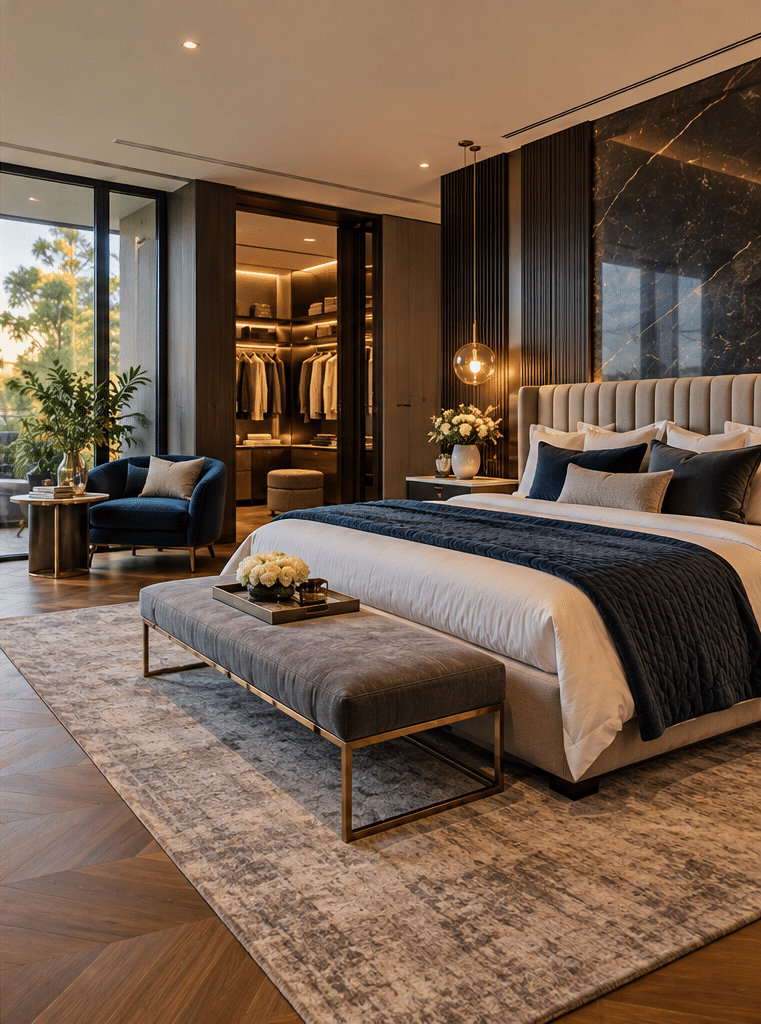
Innovative interiors are spaces designed to solve everyday problems through smart layouts, flexible furniture, thoughtful lighting, durable materials and useful technology. In Australian homes, the best ideas also respond to local climate, household needs and property size. The result is an interior that feels modern, comfortable and practical rather than simply fashionable.
Table of Contents
- Why Innovative Interiors Matter in Australia
- Six Principles Behind Innovative Interior Design
- Designing Innovative Interiors for Australia’s Climate
- Twelve Innovative Interior Ideas That Work
- Comparing Traditional and Innovative Design Options
- Room-by-Room Innovative Interiors
- Budgeting for an Innovative Interior Project
- Ten-Step Interior Design Planning Checklist
- Innovative Interiors for Property Staging
- Materials, Lighting and Technology: Practical Tests
- Common Interior Design Mistakes to Avoid
- People Also Ask About Innovative Interiors
- Innovative Interiors: Detailed Questions and Answers
- Conclusion
1. Why Innovative Interiors Matter in Australia
Australian homes serve many purposes. They provide places to relax, work, entertain guests and spend time with family. As lifestyles change, traditional room layouts may no longer meet every household’s needs.
Innovative interiors respond to these changes by making better use of existing space.
For example, a spare bedroom might also serve as a home office. A dining area could include hidden storage. Meanwhile, a small apartment may benefit from furniture that performs several functions.
The value of innovation comes from how well these ideas work together.
Better use of available space
In compact homes, careful planning can create a greater sense of openness.
Instead of filling every wall with furniture, designers can focus on clear walking paths, suitable furniture sizes and practical storage. As a result, the room may feel more spacious without requiring structural changes.
Improved everyday comfort
Good design supports daily routines.
For instance, a kitchen with well-positioned storage can reduce unnecessary movement. Similarly, suitable task lighting can make reading, cooking and working more comfortable.
These changes may seem small. However, their benefits become clear through repeated use.
Greater flexibility for future needs
Household requirements rarely remain the same forever.
Children grow older, people change jobs and families may welcome older relatives. Therefore, flexible layouts can help a home adapt without frequent major renovations.
Australia’s Your Home guidance also highlights the value of designing homes that can accommodate changing needs and different physical abilities.
YourHome
A more personalised appearance
Innovation does not mean that every home must look futuristic.
Instead, it allows people to combine traditional details, modern finishes and meaningful personal items.
A Victorian terrace in Melbourne, for example, might retain its original character while introducing contemporary furniture and practical lighting.
The result can feel distinctive without losing the home’s history.
2. Six Principles Behind Innovative Interior Design
Before selecting furniture or paint colours, it helps to understand the principles that make innovative interiors successful.
1. Function comes before decoration
Every room should support the activities that take place inside it.
For example, a living room designed for family movie nights needs comfortable seating and suitable lighting. A room used mainly for entertaining might need a different seating arrangement.
Therefore, begin with how the space will be used.
2. Flexibility creates long-term value
Flexible design allows a room to serve different purposes without major changes.
Consider a guest bedroom with a wall-mounted desk and a sofa bed. It can function as a workspace during the week and accommodate visitors when required.
However, furniture should remain easy to use. A complicated folding system may offer little value if nobody wants to operate it.
3. Natural light influences the layout
Natural light affects how a room looks and feels.
For this reason, designers should review window positions before choosing large furniture pieces, tall cabinets or room dividers.
Where possible, place activities that need daylight close to suitable windows. At the same time, control glare and unwanted heat.
4. Materials should suit real conditions
A beautiful surface is not always the most practical choice.
For example, a delicate finish may require frequent care in a busy family kitchen. Alternatively, a durable surface may offer better everyday performance, even if its initial appearance is less dramatic.
Material decisions should consider cleaning, wear, moisture and expected lifespan.
5. Visual balance supports comfort
Innovative interiors benefit from visual consistency.
A limited material palette can help rooms feel connected. However, that does not mean every surface must match.
Combining timber, stone, metal and soft textiles can create interest while maintaining a clear overall design.
6. Technology must serve a purpose
Smart home features can improve convenience when chosen carefully.
Automated lighting, for example, may help households adjust brightness for different activities. However, these systems need reliable controls, suitable electrical installation and long-term support.
The best technology is often the technology that residents hardly notice.
3. Designing Innovative Interiors for Australia’s Climate
Australia has several climate zones. Therefore, a successful design in Melbourne may not be ideal for Darwin or tropical Queensland.
Innovative interiors should consider the building’s orientation, available ventilation and local temperature patterns.
According to the Australian Government’s Your Home passive-design guidance, climate-responsive design uses features such as orientation, insulation, shading and glazing to help maintain comfortable indoor conditions.
YourHome
Melbourne and cooler southern regions
Homes in Melbourne, Hobart and other cooler areas often need to balance winter warmth with summer comfort.
As a result, suitable window coverings, draught control and thoughtful furniture placement are important.
Heavy curtains with appropriate fittings may improve comfort around windows. Meanwhile, keeping heating outlets clear supports better airflow.
In older homes, interior improvements should be considered alongside the condition of the building envelope. This refers to the roof, walls, floors, windows and doors that separate inside from outside.
Brisbane and warm coastal regions
In warmer areas, controlling sunlight can be as important as choosing attractive furnishings.
Light-coloured finishes may help create a bright visual appearance. However, colour alone does not solve overheating.
Effective shading, ventilation and suitable window treatments are often more important.
For example, adjustable blinds can help manage glare throughout the day without permanently blocking the view.
Darwin and tropical locations
Tropical homes often benefit from designs that support airflow.
Where the building allows it, carefully arranged furniture can help preserve clear ventilation paths. Ceiling fans can also support comfort.
However, natural ventilation strategies must account for humidity, outdoor conditions and any air-conditioning system.
Sydney, Perth and mixed conditions
Many Australian locations experience both hot and cooler periods.
Consequently, adaptable window treatments and seasonal furniture arrangements can be useful.
Rather than copying a design from another climate, assess how sunlight enters the property throughout the year.
This is especially important for rooms with large areas of glass.
4. Twelve Innovative Interior Ideas That Work
The following ideas show how innovative interiors can combine style, convenience and practical performance.
1. Innovative interiors with multifunctional furniture
Multifunctional furniture is particularly useful in apartments and smaller homes.
A storage ottoman, for example, can provide seating, a footrest and space for blankets. Likewise, an extendable dining table can support both everyday meals and larger gatherings.
Before buying, check the full dimensions when the furniture is open.
Otherwise, a space-saving product may become an obstacle when used.
2. Built-in storage that blends into the room
Traditional storage often depends on freestanding cabinets.
However, integrated cabinetry can make use of spaces that might otherwise remain empty.
Potential locations include alcoves, recessed walls and suitable areas beneath stairs.
A practical storage design begins by measuring the items it needs to hold. Therefore, shelving heights and drawer depths should follow real storage needs.
Avoid placing fixed cabinetry over areas that require access for building maintenance.
3. Layered lighting for comfort and flexibility
Lighting is one of the simplest ways to improve an interior.
Instead of relying on a single ceiling light, consider three types of lighting.
Ambient lighting provides general brightness. Task lighting helps with activities such as reading or preparing food. Accent lighting highlights artwork or architectural features.
Together, these layers create a flexible lighting scheme.
For example, a living room can use bright lighting for cleaning and softer lighting for evening relaxation.
4. Innovative interiors with flexible room dividers
Open-plan homes offer a sense of space, but they may provide limited privacy.
Movable screens, curtains and suitable sliding partitions can help divide activity areas.
For example, a living room may include a small work zone that can be screened during video calls.
However, light partitions do not always provide meaningful sound insulation.
Therefore, consider whether the goal is visual privacy, noise reduction or both before selecting a solution.
5. Natural textures with contemporary finishes
Natural materials can help a modern home feel warm and inviting.
Timber, stone, linen and wool offer different visual and tactile qualities.
However, each material also has practical limits. Some stone surfaces need specific cleaning methods, while certain timber finishes require regular maintenance.
A useful approach is to combine a small number of authentic textures with durable supporting materials.
This can create a refined appearance without making the room difficult to maintain.
6. Innovative interiors with smart lighting controls
Smart lighting can support different daily routines.
For example, households may use brighter light during the morning and warmer, softer light in the evening.
Simple dimmers may meet this need without a fully connected home system.
More advanced controls can offer timers, scenes and automated settings. However, check compatibility, privacy features and manual controls before purchasing.
Electrical installation should be handled by appropriately licensed professionals where required.
7. Creative vertical storage
Walls provide useful storage opportunities, particularly when floor space is limited.
Floating shelves, tall cabinets and wall-mounted organisers can reduce clutter.
However, storage should remain accessible.
Frequently used items belong at convenient heights. Meanwhile, less-used objects can occupy higher shelves if safe access is available.
Wall-mounted fixtures also need suitable supports for the wall type and expected load.
8. Innovative interiors using modular furniture
Modular furniture consists of sections that can be arranged in different ways.
A modular sofa, for instance, may suit a family room today and a different layout after moving house.
This flexibility can be helpful for households expecting change.
However, not all modular systems offer lasting value. Check whether matching sections remain available and whether connectors withstand regular use.
Also, compare the combined cost against a standard furniture option.
9. Indoor and outdoor visual connections
Australian homes often include balconies, courtyards or garden areas.
A consistent colour palette between indoor and outdoor spaces can create a stronger visual connection.
For example, related furniture tones or complementary finishes may make a balcony feel like an extension of the living room.
However, exterior furniture needs suitable weather resistance.
Sliding doors, external shading and glazing changes may also involve building requirements beyond interior styling.
10. Innovative interiors with sustainable material choices
A sustainable interior is not simply one decorated with plants.
Long-lasting furniture, repairable products and responsible material selection can reduce the need for frequent replacement.
For example, refreshing an existing timber table may be more practical than buying a new one.
Likewise, selecting washable or replaceable upholstery can extend the useful life of furniture.
However, sustainability claims should be checked rather than accepted at face value.
Look for relevant product details, credible certification and clear maintenance information.
11. Hidden home office solutions
Working from home has made flexible work areas useful for many households.
A compact desk can fit into an alcove, a spare bedroom or a section of the living area.
However, the workstation still needs good lighting, suitable seating and comfortable screen positioning.
Therefore, avoid designing the space around appearance alone.
The desk should be deep enough for the intended equipment, while cables should remain safely managed.
12. Innovative interiors with personalised statement features
A successful room often includes one memorable feature.
This might be a sculptural light, a custom cabinet, an artwork or a carefully chosen armchair.
However, too many statement pieces can compete for attention.
Instead, allow one feature to lead the design. Then select supporting materials and colours that complement it.
For luxury interiors, restraint can be just as important as decoration.
5. Comparing Traditional and Innovative Design Options
Traditional design methods are not automatically outdated. In fact, some conventional products remain highly practical.
The following comparison highlights common differences.
| Design element | Traditional approach | Innovative approach | Main consideration |
| Living room | Fixed furniture arrangement | Flexible or modular seating | Ease of rearrangement |
| Storage | Freestanding cabinets | Integrated, purpose-built storage | Cost and future flexibility |
| Lighting | One main ceiling light | Layered, adjustable lighting | Comfort and control |
| Home office | Dedicated separate room | Adaptable workstation | Privacy and ergonomics |
| Materials | Selected mainly for appearance | Selected for appearance and durability | Cleaning and lifespan |
| Room separation | Permanent internal walls | Movable partitions where suitable | Privacy and sound |
| Home controls | Individual manual switches | Optional smart controls | Reliability and maintenance |
These comparisons are general design choices, not claims that one method always performs better.
For example, a fixed wall may provide much better acoustic separation than a movable partition. Likewise, freestanding furniture may be the smarter choice for renters.
The best design balances flexibility, comfort, cost and maintenance.
Therefore, homeowners should compare options against their actual priorities rather than choosing a product simply because it appears new.
6. Room-by-Room Innovative Interiors
Each room has a different purpose. Consequently, innovative interiors should respond to its specific activities, storage needs and comfort requirements.
Living room: Flexible and welcoming
The living room often supports several activities.
Families may use it for relaxing, watching television, playing games or entertaining visitors.
Start with the largest furniture items. Then check walking routes and sightlines.
For example, a sofa does not always need to sit against a wall. In some layouts, moving it forward can create better circulation or space for a narrow console.
However, avoid oversized furniture that leaves little room for movement.
Kitchen: Practical movement and storage
Innovative kitchen interiors should make food preparation simpler.
Consider the relationship between the sink, refrigerator, cooktop and main work areas.
Frequently used items should be close to where they are needed.
For example, drawers near a preparation area can hold utensils and cutting boards.
Deep drawers may also improve access compared with low cupboards, depending on the items stored.
However, layout changes involving plumbing, gas or electricity need professional assessment. Appliance clearances and safe access must also be checked.
Bedroom: Comfort without clutter
Bedrooms benefit from a calm layout and useful storage.
A bed with suitable under-bed storage may help in compact homes. However, storage should not interfere with safe access or regular cleaning.
Bedside lighting also deserves attention.
Wall-mounted reading lights can free up space on small bedside tables. Meanwhile, blackout window coverings can help manage unwanted light where appropriate.
Instead of filling the room with decorative furniture, focus on comfort and movement.
Bathroom: Safe and practical details
Bathroom innovation often involves careful planning rather than dramatic decoration.
Good lighting, accessible storage and easy-to-clean surfaces can improve daily use.
For example, a recessed storage niche may keep shower products organised without a projecting shelf.
However, recessed fixtures and new wet-area finishes can affect waterproofing.
Therefore, changes to bathrooms should be assessed and completed by qualified professionals where required.
Also, choose suitable slip-resistant surfaces and consider the needs of different household members.
Dining room: Adaptable entertaining
Dining spaces can support more than meals.
They may also serve as homework areas, casual meeting spaces or places for family activities.
An extendable table is one practical option.
Alternatively, a built-in bench can provide seating and storage in a carefully planned layout.
However, check whether chairs can move freely and whether people can enter and leave their seats comfortably.
The goal is to improve use, not simply fit more furniture into a smaller area.
7. Budgeting for an Innovative Interior Project
Innovative interiors do not require an unlimited budget.
In fact, thoughtful planning can help homeowners avoid unnecessary purchases.
Start with the problems you want to solve
Before choosing products, identify the most important issues.
For example, your priorities might include limited storage, poor lighting or an uncomfortable home office.
Addressing these problems first can make a project more useful.
Separate essential work from optional upgrades
A practical budget should distinguish between improvements that solve everyday problems and additions chosen mainly for appearance.
Essential improvements might include damaged flooring, unsafe fixtures or unsuitable storage.
Optional upgrades may include decorative lighting or new occasional furniture.
However, an item’s priority depends on the home’s actual condition and household needs.
An illustrative budget allocation
The following is an example of how someone might distribute a hypothetical $20,000 interior improvement budget. It is not a quotation or estimate of Australian market prices.
| Budget category | Example allocation |
| Furniture and practical storage | $6,000 |
| Lighting and electrical improvements | $3,000 |
| Surface finishes and decoration | $4,000 |
| Professional design and planning | $3,000 |
| Contingency allowance | $4,000 |
| Total | $20,000 |
Actual costs depend on room size, product quality, location, trades, approvals and project complexity.
Therefore, homeowners should request itemised quotations before committing to work.
Consider ownership and maintenance costs
Purchase price is only one part of the decision.
For example, a cheaper sofa that needs early replacement may offer poorer long-term value than a durable alternative.
Likewise, complex smart home products may require maintenance or future upgrades.
Ask about warranties, spare parts, cleaning and ongoing support before buying.
8. Ten-Step Interior Design Planning Checklist
A structured process makes innovative interiors easier to plan and deliver.
Your step-by-step checklist
- Define your main goal. Decide whether the project is intended to improve everyday living, prepare a property for sale or support a renovation. Write down the three problems you most want to solve.
- Measure the existing space. Record room dimensions, ceiling heights, window locations and door swings. Also, note power points, fixed appliances and heating or cooling outlets.
- Review natural light and ventilation. Observe the room at different times of day. For example, check whether afternoon sunlight causes glare or discomfort.
- Identify what should remain. Inspect existing furniture, flooring and storage. Some items may only need repair, new hardware or different placement.
- Set a realistic budget. Include furniture, materials, labour, delivery and professional fees. Also, reserve a contingency for unforeseen costs.
- Prepare a clear design brief. Describe your preferred style, daily routines, storage needs and maintenance expectations. Reference examples of spaces you like, but explain why they appeal to you.
- Compare layout options. Review at least two practical arrangements where possible. Check access to doors, windows and frequently used furniture.
- Choose suitable materials. Request samples and review them in the actual room. Consider cleaning requirements, durability, colour and compatibility with existing finishes.
- Confirm trades and approvals. Identify any building, electrical, plumbing or structural work. Ask appropriately qualified professionals to check relevant requirements before construction begins.
- Inspect the completed space. Test doors, drawers, lighting and other installed features. Then review how the room performs during normal daily activities.
This process also improves communication with an interior designer.
Instead of relying only on inspiration pictures, you can explain your goals through measurements, priorities and practical requirements.
9. Innovative Interiors for Property Staging
Interior design and property staging share several principles. However, they have different goals.
Residential interior design usually focuses on the needs and tastes of the people who live in a property.
Property staging, by contrast, presents the space to prospective buyers.
Why thoughtful staging matters
An empty room may make it difficult to judge how furniture will fit.
Appropriate staging can help demonstrate the room’s likely purpose and practical scale.
For example, a compact second bedroom may be presented with a suitable bed and restrained furnishings.
Alternatively, a flexible room may be arranged as a study where that use is realistic.
However, styling should not hide important defects or create misleading impressions of room size.
Modern luxury staging in Melbourne
Melbourne-based VM Lux Avenue provides interior design and property staging services. Its published approach combines contemporary interiors, European-inspired elements and curated furnishings.
vmluxavenue
For property owners, innovative interiors can support effective presentation through careful furniture selection, lighting and visual balance.
A useful staging approach includes reviewing the likely buyer audience, identifying the main selling features and choosing furnishings that complement the property.
For example, a heritage residence may benefit from a different styling approach than a contemporary apartment.
Avoid confusing visual appeal with guaranteed results
Professional styling may improve presentation, but it cannot guarantee a particular selling price or shorter sales period.
Property condition, location, pricing and market demand also influence buyer decisions.
Therefore, sellers should view staging as part of a broader property marketing strategy.
The most useful innovations are those that make the home’s space and features easier to appreciate.
10. Materials, Lighting and Technology: Practical Tests
Innovative interiors require careful decisions about products and building performance.
Test materials in real conditions
Small samples can look different under daylight and artificial lighting.
Therefore, view paint, flooring and cabinetry samples inside the intended room.
If possible, check them in both morning and evening light.
For high-use areas, request information about scratch resistance, cleaning products and moisture exposure.
Also, ask whether damaged components can be repaired or replaced individually.
Understand durability and environmental claims
A product described as sustainable is not necessarily suitable for every home.
For example, recycled content may be valuable, but durability and maintenance still matter.
Consider the full expected lifespan of the product.
Where relevant, review emissions information, responsible sourcing claims and manufacturer documentation.
A long-lasting interior usually depends on several sensible choices rather than one special material.
Know when building performance assessment is useful
Decorative upgrades and energy efficiency improvements are not the same thing.
For example, changing curtains may improve comfort, but it does not establish the energy performance of the entire home.
Australia’s Nationwide House Energy Rating Scheme, known as NatHERS, provides a framework for assessing residential energy performance.
The Australian Government announced its expanded Home Energy Rating approach for existing homes on 1 July 2026. The announcement covered assessor training, updated tools and enhanced rating information.
Energy.gov.au
Homeowners considering significant efficiency upgrades can review the Australian Government’s Home Energy Rating update and check the availability of suitable assessments.
Understand relevant building requirements
Some innovative interior changes are purely decorative. Others may involve building work.
For example, installing a new sofa generally does not require building approval. However, removing a wall, altering plumbing or modifying a wet area may involve technical requirements and formal approvals.
Australia’s National Construction Code provides national technical provisions covering matters such as building safety, health, accessibility and sustainability.
NCC
Requirements can differ by state, territory, building type and applicable code edition.
Therefore, treat approval checks as a project administration task. Ask your local council, relevant building practitioner or licensed trade to confirm the requirements for your particular work.
Apartment owners may also need to check owners corporation or strata processes.
This information supports planning and is not a substitute for professional building or legal advice.
11. Common Interior Design Mistakes to Avoid
Even promising ideas can produce disappointing results when planning is rushed.
Choosing appearance over daily function
A striking chair may look beautiful in photographs but feel uncomfortable during regular use.
Therefore, test important furniture before buying whenever possible.
Consider how the product will perform after months of use, not only on installation day.
Copying trends without considering the property
A design seen online may depend on room proportions, natural light or materials that differ from your home.
Instead of copying the entire scheme, identify the details that appeal to you.
Then adapt those elements to your own space.
Overlooking storage requirements
Minimal rooms can look elegant, but households still need places for daily belongings.
Therefore, plan practical storage before removing cabinets or shelves.
A visually clean interior should not depend on hiding clutter in another room.
Installing unnecessary technology
Smart controls can be useful. However, unnecessary complexity may make ordinary tasks harder.
Choose features that solve specific problems.
Also, make sure household members can operate essential functions without depending entirely on an app.
Ignoring maintenance
Some finishes require more care than others.
Before selecting a product, consider how often it needs cleaning and whether repairs are possible.
This is especially important in kitchens, bathrooms and busy family areas.
Skipping professional checks
Changes that affect structure, waterproofing, electrical work or building safety need appropriate assessment.
Consequently, homeowners should identify these requirements early.
Doing so may help avoid redesigns, delays and unexpected expenses.
12. People Also Ask About Innovative Interiors
What are the latest innovative interior design ideas in Australia?
Popular contemporary approaches include flexible layouts, integrated storage, layered lighting, natural textures and practical smart home features. However, the most suitable ideas depend on the home’s location, size, condition and the people using it.
How can I create innovative interiors on a small budget?
Start by rearranging existing furniture, improving lighting and making better use of storage. Then focus your spending on items that solve important problems instead of replacing everything for a new appearance.
Are innovative interiors suitable for small Australian apartments?
Yes. Compact apartments can benefit from multifunctional furniture, wall-mounted storage and carefully planned layouts. However, permanent changes may require building approval or owners corporation consent, so check before beginning work.
What is the difference between modern and innovative interior design?
Modern interior design often describes a particular visual style, with clean forms and restrained decoration. Innovative interior design focuses more on solving problems through useful materials, flexible layouts, new methods or technology, and it can suit many different styles.
13. Innovative Interiors: Detailed Questions and Answers
1. How can innovative interiors improve a heritage home without removing its character?
Begin by identifying the features that give the property its architectural identity.
These may include decorative ceilings, original timber floors, fireplaces or distinctive windows.
Next, introduce contemporary furnishings and improvements that complement those elements.
For example, a traditional Melbourne living room might combine restored architectural details with simple modern seating and carefully chosen lighting.
Where possible, reversible design changes can preserve future options.
However, heritage controls and building requirements may apply to some properties. Owners should have relevant work checked before altering protected features.
2. Should homeowners choose custom cabinetry or modular storage?
The decision depends on budget, room shape and future flexibility.
Custom cabinetry may suit difficult spaces where standard furniture leaves unusable gaps. It can also create a consistent appearance.
However, custom installations can be harder to move or reuse in another property.
Modular storage is generally easier to rearrange or replace.
Therefore, homeowners who expect to move may prefer flexible furniture. Those planning to remain long term may see more value in carefully designed built-in storage.
3. How can lighting design make a luxury interior feel more comfortable?
Luxury lighting should support the way people use each space.
For example, a dining room may need a decorative pendant over the table, along with softer surrounding lighting.
Meanwhile, a kitchen needs suitable light for food preparation.
Colour temperature also affects appearance. Warmer light often creates a softer atmosphere, while cooler light may be useful for certain tasks.
However, brightness, glare control and accurate colour appearance are equally important.
A designer should consider these factors together rather than choosing fittings only for their appearance.
4. How can homeowners evaluate whether an interior design idea will provide long-term value?
Start by identifying the problem the idea is intended to solve.
Then assess its cost, durability, expected use and maintenance needs.
For example, a custom storage unit may provide lasting value if it removes clutter from a frequently used room.
However, an elaborate feature that requires expensive servicing may provide less practical benefit.
A simple decision framework is to compare comfort, flexibility, durability, cost and visual appeal.
The best option is not necessarily the most expensive or technologically advanced.
5. What information should I prepare before consulting an interior designer in Australia?
Prepare a basic floor plan with measurements, photographs of each room and a realistic budget range.
You should also describe the household’s daily routines and identify any important accessibility or storage needs.
Next, collect examples of interiors you like.
However, explain the reasons behind those preferences rather than relying only on photographs.
Finally, provide details about your preferred timeline, whether the property is owner-occupied or rented, and any known building restrictions.
This information helps the designer understand the project’s scope and propose suitable solutions.
14. Conclusion: Create Innovative Interiors That Work for You
Innovative interiors are not defined by expensive furniture, dramatic renovation work or complicated technology.
Instead, they reflect thoughtful decisions that make spaces more useful, comfortable and visually appealing.
For Australian homeowners, successful interior design begins with understanding the property, local climate, available space and household requirements.
From multifunctional furniture and efficient storage to carefully planned lighting and durable materials, even small improvements can make a meaningful difference.
However, the strongest results come from choosing design features that work together.
A beautiful room should also be easy to move through, simple to maintain and flexible enough to support changing needs.
Whether you are refreshing one room, planning a complete interior transformation or preparing a property for sale, professional design guidance can help turn ideas into a coordinated plan.
Ready to explore innovative interiors for your property?
Discover VM Lux Avenue’s luxury interior design and property styling services to explore a considered approach to modern interiors, refined furnishings and property presentation in Melbourne.
With clear priorities, practical planning and a strong design vision, you can create a space that feels beautiful today and remains useful for years to come.