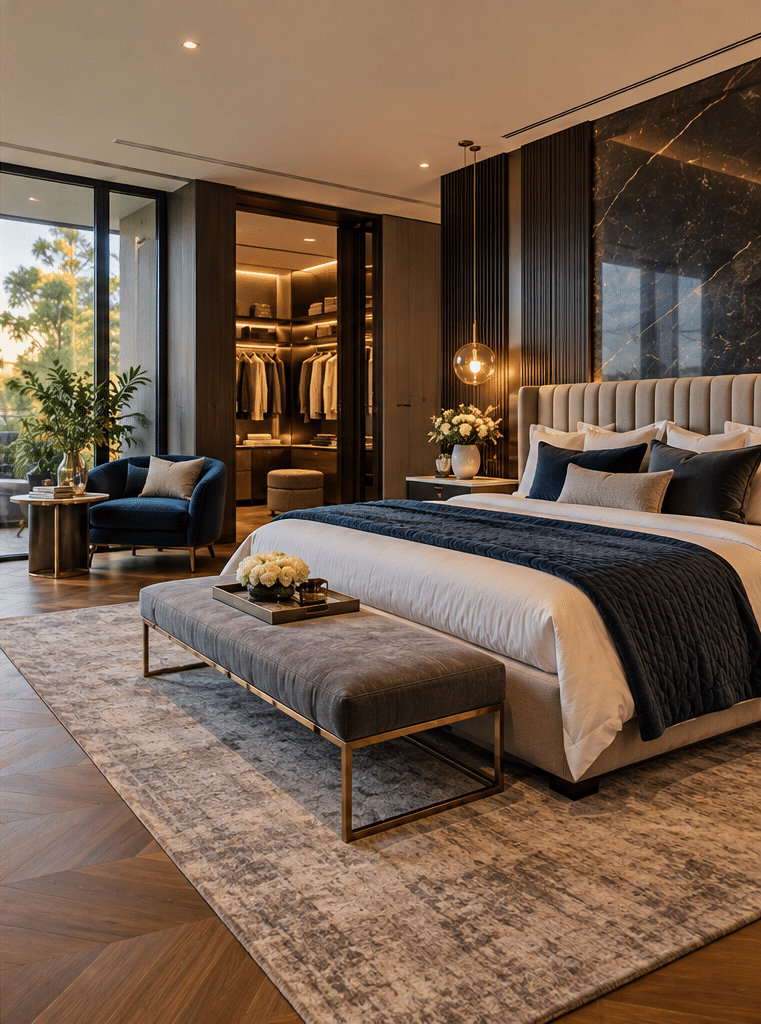
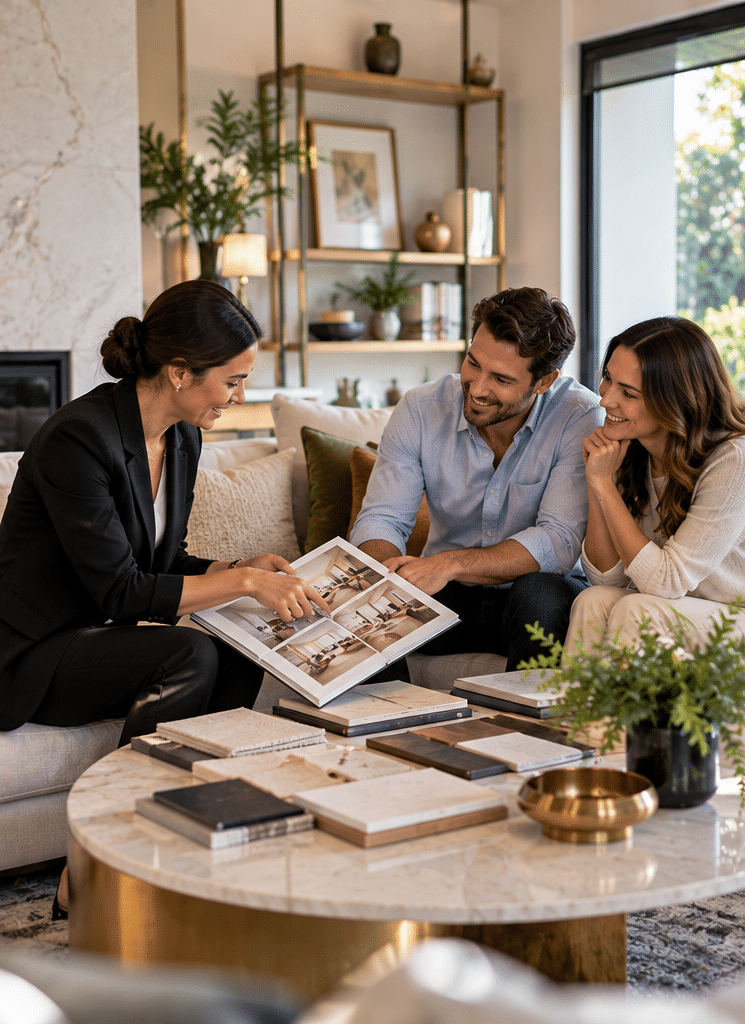
Luxury interior design in Australia is moving beyond rooms that simply look expensive. A well-designed luxury home should feel considered, comfortable and deeply connected to the people who live there. It should also respond to the building’s architecture, local climate, natural light, daily routines and long-term maintenance. Whether you are planning a full Melbourne renovation or refining a single living space, the goal is not excess. Instead, it is to create a coherent home where proportion, material quality, craftsmanship and function work together.
A practical lesson from analysing successful residential design is that the most memorable interiors rarely depend on one dramatic feature. They work because hundreds of smaller decisions—lighting levels, furniture proportions, joinery lines, circulation, texture, storage and sightlines—support the same overall idea.
What Is Luxury Interior Design?
Luxury interior design is the deliberate planning of space, materials, lighting, furniture and detailing to create a home that feels refined, comfortable and personal. In Australia, true luxury also responds to climate, architecture, durability and daily living, rather than relying only on expensive finishes or recognisable brands.
Table of Contents
- What makes luxury interior design different?
- Why Australian luxury interiors need a local approach
- Luxury interior design versus luxury decorating
- Start with space planning, not shopping
- Choosing materials that feel genuinely luxurious
- Colour, texture and quiet luxury
- Lighting design for premium interiors
- Bespoke joinery and furniture
- Sustainable luxury interior design
- Australian compliance and project coordination
- A 10-step luxury interior design checklist
- Common mistakes to avoid
- People Also Ask
- Expert Q&A
- Conclusion
What Makes Luxury Interior Design Different?
Luxury interior design is not defined by marble, oversized chandeliers or designer furniture alone. Those elements can belong in a premium home, but they do not automatically make the interior successful.
The difference is usually found in intentionality.
In a well-resolved interior, the designer thinks about how someone enters the house, where their eyes naturally travel, how furniture affects movement, where personal possessions are stored, how surfaces feel to touch and how the atmosphere changes from morning to evening.
According to the Design Institute of Australia, interior designers consider factors including space allocation, traffic flow, building services, fixtures, furniture, lighting, finishes, efficiency, safety and comfort—not simply decoration. Design Institute of Australia: Interior Design Discipline
Therefore, luxury interior design should solve practical problems as carefully as visual ones.
For example, imagine a large open-plan living room with expensive furniture. If the sofa is undersized, the lighting is harsh, television cables remain visible and there is nowhere to store everyday items, the room may look costly but still feel unresolved.
Conversely, a room with fewer pieces can feel far more luxurious when the proportions are right, storage is integrated, materials have depth and lighting is carefully layered.
Luxury is increasingly about restraint
Contemporary luxury often communicates quality quietly.
Instead of filling every wall, surface and corner, designers may use:
- fewer but better-quality materials
- carefully proportioned negative space
- concealed storage
- custom joinery
- natural stone or timber as focal materials
- restrained colour palettes
- integrated lighting
- handcrafted details
- original art and meaningful objects.
The result can feel sophisticated without becoming visually exhausting.
Why Australian Luxury Interior Design Needs a Local Approach
Australia is too geographically and climatically diverse for one interior formula to work everywhere.
The Australian Government’s YourHome guidance identifies eight main climate zones. Melbourne, for example, sits within Climate Zone 6, a mild temperate zone where designers need to balance winter warmth with summer cooling. Australian Government YourHome climate guidance
That matters because interior design decisions affect comfort.
Large expanses of glass may produce beautiful daylight, for example. However, glazing, orientation and shading also affect heat gain and heat loss. Similarly, heavy curtains may contribute softness and acoustic comfort while helping manage unwanted light.
Melbourne luxury interiors
A Melbourne home may benefit from layered strategies because the city experiences distinct seasons.
For example, consider a renovated Victorian terrace.
A thoughtful approach could preserve decorative cornices, fireplaces or ceiling roses while introducing contemporary joinery, warm timber, natural stone and discreet architectural lighting. The intention is not to make the original home appear newly built. Instead, old and new should read as deliberate layers.
In a contemporary Melbourne house, north-facing living zones, suitable shading, glazing, insulation and thermal mass may also contribute to comfort.
Australian Government guidance notes that passive design combines factors such as orientation, insulation, glazing, thermal mass and shading to work with local climate.
Sydney luxury interiors
Sydney projects can vary substantially between coastal homes, dense apartments and suburban residences.
An apartment with extensive glazing, for instance, may require careful treatment of glare, privacy and furniture placement. A layered window treatment combining sheers with blockout curtains can create softness while giving occupants more control.
Meanwhile, concealed cabinetry can be particularly valuable in apartments because visual calm becomes easier to achieve when daily objects have a designated home.
Queensland luxury interiors
In warmer and more humid parts of Queensland, a heavy Melbourne-style scheme may be inappropriate.
Instead, interiors may favour stronger connections to outdoor areas, cross-ventilation, ceiling fans, lighter materials and shaded openings. Passive cooling guidance highlights ventilation, shading and reduction of unwanted heat gain as important considerations in warmer Australian conditions.
Therefore, successful luxury interior design should never be copied directly from an overseas image without considering local conditions.
Luxury Interior Design vs Luxury Decorating
Interior design and decoration overlap, but they are not identical.
The distinction becomes especially important when your project involves layout changes, kitchens, bathrooms, lighting plans or permanent built-in elements.
| Area | Luxury Interior Design | Luxury Decorating |
| Main focus | How the whole interior functions and feels | How an existing space looks and feels |
| Space planning | Usually central to the process | Usually works within existing layout |
| Joinery | May include detailed built-in cabinetry | May style around existing cabinetry |
| Lighting | Can involve architectural and decorative lighting | Often focuses on decorative fittings |
| Furniture | Integrated with room planning | Selection and placement are major tasks |
| Materials | Floors, walls, stone, joinery, finishes and textiles | Primarily furnishings, colour and surface finishes |
| Consultants | May coordinate builders and specialist consultants | Usually fewer construction consultants |
| Best suited to | Renovations, new builds and complete interiors | Furnishing, styling and cosmetic updates |
Neither service is inherently more valuable. The correct choice depends on your project.
If your floor plan already works and you mainly need furniture, rugs, art, window treatments and colour direction, interior decoration may be sufficient.
However, if you need to redesign a kitchen, relocate walls, develop lighting layouts or create custom cabinetry, a broader interior design process is usually more appropriate.
Start Luxury Interior Design With Space Planning, Not Shopping
One of the easiest ways to waste money on a premium interior is to purchase furniture before the layout has been resolved.
A beautiful sofa can still be wrong if it blocks circulation or overwhelms the room.
Therefore, begin with the space.
Understand circulation
Circulation refers to how people move through an interior.
A designer considers questions such as:
- Can someone enter the room without walking around furniture?
- Is there comfortable movement between the kitchen, dining and living areas?
- Do doors conflict with furniture?
- Does the dining table obstruct access when chairs are pulled out?
- Can two people comfortably use the kitchen together?
Good circulation often goes unnoticed. Poor circulation is noticeable every day.
Establish focal points
Most successful rooms have a visual hierarchy.
In one living room, the focal point may be a fireplace. In another, it could be a garden view, artwork, sculptural staircase or custom stone wall.
Luxury interior design works better when furniture and lighting reinforce that hierarchy instead of competing with it.
Consider sightlines
A sightline is what you see from one part of the house into another.
For example, the view from the entry may terminate at an artwork, courtyard or architectural feature rather than a laundry door.
Similarly, kitchen appliances can sometimes be positioned so they are less dominant from the primary living zone.
These decisions cost little compared with premium furniture, yet they can dramatically improve the perception of the space.
Materials Are the Foundation of Luxury Interior Design
Material selection has a powerful influence on how an interior ages.
The Australian Government’s YourHome guidance notes that material choices affect performance, durability, energy use and lifecycle environmental impacts.
For luxury interior design, the key is not simply choosing the most expensive material. Instead, choose a material that is appropriate for its location, use and maintenance requirements.
Natural stone
Marble, limestone, travertine, granite and quartzite can add depth and individuality.
However, natural stone varies considerably.
Some stones are porous. Others may scratch, stain or etch more easily. Therefore, samples should be assessed for the intended application rather than chosen from photographs alone.
A highly expressive marble may work beautifully on a vanity or feature wall while a more resistant material may be preferable for a heavily used kitchen surface.
Timber
Timber introduces warmth and natural variation.
It can appear in flooring, cabinetry, furniture, ceilings, wall panelling and architectural details.
For a quieter luxury aesthetic, repeating the same or closely related timber tones throughout the home can create continuity.
Too many unrelated timber species, however, can make an otherwise refined palette feel fragmented.
Metal
Brass, bronze, stainless steel and dark metal finishes can provide contrast.
The key is consistency.
For example, repeating a brushed metal family across cabinetry handles, lighting and selected bathroom fittings may look more intentional than introducing several competing finishes.
Nevertheless, every metal does not need to match exactly.
Subtle variation can create character when it appears deliberate.
Textiles
Luxury is also tactile.
Wool rugs, linen, velvet, leather and textured upholstery can soften architectural surfaces and improve acoustic comfort.
Importantly, fabric should suit the household. A formal textile that is difficult to maintain may make little sense in a frequently used family room.
Practicality is part of luxury because the home should support daily life rather than make its occupants anxious about using it.
Colour and Texture in Luxury Interior Design
A luxury colour scheme does not need to be beige.
However, many sophisticated interiors use a restrained base because it allows materials, art and furniture forms to carry more visual weight.
For instance, a palette might combine:
- warm white walls
- oak cabinetry
- cream limestone
- aged brass
- deep chocolate upholstery
- muted olive accents.
Another interior could use charcoal, walnut, burgundy and travertine.
The specific colours matter less than their relationship.
Undertones matter
Two whites can look very different beside the same stone.
One may contain warm yellow or red undertones. Another may lean grey, blue or green.
Therefore, paint should be tested alongside permanent materials and under the actual room lighting.
Morning daylight, afternoon sun and artificial light can all change how colour appears.
Texture prevents neutral rooms from feeling flat
When the colour palette is restrained, texture becomes more important.
Smooth plaster can contrast with rough stone. Polished metal can sit beside woven fabric. Fine-grained timber can contrast with a thick wool rug.
Consequently, the space remains visually rich even when colour is limited.
Luxury Lighting Design: More Than a Statement Pendant
Lighting is one of the most important elements of luxury interior design because it affects both function and atmosphere.
A single bright ceiling light rarely produces a sophisticated result.
Instead, designers typically think in layers.
Ambient lighting
Ambient lighting provides general illumination.
This might come from recessed lights, indirect lighting, architectural fittings or decorative pendants.
Task lighting
Task lighting supports an activity.
Examples include:
- kitchen bench lighting
- bedside reading lights
- vanity lighting
- desk lamps
- lighting inside wardrobes.
Accent lighting
Accent lighting creates hierarchy.
It may highlight artwork, stone, shelving, architectural details or textured walls.
Decorative lighting
Decorative lighting can also function as sculpture.
However, a statement pendant should support the room rather than exist only because it looks impressive online.
Scale is crucial.
A small pendant may disappear over a long dining table, while an oversized chandelier can make a modest room feel crowded.
Control is part of luxury
Dimmers, separate circuits and thoughtfully planned switching allow the same interior to change mood.
For example, the lighting needed for cleaning a kitchen is very different from the lighting desired during dinner.
Therefore, flexibility is often more valuable than simply increasing brightness.
Bespoke Joinery and Furniture in Australian Luxury Interiors
Customisation can distinguish luxury interior design from a standard fit-out.
Bespoke joinery can respond precisely to the architecture rather than forcing standard furniture into an unsuitable space.
Examples include:
- wall-to-wall entertainment cabinetry
- integrated bars
- libraries
- window seats
- study areas
- concealed appliance cabinets
- dressing rooms
- integrated bedheads
- display niches.
The visual advantage is significant because customised elements can align with doors, ceilings and architectural proportions.
However, custom work should solve a real problem.
Creating complicated joinery simply because it is bespoke can increase cost without improving the room.
Concealed storage creates visual calm
One characteristic shared by many refined homes is that everyday clutter has somewhere to go.
That does not mean everything must be hidden.
Instead, the design distinguishes between items worth displaying and items that are better stored.
A built-in living-room cabinet might conceal electronics, cables, games and household items while leaving selected books, ceramics and artwork visible.
As a result, the room feels personal without appearing chaotic.
Sustainable Luxury Interior Design
Sustainability and luxury do not need to conflict.
In fact, longevity can be viewed as one of the strongest expressions of luxury.
A cheap finish that needs frequent replacement may ultimately create more waste and disruption than a durable material selected for long-term use.
Design for climate first
Australian Government guidance recommends responding to climate through orientation, shading, insulation, glazing, ventilation and appropriate thermal mass rather than relying only on mechanical heating or cooling.
For Melbourne’s mild temperate conditions, for instance, design should consider both winter heat retention and summer heat control.
That can influence curtain selection, flooring, furniture placement and even the way interior zones are separated.
Consider indoor air quality
Luxury should also account for the quality of the indoor environment.
Some paints, adhesives, furniture, cabinetry products and finishes can release volatile organic compounds, or VOCs. Australian Government guidance recommends considering low-VOC products and appropriate ventilation when designing or renovating interiors.
Therefore, specifications can consider factors such as:
- low-VOC paints
- low-emission joinery materials
- suitable ventilation
- responsibly sourced timber
- durable finishes
- products with credible environmental certifications.
Buy fewer, better pieces
Another approach is simply to reduce unnecessary consumption.
One excellent dining table that remains relevant for decades can make more sense than replacing trend-driven furniture every few years.
Vintage and antique furniture can also add depth to a new interior while reducing the feeling that every item came from the same showroom.
This is especially effective in luxury interior design because individuality is difficult to achieve when every piece follows the same current trend.
Australian Compliance and Project Coordination
Interior design becomes more technically complex when a project moves beyond furniture and finishes.
The National Construction Code is Australia’s primary set of technical provisions covering areas including safety, health, amenity, accessibility and sustainability. Australian National Construction Code
Requirements can also vary according to project type, state or territory, local conditions and the exact building work proposed.
Therefore, structural alterations, waterproofing, electrical work, plumbing, fire-safety requirements and other regulated work should be reviewed and completed by appropriately qualified or licensed professionals where required.
This is an administrative project-planning point rather than legal advice.
Why early coordination matters
The design should ideally be resolved before construction advances too far.
Australian Government guidance on residential design notes that changes made after final design sign-off are likely to add to design or building costs.
For example, deciding late that a wall light is required may involve opening completed plasterwork and changing electrical work.
Similarly, selecting a different stone thickness after cabinetry fabrication may create alignment problems.
Therefore, detailed documentation can protect the overall design concept while reducing avoidable changes.
10-Step Luxury Interior Design Checklist
Use this checklist before committing to furniture, finishes or construction.
- Define how you want the home to feel. Choose a few clear concepts such as warm, sculptural, European-inspired, calm or contemporary rather than collecting dozens of unrelated reference images.
- List your functional priorities. Identify storage problems, entertaining needs, work-from-home requirements, children, pets and accessibility considerations.
- Measure and plan the space. Confirm dimensions, circulation, furniture zones, windows, doors and fixed architectural features.
- Assess the Australian climate and orientation. Consider sunlight, seasonal heat, glare, ventilation and privacy before selecting window treatments or furniture positions.
- Create the material palette. Resolve major surfaces such as flooring, stone, timber, cabinetry and paint before choosing decorative accessories.
- Develop the lighting strategy. Separate ambient, task, accent and decorative lighting so each room can perform differently throughout the day.
- Design storage early. Decide what needs to be visible, concealed or easily accessible.
- Confirm furniture scale. Use floor plans and dimensions rather than judging pieces solely from showroom displays or online photographs.
- Coordinate technical work before construction. Confirm joinery, electrical, plumbing, lighting and specialist details with appropriate professionals.
- Review the entire scheme together. Place physical material samples beside one another and assess them under both daylight and artificial lighting before final approval.
Common Luxury Interior Design Mistakes
Following every trend
Trends can provide inspiration, but designing an entire home around a short-lived aesthetic can date the result quickly.
Instead, use trends selectively.
A fashionable colour may be easy to introduce through cushions or art. However, an expensive permanent feature should ideally have a stronger reason for being there.
Choosing materials from photographs
Stone, timber and fabrics can vary considerably in real life.
Whenever possible, inspect physical samples.
For natural materials, individual slabs or batches may also differ.
Using too many statement pieces
If the sofa, rug, pendant, artwork, coffee table and wall finish are all demanding attention, the room loses hierarchy.
Choose where you want the eye to rest.
Then allow supporting elements to remain quieter.
Ignoring storage
Visual simplicity is difficult without practical storage.
Plan it early rather than trying to add cupboards after everything else has been selected.
Prioritising appearance over comfort
A beautiful chair nobody enjoys sitting in is poor residential design.
Similarly, an elegant bathroom with nowhere to place a towel may photograph well but perform badly.
Luxury interior design should improve daily experience.
Copying another house exactly
Reference images are valuable, but every property has different dimensions, light, architecture and occupants.
Instead of copying a photograph literally, identify why you like it.
Is it the warm lighting? The limited palette? The contrast between stone and timber? The feeling of openness?
Once the underlying principle is understood, it can be adapted to your own home.
People Also Ask About Luxury Interior Design
What makes an interior look luxurious?
A luxurious interior usually combines strong proportions, high-quality materials, layered lighting, thoughtful furniture placement and detailed craftsmanship. Consistency is more important than using expensive products everywhere, because a coherent material and colour palette makes the whole home feel intentional.
Is luxury interior design worth it?
Its value depends on your project, budget and priorities. Professional design can be particularly useful when you are making expensive permanent decisions involving layouts, kitchens, bathrooms, lighting or custom joinery because those elements are difficult to change later.
What colours are used in luxury interior design?
There is no required luxury colour palette. Warm neutrals, natural stone colours, deep greens, chocolate, burgundy, charcoal and timber tones can all work; however, sophisticated interiors generally control the number of competing colours and pay close attention to undertones.
What is modern luxury interior design?
Modern luxury interior design combines contemporary planning with premium materials, craftsmanship and restrained detailing. Rather than heavy ornamentation, it often uses clean architectural lines, custom joinery, natural materials, integrated lighting and carefully selected furniture.
How do I make my Australian home feel more luxurious?
Start with layout, lighting and visual clutter before buying decorative objects. Improving furniture proportions, window treatments, storage, material consistency and lighting often produces a more sophisticated result than simply adding expensive accessories.
Expert Q&A: Luxury Interior Design in Australia
1. Should every room use the same materials?
Not exactly.
Consistency is useful, but repetition should not become monotonous. A timber used in the kitchen might reappear in a study or entertainment unit, while other rooms introduce complementary stone, metal or textile finishes.
Think of the home as one visual language with different sentences rather than identical rooms.
2. When should furniture be selected during a renovation?
Furniture planning should begin early, even when the actual purchase occurs later.
Knowing the approximate sofa, bed, dining table and artwork locations helps coordinate electrical outlets, lighting, joinery and circulation.
For instance, knowing the final dining-table dimensions helps position a pendant correctly rather than trying to centre it after electrical work has been completed.
3. Are imported materials necessary for a luxury interior?
No.
Luxury depends on appropriateness, detailing, provenance, craftsmanship and design coherence rather than country of origin.
Australian timber, locally fabricated joinery, custom furniture and locally sourced art can create highly distinctive interiors. Imported products can also be appropriate where they offer a particular material, craft technique or design language.
The strongest approach is usually selective rather than ideological.
4. How should homeowners set a luxury interior design budget?
Start by separating permanent work from movable items.
Permanent elements can include flooring, lighting, bathrooms, kitchens, cabinetry and architectural finishes. Movable items include furniture, rugs, art and accessories.
Then establish priorities.
If custom joinery and natural stone are central to the design, allocate for those first rather than spreading the budget evenly across every category.
Also maintain a contingency appropriate to the nature of the renovation. Exact amounts should be established with the relevant designer, builder or project professional because project risks differ substantially.
5. How can a luxury home still feel personal?
Avoid designing solely around what is currently fashionable.
Include artwork, books, collected objects, heirloom furniture and materials that relate to your personal story.
A designer can then edit and position these elements so they sit comfortably within the overall scheme.
The result should feel curated rather than generic.
Conclusion: Luxury Is the Quality of the Whole Experience
The strongest luxury interior design does not shout for attention. Instead, it reveals quality gradually.
You notice that the furniture fits perfectly. Then you notice the softness of the lighting, the alignment of the cabinetry, the natural variation in the stone and the way one material quietly repeats elsewhere in the house.
More importantly, the home works.
There is storage where you need it. Movement feels effortless. Lighting changes with the occasion. Materials suit Australian conditions. Rooms feel connected without becoming repetitive.
That is why successful luxury interior design starts with understanding the home and its occupants rather than compiling a shopping list of premium products.
For an Australian project, the process should also respond to local climate, architecture, construction requirements and the realities of everyday living. In Melbourne especially, balancing seasonal comfort with refined materials and thoughtful spatial planning can produce interiors that feel impressive when completed yet remain practical years later.
If you are planning a refined residential interior, renovation or styling project, explore VM Lux Avenue’s interior design and styling services to begin shaping a home around your architecture, lifestyle and preferred design direction.