Finding the right luxury interior designers Sydney homeowners can trust is about far more than choosing a portfolio with beautiful rooms. A successful high-end interior must work for everyday life, respond to the architecture of the property and translate personal taste into a consistent design language. It also needs careful planning, realistic budgeting, documentation, sourcing and coordination. This guide uses that practical lens to explain what to look for, what questions to ask and how to avoid expensive design decisions that do not suit your home.
Sydney also presents a varied residential landscape. A waterfront apartment may call for a very different design strategy from a Federation home, contemporary new build, terrace or large family residence. Therefore, the strongest interior design brief begins with the property itself and the people who will live there rather than a catalogue of fashionable finishes.
What Do Luxury Interior Designers Sydney Do?
Luxury interior designers Sydney homeowners hire plan and coordinate high-end residential interiors around lifestyle, architecture, materials, lighting, custom joinery and project delivery. The best fit is not simply the designer with the most expensive portfolio, but the professional whose process, aesthetic, documentation, budget control and communication match your home and priorities.

Table of Contents
- What luxury interior design really means
- What luxury interior designers in Sydney actually do
- Designer vs decorator vs architect
- How the luxury interior design process works
- Sydney-specific design considerations
- Materials, joinery and lighting
- Budgeting for a luxury interior
- Approvals, strata and building considerations
- How to shortlist a luxury interior designer
- Full-service vs consultation-only design
- Common mistakes to avoid
- People Also Ask
- Expert Q&A
- Conclusion
What Does Luxury Interior Design Really Mean?
Luxury is often misunderstood as a particular visual style.
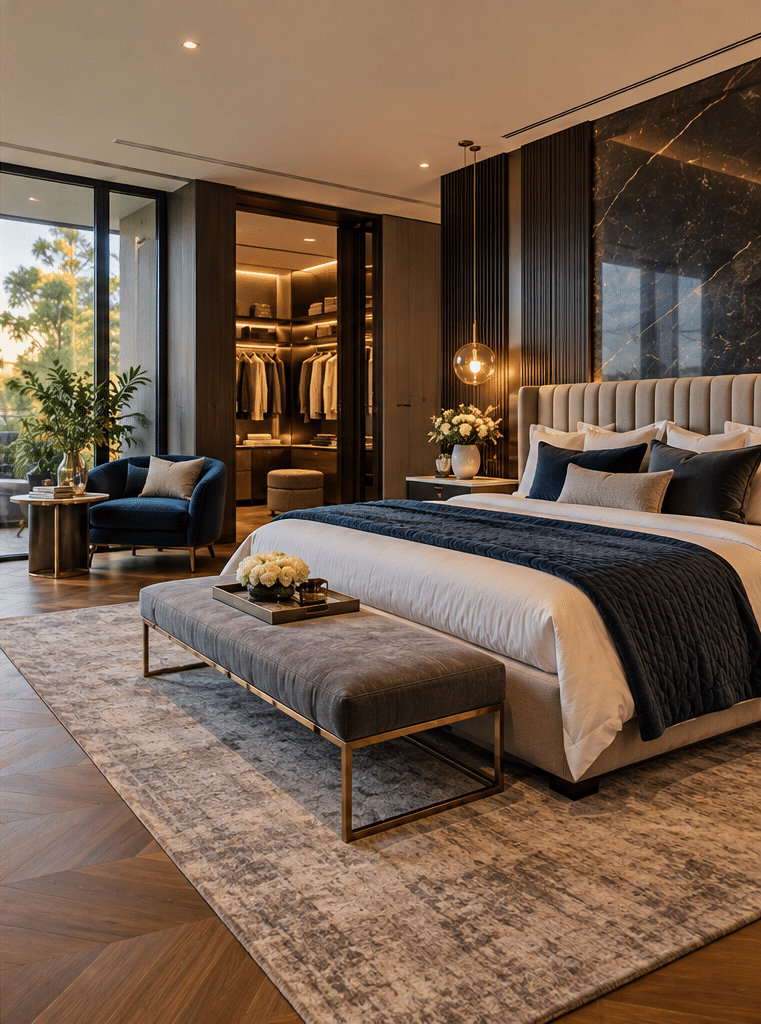
It does not automatically mean marble, oversized chandeliers, gold detailing or designer furniture. Instead, well-resolved luxury usually comes from proportion, craftsmanship, material consistency and thoughtful customisation.
For example, a quiet contemporary home with restrained limestone, oak joinery and carefully integrated lighting can feel more luxurious than a room filled with expensive statement pieces.
The difference is intention.
Good luxury interior designers Sydney clients engage will usually consider several layers at once:
- how people move through the home;
- where natural light enters;
- furniture scale and circulation;
- architectural proportions;
- storage requirements;
- joinery detailing;
- lighting temperatures and placement;
- material durability;
- acoustic comfort;
- artwork and decorative objects;
- transitions between rooms; and
- how the design will age.
Therefore, a luxury interior should not feel as though individual products were simply placed together. The space should feel composed.
Personalisation Is More Important Than Trends
Luxury also becomes more meaningful when a house reflects its owner.
A home designed for a couple who regularly entertains twenty guests should function differently from a home designed for a family with young children. Likewise, an art collector may need carefully planned wall surfaces and lighting, while someone who works from home may prioritise acoustics, storage and adaptable rooms.
This is why a detailed client brief matters.
A strong designer asks how you live before deciding how the home should look.
What Luxury Interior Designers Sydney Homeowners Hire Actually Do
Professional interior design can cover much more than colours and furniture.
Depending on the scope, luxury interior designers Sydney clients appoint may work on spatial layouts, finishes, fixtures, custom joinery, furniture, lighting concepts, window treatments, artwork, styling and coordination with other professionals.
Typical responsibilities can include:
- initial consultation and project briefing;
- measuring or reviewing existing plans;
- space planning;
- concept development;
- mood boards and visual direction;
- material and finish schedules;
- kitchen and bathroom concepts;
- custom cabinetry and joinery design;
- decorative lighting selection;
- furniture sourcing;
- window furnishing specifications;
- artwork placement;
- supplier coordination;
- styling;
- procurement; and
- installation coordination.
However, every studio operates differently.
Therefore, ask exactly what is included before comparing fees.
A designer offering full documentation, procurement, trade coordination and installation management cannot fairly be compared with a consultant who provides only concepts and a shopping list.
Why Professional Credentials Matter
The Design Institute of Australia describes itself as Australia’s peak professional membership body for designers. Its Accredited Designer program considers professional qualifications, industry experience and continuing professional development. Accreditation is not the only way to judge a designer, but it can provide another useful verification point when evaluating professional capability.
Homeowners who want to check professional standing can review the Design Institute of Australia Accredited Designer program.
Luxury Interior Designers Sydney vs Decorators and Architects
These professions can overlap, but they are not identical.
| Professional | Typical Focus | Best Suited To |
| Interior designer | Space planning, materials, joinery, lighting, furniture and interior experience | Detailed residential interiors and renovations |
| Interior decorator/stylist | Furniture, colour, soft furnishings, accessories and styling | Cosmetic transformations where structural planning is limited |
| Architect | Building form, planning, structure and architectural documentation | Extensions, new homes and major architectural changes |
| Building designer | Building layouts and documentation within their professional scope | New builds, additions and certain renovation projects |
| Interior architect | Detailed spatial and interior architectural work, depending on qualifications and project role | Complex interior transformations |
Large projects may involve several of these professionals.
For example, an architect may develop the building envelope while an interior designer develops joinery, interior finishes, furniture and decorative lighting.
Instead of asking which profession is “better”, ask what expertise your project requires.
That distinction is especially important when comparing luxury interior designers Sydney because the word “luxury” does not define a professional scope by itself.
How the Luxury Interior Design Process Works
Although every practice has its own method, a well-managed residential project usually develops in stages.
1. Discovery and Client Brief
First, the designer learns about:
- the property;
- your lifestyle;
- your preferred aesthetic;
- your priorities;
- existing furniture or artwork;
- practical requirements;
- timing; and
- budget expectations.
This stage is more important than many clients realise.
If the brief is vague, later decisions become harder.
For instance, saying “I want a luxurious living room” gives little useful direction. Saying “I want a sophisticated but relaxed room for six people, with discreet television storage, strong natural materials and enough seating for weekend entertaining” gives the designer much more information.
2. Site and Existing Conditions
Next, the property is assessed.
Depending on the engagement, measurements, plans, photographs and existing architectural details may be reviewed.
Constraints matter just as much as opportunities.
Columns, ceiling heights, window positions, services and existing flooring can influence the final design.
3. Concept Development
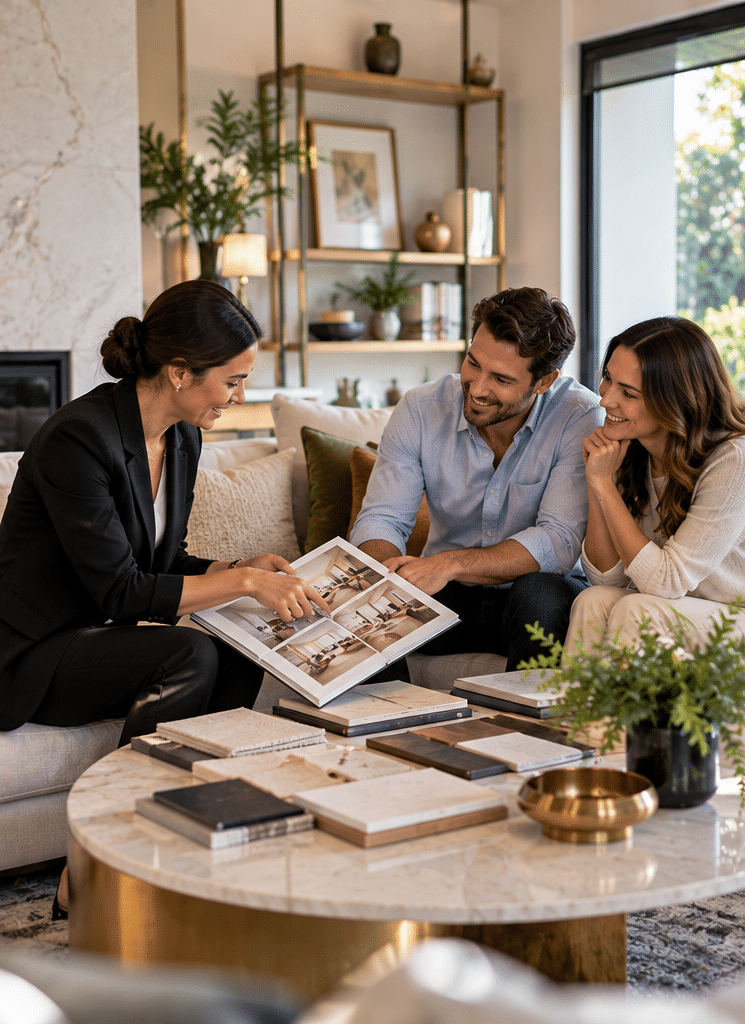
At this point, luxury interior designers Sydney may establish the visual direction through mood boards, preliminary layouts, colour palettes, reference imagery and initial material selections.
The goal is not yet to choose every cushion.
Instead, the concept should create a consistent design language.
For example, a concept might combine warm natural stone, dark timber, aged metal, sculptural lighting and soft neutral upholstery.
Once this language is agreed, hundreds of later decisions become easier.
4. Design Development
The concept then becomes more detailed.
Joinery, furniture layouts, finishes, fittings, lighting, hardware and other elements are coordinated.
Good designers also consider relationships between decisions.
A beautiful pendant, for example, may still be unsuitable if its scale conflicts with the dining table or ceiling height.
5. Documentation and Specification
For more involved projects, concepts need to become instructions that suppliers and trades can work from.
The designer may prepare or coordinate:
- plans;
- elevations;
- joinery drawings;
- schedules;
- finish references;
- fixture specifications;
- furniture lists; and
- installation information.
Clear documentation reduces ambiguity.
6. Procurement
Once selections are approved, products can be ordered.
This stage requires attention to lead times, quantities, delivery schedules and storage arrangements.
Bespoke furniture and imported pieces may require significantly more planning than stock products, so procurement should not be left until construction is nearly complete.
7. Installation and Final Styling
Finally, furniture, artwork, rugs, accessories and decorative elements bring the layers together.
At this point, seemingly small decisions become important.
The height of an artwork, position of a floor lamp or proportion of objects on a console can affect whether the finished room feels balanced.
Sydney-Specific Considerations for Luxury Interior Design
Sydney homes are diverse, so a single “Sydney luxury style” would be misleading.
Instead, design should respond to location, architecture and use.
Apartments
High-end apartment projects may require careful attention to:
- lift dimensions;
- delivery access;
- common-property protection;
- acoustic requirements;
- strata approvals;
- flooring restrictions; and
- permitted working hours.
As a result, procurement and installation planning can be almost as important as visual design.
Heritage and Character Homes
Older properties may contain decorative ceilings, fireplaces, timber floors, detailed mouldings and distinctive proportions.
The strongest approach is not always to copy historical decoration.
Often, luxury interior designers Sydney homeowners engage will decide which architectural features deserve emphasis and where contemporary interventions can sit quietly alongside them.
The result can feel layered rather than themed.
Contemporary Homes
Contemporary properties may appear simpler, but simplicity often requires precision.
Shadow lines, stone junctions, cabinetry alignment, concealed storage and lighting details become more noticeable because there is less decorative complexity to hide inconsistencies.
Waterfront and Light-Filled Homes
Large windows and strong natural light can become major design assets.
However, material appearance can change significantly throughout the day.
Therefore, fabrics, timber stains, paint colours and stone samples should ideally be reviewed under the lighting conditions in which they will actually be seen.
Materials: Where Luxury Becomes Tangible
Materials are one of the clearest differences between a generic interior and a carefully developed one.
However, expensive does not always mean appropriate.
Natural Stone
Marble, limestone, travertine and other natural stones can create depth and individuality because each piece varies.
Nevertheless, natural stone may require ongoing care depending on the material and finish.
A designer should consider suitability as well as appearance.
Timber
Timber can introduce warmth and texture.
Species, grain direction, stain and finish all influence the result.
For example, heavily figured timber may create a strong statement, while a quieter grain can support a more restrained scheme.
Metals
Brass, bronze, stainless steel and darkened metal can provide contrast and detail.
Consistency matters.
Using too many unrelated metal finishes can make the room feel accidental rather than curated.
Textiles
Fabric selection affects visual softness, comfort and practicality.
Performance should match the household.
A formal occasional chair can use a different fabric strategy from a sofa used every day by children and pets.
Why Custom Joinery Matters in Luxury Interiors
Custom joinery is often central to sophisticated residential design because it allows the room to respond precisely to architecture and storage requirements.
Rather than forcing standard furniture into an awkward area, joinery can be developed around the actual dimensions.
It may include:
- wardrobes;
- media cabinetry;
- home bars;
- display units;
- studies;
- bookshelves;
- integrated desks;
- banquette seating;
- kitchen cabinetry; and
- bathroom vanities.
The value lies in integration.
A successful media wall, for example, might conceal equipment, cables and storage while also framing artwork and balancing the proportions of the room.
Therefore, good joinery should solve problems quietly.
Lighting: One of the Most Important Luxury Design Tools
Lighting is often underestimated because homeowners naturally focus first on surfaces and furniture.
Yet lighting changes how every other element is perceived.
A thoughtful scheme may combine:
- ambient light;
- task lighting;
- decorative lighting;
- accent lighting; and
- natural light.
Ambient lighting provides general illumination.
Task lighting helps with activities such as cooking, reading or applying makeup.
Accent lighting draws attention to architecture, artworks or materials.
Decorative lighting, meanwhile, can function almost like sculpture.
The strongest luxury interior designers Sydney projects coordinate these layers instead of depending on one bright ceiling source.
Why Lighting Temperature Matters
Colour temperature can change how materials feel.
A timber that looks warm and rich under one source may appear dull under another.
Similarly, stone, paint and upholstery can shift noticeably.
Therefore, lighting should be considered alongside the material palette rather than treated as a final electrical decision.
Budgeting for Luxury Interior Designers Sydney Projects
There is no useful universal price for luxury interior design.
Project size, property type, customisation, product level, design scope and construction complexity vary too widely.
Therefore, online “average cost” figures should be treated cautiously unless the scope is clearly defined.
A realistic budget may need separate allowances for:
- professional design fees;
- architectural or technical consultants;
- construction;
- joinery;
- stone;
- appliances;
- plumbing fixtures;
- lighting;
- furniture;
- rugs;
- window furnishings;
- artwork;
- accessories;
- freight;
- storage;
- installation; and
- contingency.
Ask About the Fee Structure
Interior design practices may charge through:
- fixed project fees;
- hourly rates;
- staged fees;
- procurement margins;
- percentage-based fees; or
- combinations of these methods.
No model is automatically better.
Transparency matters more.
Ask which services are included, which are optional and how changes to the brief affect fees.
Establish Priorities Early
Most projects involve choices.
Perhaps custom stone is important to you, while designer-brand furniture is not.
Alternatively, original artwork may be a priority while secondary bedrooms can use more economical materials.
Luxury is stronger when the budget is concentrated deliberately rather than spread randomly.
Approvals, Strata and Building Requirements
Design conversations eventually become practical when renovation work is involved.
For that reason, luxury interior designers Sydney homeowners consider should be comfortable coordinating with the appropriate qualified professionals when work moves beyond decoration.
Australia’s National Construction Code provides the country’s primary technical framework for building safety, health, amenity, accessibility and sustainability. The applicable edition and requirements can depend on jurisdiction and project circumstances, so qualified building practitioners or certifiers should confirm requirements for a specific project.
Homeowners can review the National Construction Code guidance from the Australian Building Codes Board.
Planning Pathways in NSW
Not every renovation requires the same approval pathway.
The NSW Planning Portal explains that some low-impact or minor work may qualify as exempt development. Meanwhile, certain internal alterations may potentially follow the complying-development pathway when the relevant standards are met.
See the official NSW Planning Portal home renovation guidance for current administrative information.
This is important because “interior renovation” does not automatically mean “no approvals required”.
Strata Apartments Need Extra Attention
For Sydney apartment owners, strata requirements can also affect a project.
NSW Government guidance updated in June 2026 states that cosmetic changes can generally be treated differently from minor and major renovations. Kitchen work, certain flooring changes and alterations to walls may require approval, while work involving structure or waterproofing can fall into more substantial approval categories. Scheme by-laws also need to be checked.
Therefore, discuss approvals before demolition, procurement or booking trades.
These points are an administrative overview, not legal advice. A strata manager, council, registered practitioner, certifier or other appropriately qualified professional should confirm what applies to your property.
How to Shortlist Luxury Interior Designers Sydney: 10-Step Checklist
Use this checklist before appointing a designer.
- Define your project scope.
Decide whether you need one-room styling, complete furnishing, renovation design or full project coordination. - Set a realistic investment range.
Give the designer enough information to recommend appropriate materials and solutions. - Review complete projects, not isolated images.
Look for consistency from room to room. - Check whether the aesthetic feels adaptable.
A designer should have a clear point of view without forcing every client into the same formula. - Ask who will actually work on your project.
Understand the team structure and your primary contact. - Request a clear explanation of deliverables.
Determine whether drawings, specifications, procurement and installation are included. - Discuss communication.
Ask how frequently updates are provided and how decisions are documented. - Ask how budget changes are handled.
Scope changes should have a clear process. - Clarify procurement and lead times.
This is especially important for bespoke or imported pieces. - Confirm Sydney service availability and site involvement.
If you are considering an interstate or multi-location studio, confirm travel arrangements, site attendance, installation responsibilities and coordination with local trades before signing an agreement.
This last point is particularly important when searching online for luxury interior designers Sydney. A strong digital portfolio does not automatically mean the studio is physically based in Sydney or regularly undertakes projects there.
Full-Service Interior Design vs Design Consultation
Both service levels can be valuable.
The right choice depends on how much professional involvement you need.
| Area | Full-Service Design | Consultation / Advisory |
| Client brief | Detailed | Usually focused |
| Space planning | Included in scope | May be limited |
| Material selection | Comprehensive | Recommendations |
| Custom joinery | Often available | Usually limited |
| Furniture sourcing | Often comprehensive | Suggested pieces |
| Procurement | Often managed | Usually client-managed |
| Trade coordination | May be included | Usually client-managed |
| Installation | Often coordinated | Usually client-managed |
| Best for | Major transformations | Targeted advice |
| Client time commitment | Lower day-to-day burden | Higher self-management |
A consultation can be ideal when the architecture already works and you mainly need direction.
By contrast, full-service design can be valuable when many decisions must be coordinated across construction, finishes, joinery, furniture and installation.
How to Read a Luxury Designer’s Portfolio Properly
Portfolio images can be seductive.
However, try to look beyond photography.
Ask yourself:
- Does the furniture suit the scale of the room?
- Are materials repeated consistently?
- Is there enough practical storage?
- Does the lighting appear layered?
- Are different homes genuinely different?
- Does the design enhance the architecture?
- Are details resolved at junctions and edges?
- Does the property still look liveable?
Also examine several projects.
One spectacular room proves less than a consistent body of work.
The best luxury interior designers Sydney candidates should demonstrate repeatable design judgement, not only one photogenic installation.
Common Mistakes When Choosing a Luxury Interior Designer
Choosing Only by Instagram Style
A strong visual feed is useful, but a project involves far more than photography.
Documentation, budget communication, coordination and problem-solving matter too.
Starting Procurement Too Late
Custom products can have long production periods.
Therefore, early selection reduces the risk that the design must be changed simply because something cannot arrive when needed.
Following Trends Too Closely
Trends can provide inspiration.
However, large permanent investments deserve a longer-term perspective.
Use trends selectively in items that are easier to change.
Ignoring How the Home Will Be Used
A fragile material may be beautiful but wrong for a heavily used family space.
Practicality does not make a design less luxurious.
In fact, a genuinely well-designed home should make daily life easier.
Treating Every Room Separately
Room-by-room decorating can create visual fragmentation.
Even when spaces have individual identities, repeating selected materials, proportions, colours or details helps the entire residence feel connected.
Confusing Expensive With Bespoke
Price alone does not produce distinction.
A modest material used in an intelligent, custom way can have more character than a costly material used without context.
The Role of Furniture in Luxury Interior Design Sydney Homes
Furniture establishes proportion and comfort.
Before selecting pieces, designers usually consider how the room will be used.
For example, a formal living room may prioritise conversation, while a family room may require flexible seating, accessible side tables and hidden storage.
Scale is critical.
A sofa that looks refined in a showroom may overwhelm a smaller room or appear lost in a large one.
This is why plans should be considered before major purchases.
Bespoke vs Ready-Made Furniture
Bespoke furniture offers precise dimensions, finishes and upholstery.
However, it usually requires more time and investment.
Ready-made pieces can be highly effective when carefully selected.
A balanced project may use custom pieces where they solve a specific design problem and high-quality ready-made furniture elsewhere.
Designing for Longevity
A luxury interior should ideally survive changing fashion.
This does not mean creating a bland home.
Instead, build the core design around materials and proportions that you genuinely value.
Then use more changeable elements for experimentation.
For example:
Long-term elements
- stone;
- flooring;
- cabinetry;
- architectural lighting;
- bathroom fixtures;
- major joinery.
More flexible elements
- cushions;
- smaller furniture;
- accessories;
- decorative objects;
- some artwork;
- seasonal textiles.
This hierarchy makes future updates easier.
People Also Ask About Luxury Interior Designers Sydney
How do I choose a luxury interior designer in Sydney?
Start by matching the designer’s professional scope, portfolio and design process to your project. Then discuss fees, budget management, documentation, procurement, site involvement and communication before making a decision.
What makes an interior designer “luxury”?
Luxury interior design usually involves a high level of personalisation, considered material selection, detailed spatial planning and careful execution. However, the word “luxury” is subjective, so evaluate actual work and service scope rather than relying on the label alone.
Do luxury interior designers manage renovations?
Some do, while others focus only on design. Before engagement, ask whether the studio coordinates builders, joiners, suppliers and consultants or whether you will need to appoint a separate project manager.
Can an interior designer help with furniture and artwork?
Yes. Many luxury interior designers Sydney clients hire provide furniture sourcing, decorative lighting, rugs, artwork guidance, window treatments and final styling. However, these services should be confirmed in the proposal.
Do I need an interior designer for a luxury apartment renovation?
It is not mandatory simply because a property is luxurious. However, professional design can be valuable when the project involves custom joinery, detailed material coordination, new layouts, furniture procurement or complex strata requirements.
Expert Q&A: Luxury Interior Designers Sydney
1. Should I choose a Sydney-based designer or consider an interstate studio?
Both can work.
A local studio may provide easier site access. However, an interstate designer may still be suitable if the project model supports remote documentation, planned site visits and reliable coordination with Sydney-based professionals.
Before engaging them, confirm travel fees, meeting arrangements, installation responsibilities and who manages local trades.
2. How early should I appoint an interior designer for a renovation?
Earlier is usually better when interior decisions affect architecture, electrical planning, plumbing positions or joinery.
Late involvement can mean changing work that has already been documented or completed. Ideally, important interior design decisions should develop alongside the relevant architectural and construction planning.
3. Should I give a luxury designer my real budget?
Yes.
A designer cannot allocate money intelligently without understanding the available investment.
A realistic budget allows them to decide where bespoke solutions will add value, where standard products will perform well and which ideas may need to be simplified.
4. What should a luxury interior design proposal contain?
A useful proposal should clearly explain the project scope, design stages, deliverables, fee structure, exclusions and likely client responsibilities.
For larger projects, also ask how variations, procurement, travel, installation and external consultants are handled.
5. How can I tell whether a design will still feel relevant in ten years?
No one can guarantee how tastes will change.
However, designs built around good proportions, functional layouts, quality craftsmanship and materials you genuinely enjoy are usually more resilient than interiors built entirely around a short-lived visual trend.
A Practical Final Test Before Signing
Before you appoint one of the luxury interior designers Sydney search results have introduced you to, ask yourself five final questions.
Do they understand how I live?
Do I understand exactly what they will deliver?
Can I communicate openly with them about money?
Does their work demonstrate judgement rather than repetition?
Do I trust their process as much as I like their photographs?
If the answer is yes across all five, you are evaluating the relationship on more than appearance.
That matters because a luxury residential project can involve hundreds of interconnected decisions.
The designer is not simply choosing attractive objects.
They are helping create a coherent system of spaces, materials, furnishings, lighting and details that must eventually work as one home.
Conclusion: Choosing Among Luxury Interior Designers Sydney
Choosing among luxury interior designers Sydney is ultimately about finding the right combination of design sensitivity, technical understanding, communication and service.
Start with your lifestyle and priorities.
Then examine portfolios carefully, define your budget, compare the actual scope of each proposal and ask how the designer handles documentation, procurement, installation and project coordination.
For renovation projects, also identify planning, building and strata requirements early rather than treating approvals as an afterthought.
Most importantly, remember that luxury does not come from adding the greatest number of expensive elements. It comes from restraint, proportion, material quality, craftsmanship and a design that feels specific to the people who live there.
If you are drawn to refined interiors that combine European-inspired character with contemporary residential design, you can explore VM Lux Avenue’s interior design approach and enquire about current Sydney project availability. A clear initial conversation about your property, location, scope, budget and timing is the best first step towards determining whether the studio is the right fit for your home.